ARTICLE GUIDE
At a Glance
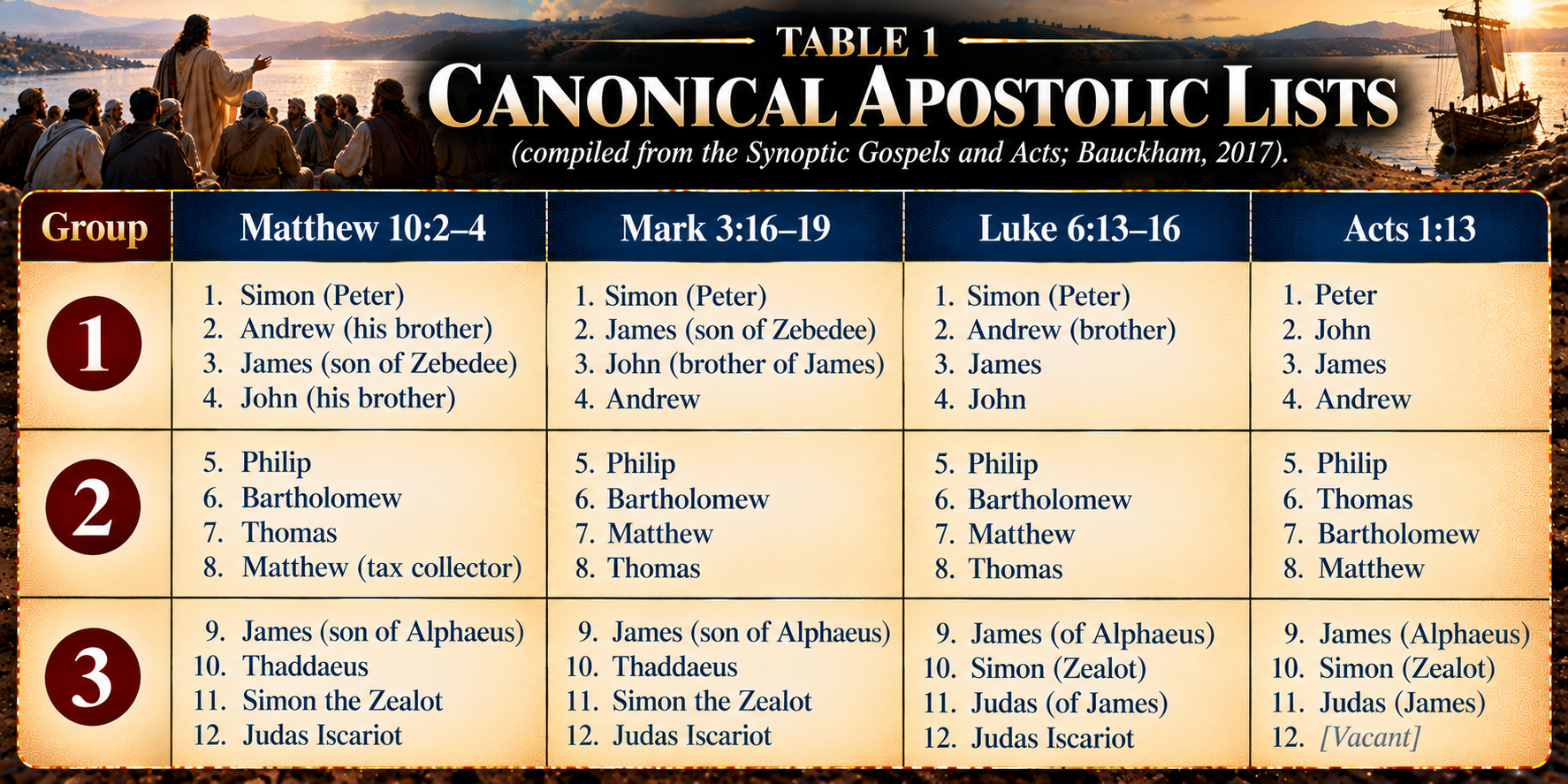
Matthew’s apostolic list is examined through name patterns, relational pairings, historical plausibility, and the Twelve’s place in the promise-plan.
What can the structure of Matthew’s list establish?
Key Claims
- The essay separates explicit textual claims from strong inferences, possibilities, and speculation.
- Matthew’s six pairings are compared with the two-by-two mission in Mark.
- Naming patterns and distinguishing qualifiers are evaluated in their Jewish context.
- The Twelve are interpreted through Israel’s restoration and the mission extending to all nations.
Primary Textual Anchors
- Matthew 10:1–6 — authority, names, and initial mission.
- Mark 6:7 — sending disciples two by two.
- Matthew 28:18–20; Romans 11:28–29 — global discipleship and enduring calling.
Scripture Connections
Matthew 10:1–6 — authority, names, and initial mission. Mark 6:7 — sending disciples two by two. Matthew 28:18–20; Romans 11:28–29 — global discipleship and enduring calling.
Selected Scholarship
- J. Warner Wallace — the essay’s evidentiary taxonomy.
- Richard Bauckham — eyewitness and naming studies.
- Peter J. Williams — historical reliability and name patterns.
- Walter C. Kaiser Jr. — promise-plan biblical theology.
Related Guides
Continue on Substack
Read the complete article on Substack, with Watch and Listen resources where available.
Leave a Reply