ARTICLE GUIDE
At a Glance
The commentary reads Exodus 19 as the vocation of a people already redeemed. Yahweh's declaration that He carried Israel and brought them to Himself precedes the call to covenant fidelity, making grace the narrative basis of their priest-nation identity.
What is Israel called to become at Sinai?
The commentary reads Exodus 19 as the vocation of a people already redeemed. Yahweh's declaration that He carried Israel and brought them to Himself precedes the call to covenant fidelity, making grace the narrative basis of their priest-nation identity.
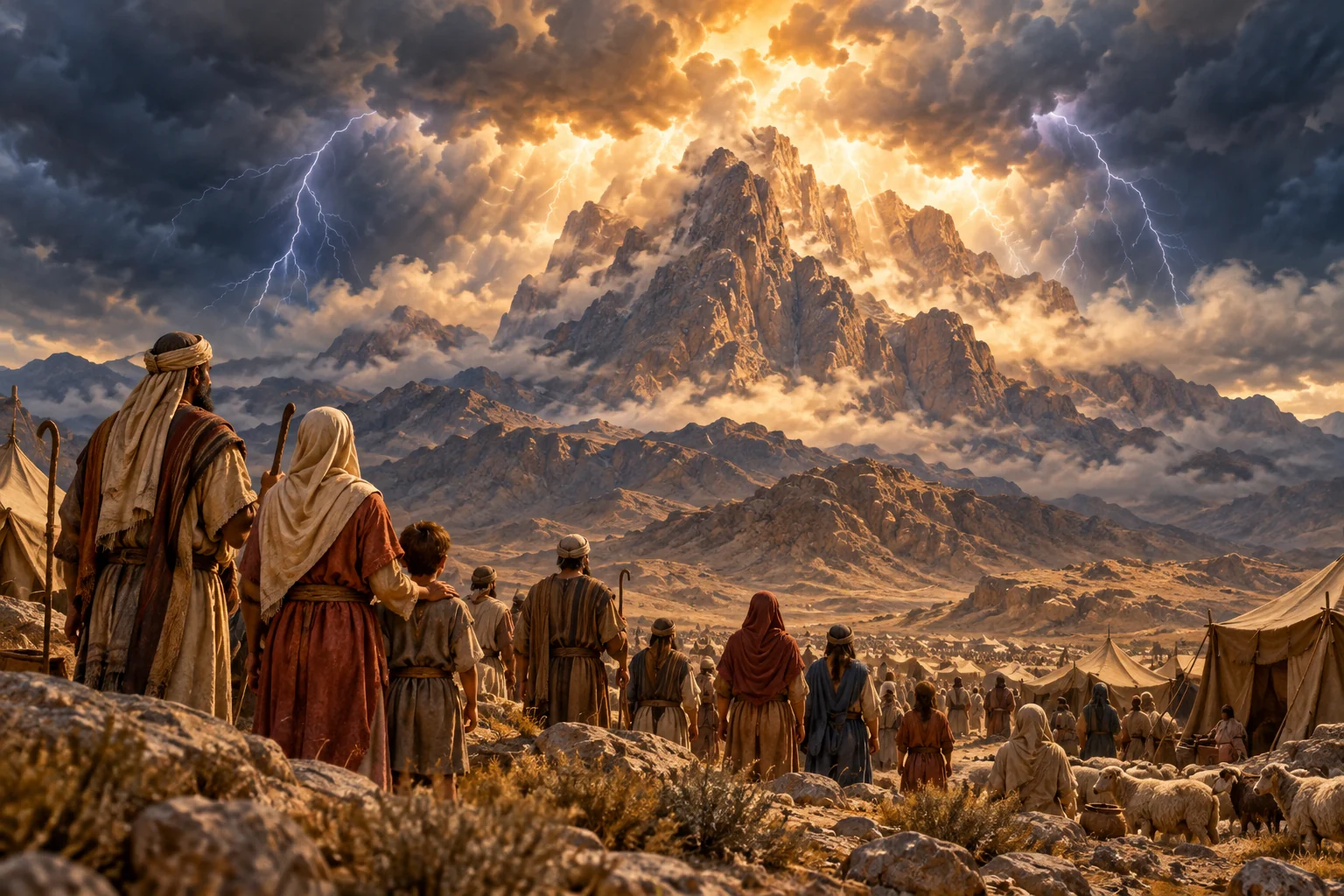
The Sinai encounter joins divine presence, holiness, mediation, and mission. Israel's treasured-possession status is read as a calling to mediate Abrahamic blessing, while the study traces royal priesthood and new-covenant renewal into the Messiah's multiethnic people.
Key Claims
- Israel arrives at Sinai after deliverance from Egypt.
- The divine speech recalls redemption before stating covenant obligation.
- Treasured possession and kingdom of priests describe a communal vocation.
- Consecration and boundaries underscore the holiness of the divine encounter.
- The commentary connects Sinai with new-covenant renewal without canceling Israel's calling.
Interpretive Context
The chapter is situated within the Abrahamic promise and Israel's journey from bondage to covenant formation. The study treats Sinai as vocational instruction rather than an autonomous works-based route to salvation.
The commentary also considers Jewish reception of the arrival chronology and the association of Sinai with Pentecost. Such reception is distinguished from the chapter's direct narrative claims.
Primary Textual Anchors
- Exodus 19:1–3 — arrival and Moses' mediating role.
- Exodus 19:4–6 — redemption, treasured possession, and royal priesthood.
- Exodus 19:7–15 — corporate response and consecration.
- Exodus 19:16–25 — theophany, holiness, and boundaries.
- Jeremiah 31:33; Ezekiel 36:26–27 — internalized instruction and renewal.
Scripture Connections
Exodus 3:12; 19:1–25; Genesis 12:1–3; Deuteronomy 32:8–9; Jeremiah 31:33; Ezekiel 36:26–27; Acts 2; 1 Peter 2:9; Romans 11.
Related Guides
- The Genesis 5 Genealogy within the Promise-Plan: A Biblical-Theological and Philological Critique
- Genesis 21: An Exegetical and Biblical-Theological Commentary
- The Hellenistic Matrix and the Word Made Greek
Continue on Substack
Read the complete article on Substack, with Watch and Listen resources where available.
Leave a Reply