ARTICLE GUIDE
At a Glance
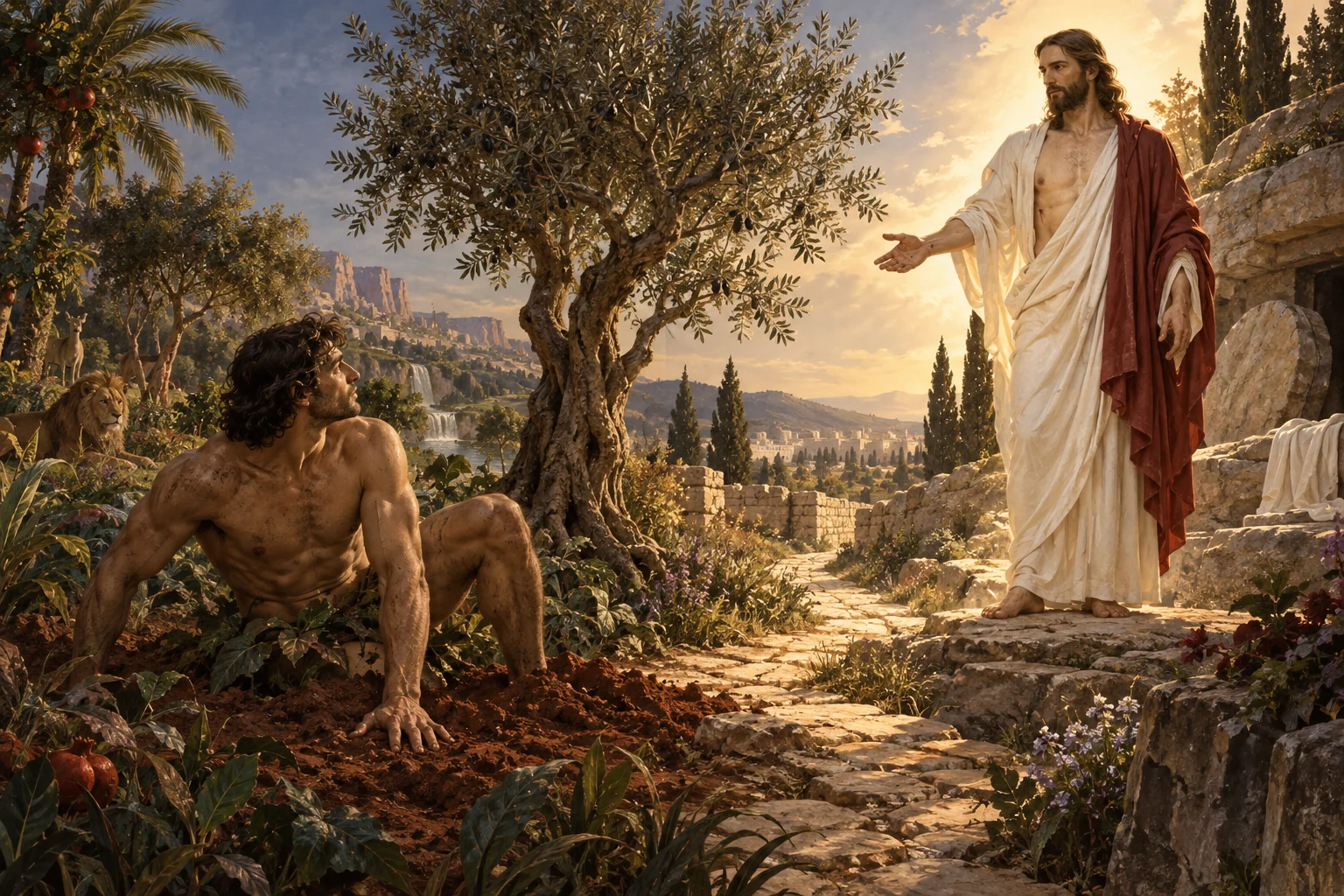
The question of theological anthropology—what it means to be human—cannot be answered by isolating either the creational prototype of Adam or the redemptive archetype of Christ. Read within Walter C. Kaiser Jr.’s promise-plan, the two horizons belong to one unfolding word.
Read moreShow less
What This Study Explores
Promise-Plan Theology • Christology • Theological Anthropology
How does Christ restore and transfigure the image of Adam?
Jesus is the true image of the invisible God and the faithful Last Adam who succeeds where the first human vocation failed. In him, image-bearing is revealed as embodied royal-priestly representation, covenant fidelity, and participation in God’s rule.
Salvation therefore includes more than pardon or disembodied survival. Union with Messiah conforms believers to his image, restores their communal vocation, and directs them toward bodily resurrection and service within renewed creation.
Key Claims
- Genesis presents humanity as living images installed to represent God’s rule in sacred space.
- Adam’s failure distorts vocation but does not erase humanity’s Creator-given dignity.
- The incarnation reveals perfect humanity without separating Christology from Israel’s covenantal story.
- The transfiguration anticipates resurrection glory and the transformation promised to Messiah’s people.
- Paul’s image language joins justification, sanctification, corporate formation, and eschatological embodiment.
Interpretive Context
The study distinguishes image as vocation and status from theories that reduce it to rational capacity, physical form, or an inner spiritual substance. Human faculties serve the calling but do not determine who qualifies as God’s image.
Within the promise-plan, the woman’s seed, Abrahamic blessing, Israel’s priestly vocation, Davidic kingship, and new-covenant renewal converge in the Last Adam. Gentile participation expands rather than replaces Israel’s story.
Selected Scholarship
- Carmen Joy Imes, Being God’s Image (2023).
- J. Richard Middleton, The Liberating Image (2005).
- N. T. Wright, The Resurrection of the Son of God (2003).
- G. K. Beale, The Temple and the Church’s Mission (2004).
- Walter C. Kaiser Jr., The Promise-Plan of God (2008).
Scripture Connections
Genesis 3:15; Romans 11; Genesis 1:26–28; Genesis 5:1–3; Genesis 9:6; Genesis 3; Genesis 6:1–4; Genesis 1
Continue on Substack
The complete article remains on Rabbit Room Apologetics at Substack.
Originally published August 26, 2026. This WordPress page is a discovery guide; the complete article is hosted on Substack.