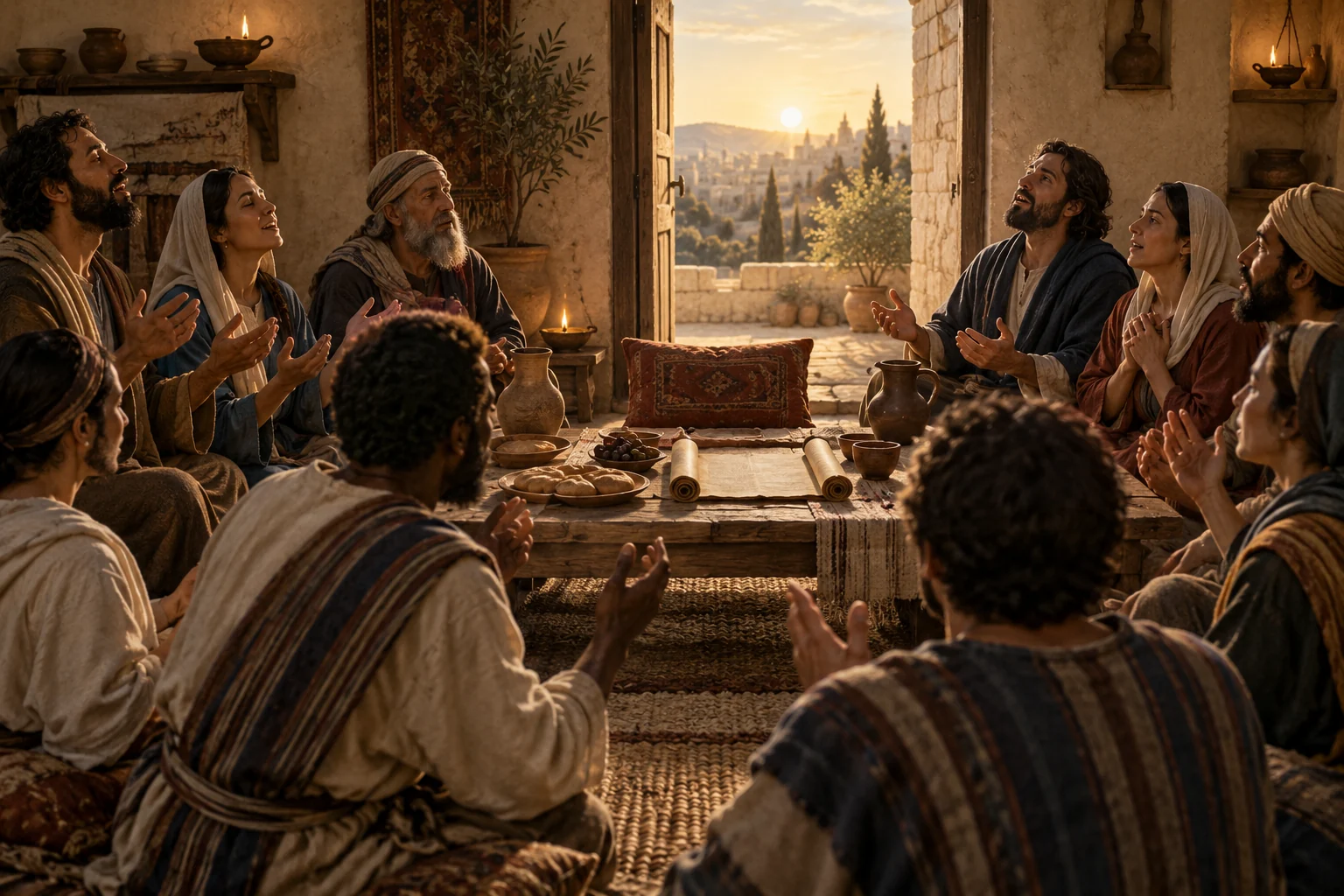
ARTICLE GUIDE
At a Glance
Contemporary Christology is characterized by a significant tension between historical orthodoxy and a wide range of critical re-evaluations. As traditional theological foundations face increasing scrutiny from both academic skepticism and alternative religious movements, clarifying the nature of early Christian devotion becomes essential.
Read moreShow less
What This Study Explores
Christology
Direct Answer: Why did Jewish followers of Jesus worship him without believing they had abandoned monotheism?
The earliest Christians did not ordinarily present Jesus as a second, competing deity. They identified him with God’s unique rule, name, saving deeds, and eschatological judgment while maintaining a real distinction between the Father and the Son. Devotion to Jesus was incorporated into the worship of the one God.
The case is cumulative: Jesus receives prayer, invocation, hymnic praise, baptismal confession, the divine name, creation and redemption language, and the heavenly throne. No single text bears the whole argument, but together these patterns show that high Christology belongs to the earliest Christian devotional grammar.
Key Claims
- New Testament writers distinguish Jesus from the Father while including him within God’s unique identity and rule.
- Jesus receives honors and cultic devotion that Jewish monotheism reserved for Israel’s God.
- Divine attributes, names, deeds, and enthronement reinforce the devotional evidence.
- Early Christ devotion emerged within Jewish monotheistic communities rather than through a simple abandonment of monotheism.
- The cumulative pattern is stronger than an argument resting on any isolated title or proof text.
Interpretive Context
Scholars debate how rapidly explicit Christology developed and whether some passages can be explained through exalted-agency categories. Jewish traditions did include principal angels, personified Wisdom, and authorized agents, so not every lofty description proves full divine identity by itself. The crucial question is the combined devotional and narrative pattern, while preserving the New Testament’s distinction between Father and Son.
The article’s HANDS-style cumulative case depends on convergence: Jesus receives prayer, invocation, confession, sacred remembrance, divine names and deeds, and the throne associated with God’s rule. These practices arise within Jewish communities still confessing the one God, so the argument is not that Father and Son are collapsed but that Jesus is included within the unique divine identity.
Selected Scholarship
- Robert M. Bowman Jr. and J. Ed Komoszewski, Putting Jesus in His Place — presents the Honors, Attributes, Names, Deeds, and Seat framework.
- Larry W. Hurtado, Lord Jesus Christ — documents the early emergence of Jesus-devotion within Jewish monotheism.
- Richard Bauckham, Jesus and the God of Israel — argues that Jesus is included in the unique divine identity.
- James F. McGrath, The Only True God — offers a critical alternative that tests claims about early Christian monotheism.
- James D. G. Dunn, Christology in the Making — a developmental account of early Christology that provides a major critical comparison for divine-identity arguments.
Scripture Connections
Matthew 14:33; Job 9:8; Acts 10:25–26; Matthew 28:9; Matthew 28:17; John 20:28; John 20:29; Romans 11
Continue on Substack
The complete article and its available video material remain on Rabbit Room Apologetics at Substack.
Originally published May 15, 2026. This WordPress page is a discovery guide; the complete article is hosted on Substack.