ARTICLE GUIDE
At a Glance
Modern Western Christianity often treats the weekly, uninterruptible monologue sermon as the primary and divinely ordained vehicle of congregational instruction. Historical, lexical, and contextual evidence does not support that assumption as a description of apostolic practice.
Read moreShow less
What This Study Explores
Biblical Theology • Canonical Interpretation • The Promise-Plan of God
Were Weekly Monologue Sermons Central to New Testament Assemblies?
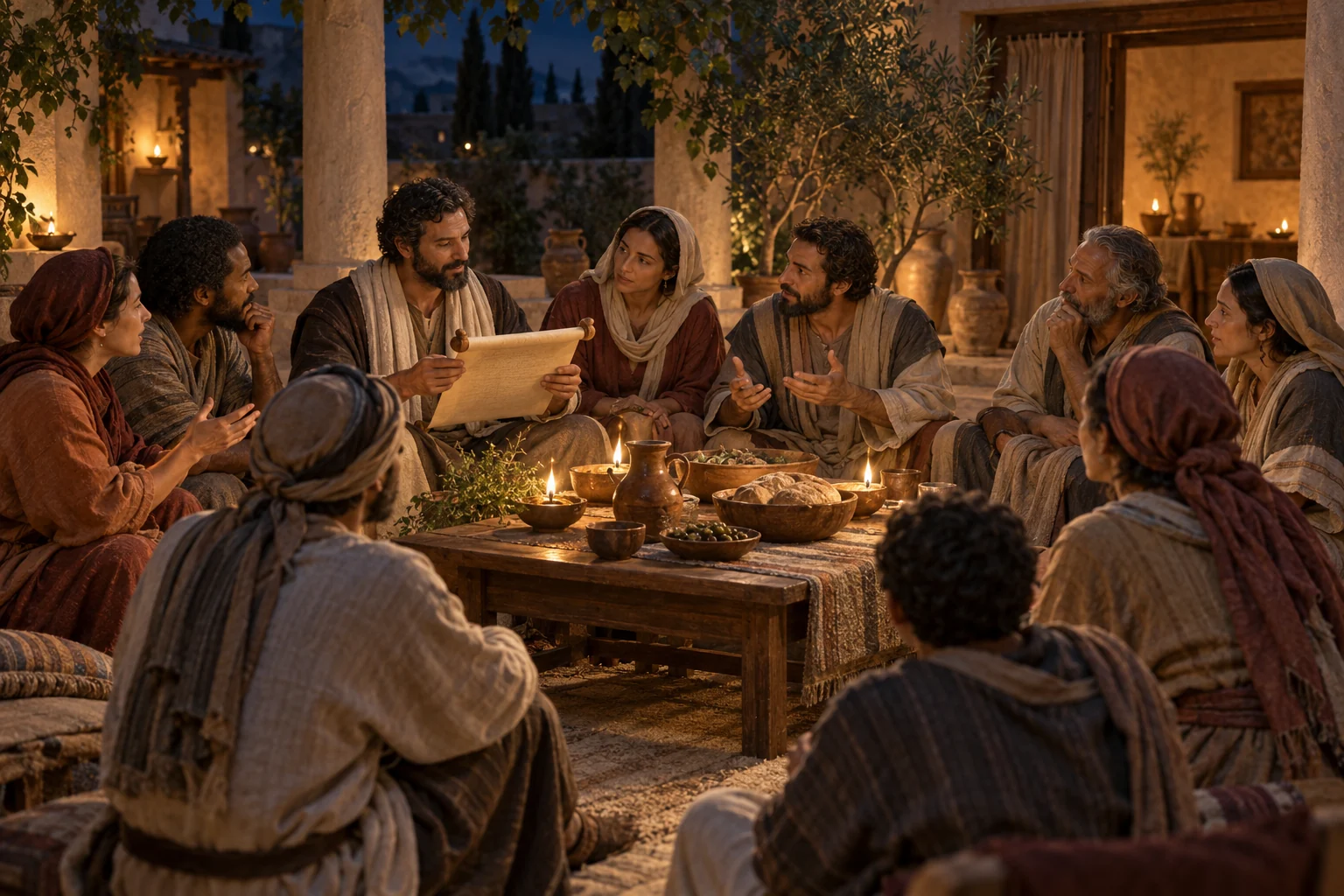
The New Testament preserves authoritative proclamation and sustained teaching, but it does not present the modern weekly, uninterrupted monologue as the single divinely mandated center of congregational life. Apostolic kerygma publicly announced the crucified and risen Messiah, while ongoing instruction within assemblies commonly involved reading, dialogue, questioning, exhortation, shared discernment, prayer, meals, and mutual participation.
Luke’s repeated use of dialegomai describes reasoning or discussion, and Acts 20 portrays Paul conversing with the gathered believers rather than merely delivering a modern-style sermon. This does not eliminate trained teachers or long discourse. It relocates teaching within a participatory ecology ordered toward formation, obedience, and the equipping of the whole body.
Key Claims
- Proclamation and congregational instruction are related but distinct. Kēryssō announces the gospel publicly, while didaskō forms those within the community.
- Dialogue is prominent in apostolic pedagogy. Dialegomai regularly names reciprocal scriptural reasoning in synagogues, public settings, and disciple gatherings.
- The synagogue supplied a reading-and-discussion inheritance. Early Jesus assemblies emerged from Jewish communal practices centered on Scripture and exposition.
- New Testament gatherings were multi-voiced. First Corinthians 14 expects several members to contribute under order and discernment.
- Reform concerns centrality, not abolition. Faithful sermons remain valuable when they serve a broader ecology of Scripture, table, prayer, dialogue, and mutual ministry.
Interpretive Context
The study distinguishes later meanings of “homily” from first-century homileō, examines Acts 20 and Pauline assembly instructions, and places early Christian gatherings within Second Temple synagogue practice. The Theodotus inscription provides important evidence for synagogues devoted to Torah reading and instruction.
The argument also traces the later architectural and rhetorical shift toward the basilica, elevated pulpit, and professional orator. Historical development is not automatically corruption, but inherited forms should be tested by whether they form active disciples rather than passive religious consumers.
Selected Scholarship
- Dunn, J. D. G. (2009). Beginning from Jerusalem. Eerdmans.
- Keener, C. S. (2014). Acts: An Exegetical Commentary, Vol. 3. Baker Academic.
- Levine, L. I. (2005). The Ancient Synagogue (2nd ed.). Yale University Press.
- Snyder, G. F. (2003). Ante Pacem (Rev. ed.). Mercer University Press.
- Witherington, B., III. (2006). Conflict and Community in Corinth. Eerdmans.
Scripture Connections
Acts 15; 1 Corinthians 14; Acts 2; Acts 13; Acts 8; Titus 1; Acts 20; Luke 24
Continue on Substack
The complete article remains on Rabbit Room Apologetics at Substack.
Originally published September 9, 2026. This WordPress page is a discovery guide; the complete article is hosted on Substack.