ARTICLE GUIDE
At a Glance
For generations, Western systematic theology has flattened the concluding poem of Proverbs 31 into a domestic moral ‘checklist’ for submissive wives. However, when we step back into the ancient Hebraic cognitive environment and Second Temple Jewish interpretive horizons, the text reveals a highly structured, alphabetic acrostic that acts as the theological and literary climax of the entire Book of Proverbs.
Read moreShow less
What This Study Explores
Second Temple Judaism
Direct Answer: Is the woman of Proverbs 31 merely a checklist for a submissive domestic wife?
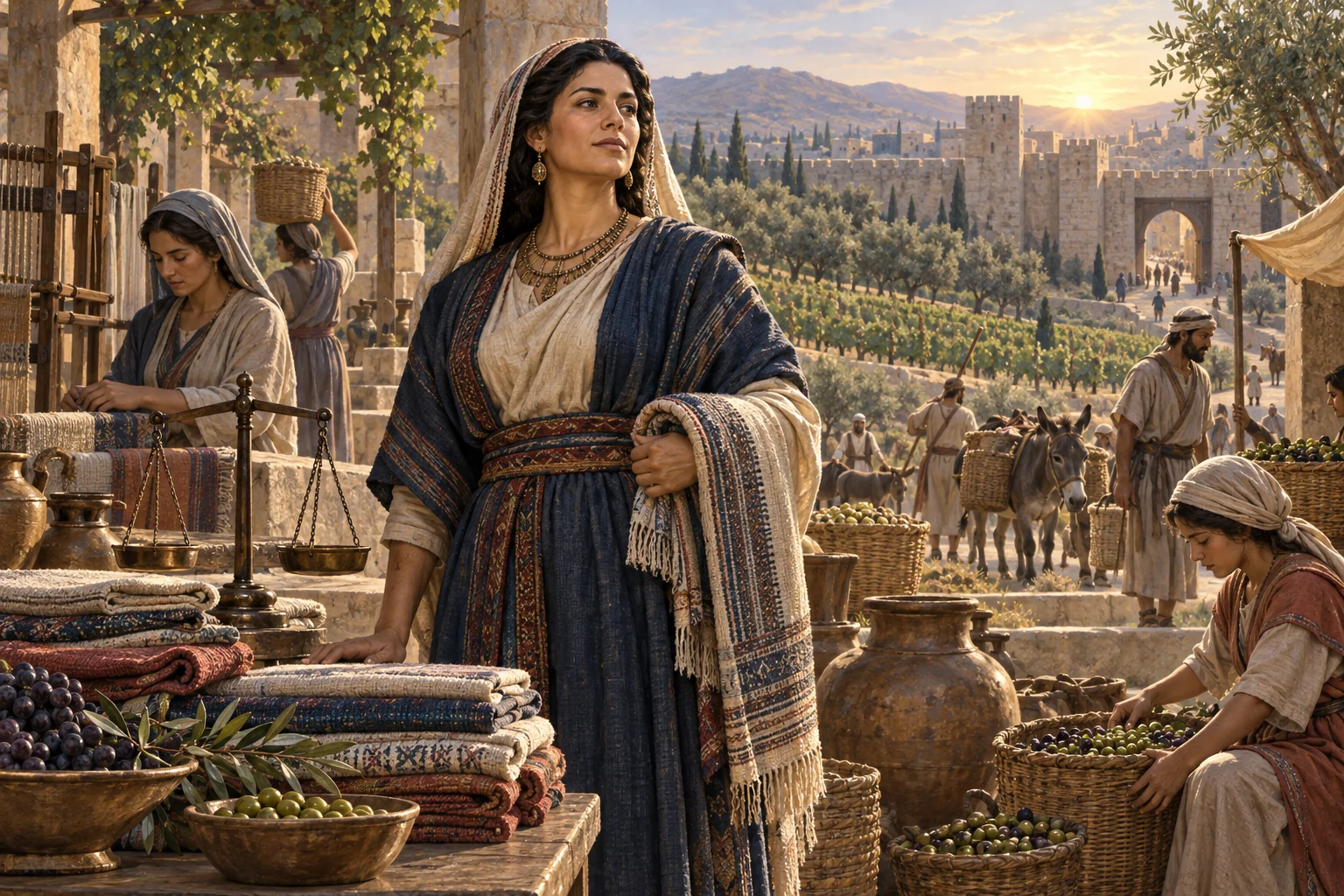
No. The Hebrew ’eshet chayil denotes a woman of strength, capability, substance, and valor. The poem depicts a public, economically competent household leader who acquires land, organizes production and trade, provides for dependents, serves the poor, teaches wisdom, and prepares her household for the future.
As an alphabetic acrostic at the conclusion of Proverbs, she embodies the wisdom celebrated throughout the book. The portrait is therefore theological and vocational before it is a restrictive marital checklist: wisdom takes visible form in courageous, skillful stewardship ordered by the fear of Yahweh.
Key Claims
- Chayil carries a semantic range including strength, capability, wealth, and valor rather than passive niceness.
- The twenty-two-line acrostic presents a comprehensive or A-to-Z portrait of embodied wisdom.
- Verbal links connect the woman of Proverbs 31 with Lady Wisdom in Proverbs 1–9.
- Her work crosses domestic, agricultural, commercial, charitable, and instructional spheres.
- The poem’s explicit criterion of praise is fear of Yahweh, not appearance or conformity to a narrow modern gender script.
Interpretive Context
“Warrior woman” usefully restores the vigor of chayil, but the phrase should not be reduced to literal combat. The poem idealizes wise agency within an ancient household economy and can guide contemporary application without turning every activity into a universal requirement for every woman.
The acrostic form presents a comprehensive portrait of wisdom embodied rather than a schedule imposed on every woman. Lexical and thematic links to Lady Wisdom integrate commerce, land, household administration, generosity, teaching, and fear of Yahweh within one vocation. Contemporary application should therefore honor diverse callings and circumstances while recovering the poem’s challenge to cultural assumptions that restrict female strength, public agency, or theological instruction.
Selected Scholarship
- Bruce K. Waltke, The Book of Proverbs, Chapters 15–31 (2005).
- Michael V. Fox, Proverbs 10–31 (2009).
- Carol A. Newsom, The Book of Proverbs (2012).
- Claudia V. Camp, Wisdom and the Feminine in the Book of Proverbs (1985).
- Carmen Joy Imes, Being God’s Image (2023).
Scripture Connections
Proverbs 31:10; Proverbs 31; Proverbs 3:15; Genesis 1:26–28; Proverbs 31:26; Jeremiah 31:33; Ezekiel 36:26–27; Genesis 3
Continue on Substack
The complete article remains on Rabbit Room Apologetics at Substack.
Originally published July 6, 2026. This WordPress page is a discovery guide; the complete article is hosted on Substack.