ARTICLE GUIDE
At a Glance
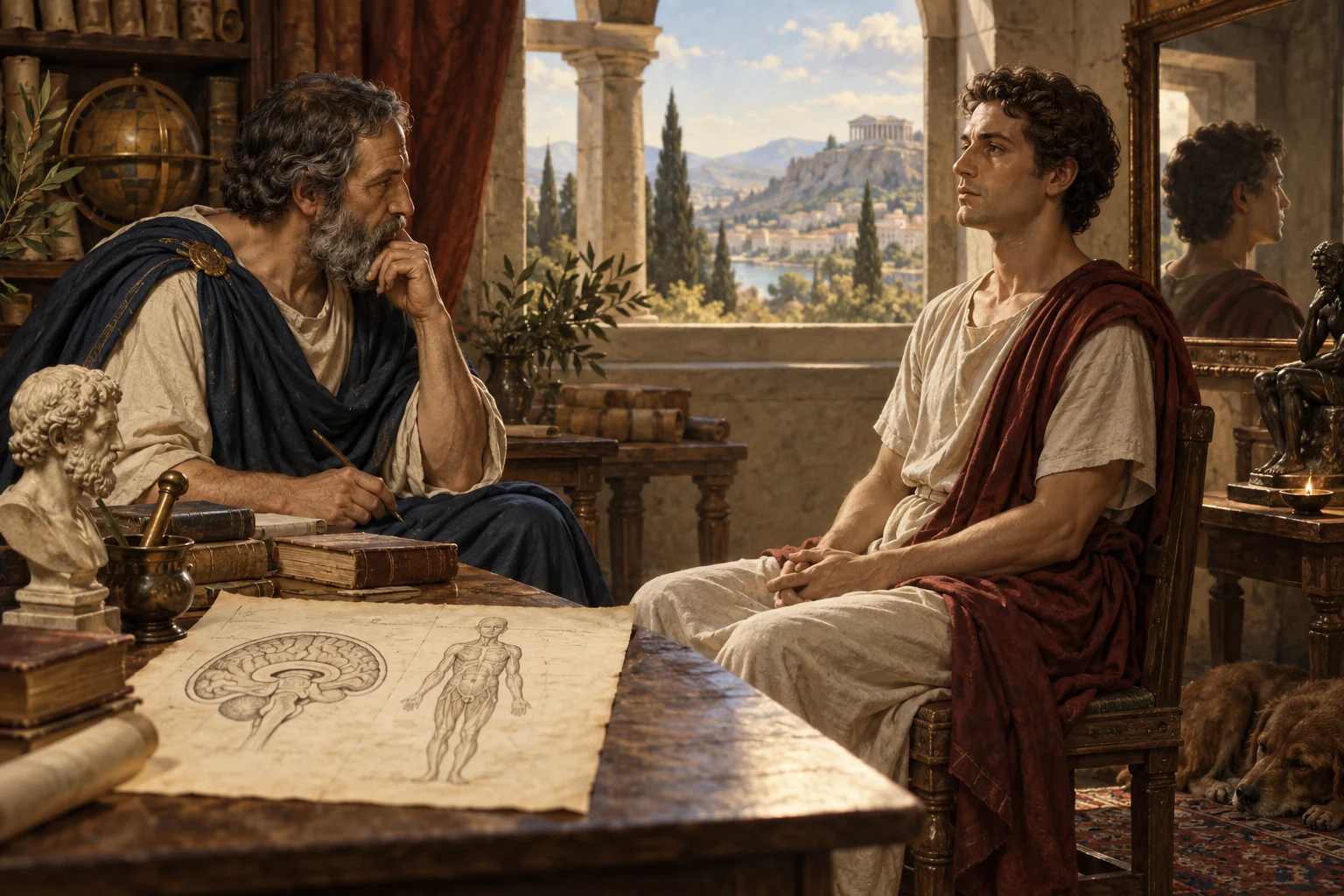
This essay defends generic, holistic substance dualism—the claim that the human person is an integrated compound of an immaterial soul and a material body—against reductive materialism, nonreductive physicalism, and a post-biblical Hellenistic dualism that treats the body as a prison.
Read moreShow less
What This Study Explores
Promise-Plan Theology
Does biblical anthropology require the mind to be identical with the brain?
The article argues that neuroscience establishes deep dependence between mental life and brain function but does not prove identity. Correlation, impairment, and neural mediation are compatible with a substantial soul that normally expresses personal agency through the embodied brain.
A biblical account is neither Platonic contempt for the body nor reductive physicalism. Human beings are embodied souls whose intermediate existence is incomplete and whose final hope is bodily resurrection in renewed creation.
Key Claims
- First-person consciousness, intentionality, rational inference, and unified subjectivity resist reduction to third-person neural description.
- Brain injury can alter expression and capacity without demonstrating that the person is nothing more than the damaged organ.
- Scripture distinguishes body and soul while normally treating the human person as an integrated unity.
- The intermediate state affirms continued personal existence but is not the goal of salvation.
- Resurrection restores embodied human vocation and preserves identity through divine faithfulness.
Interpretive Context
Philosophical arguments from consciousness and reason are offered as cumulative inferences rather than laboratory proofs. Substance dualism must remain accountable to neuroscience and avoid imagining the soul as the complete human person apart from the body.
Within the promise-plan, creation, incarnation, bodily resurrection, and New Jerusalem establish matter’s goodness. The soul’s survival secures continuity, while resurrection completes the royal-priestly vocation for which humanity was made.
Selected Scholarship
- J. P. Moreland, The Soul (2014).
- Richard Swinburne, Mind, Brain, and Free Will (2013).
- John W. Cooper, Body, Soul, and Life Everlasting (2nd ed., 2000).
- Stewart Goetz and Charles Taliaferro, A Brief History of the Soul (2011).
- Nancey Murphy, Bodies and Souls, or Spirited Bodies? (2006).
Scripture Connections
Genesis 1; 1 Corinthians 15; Genesis 3:15; Jeremiah 31; Ezekiel 36; Romans 11; Luke 1:32–33; Luke 24:39
Continue on Substack
The complete article remains on Rabbit Room Apologetics at Substack.
Originally published August 27, 2026. This WordPress page is a discovery guide; the complete article is hosted on Substack.