ARTICLE GUIDE
At a Glance
This essay offers a historical-critical examination of the traditional claim that the Qurʾan has been preserved letter for letter from the seventh century to the present. Drawing on paleography, codicology, and the history of the qirāʾāt, it argues that the available evidence does not sustain a doctrine of pristine, physically unaltered transmission.
Read moreShow less
What This Study Explores
Promise-Plan Theology • Qur’anic Studies
Does the Manuscript Evidence Support Perfect Letter-for-Letter Qurʾānic Preservation?
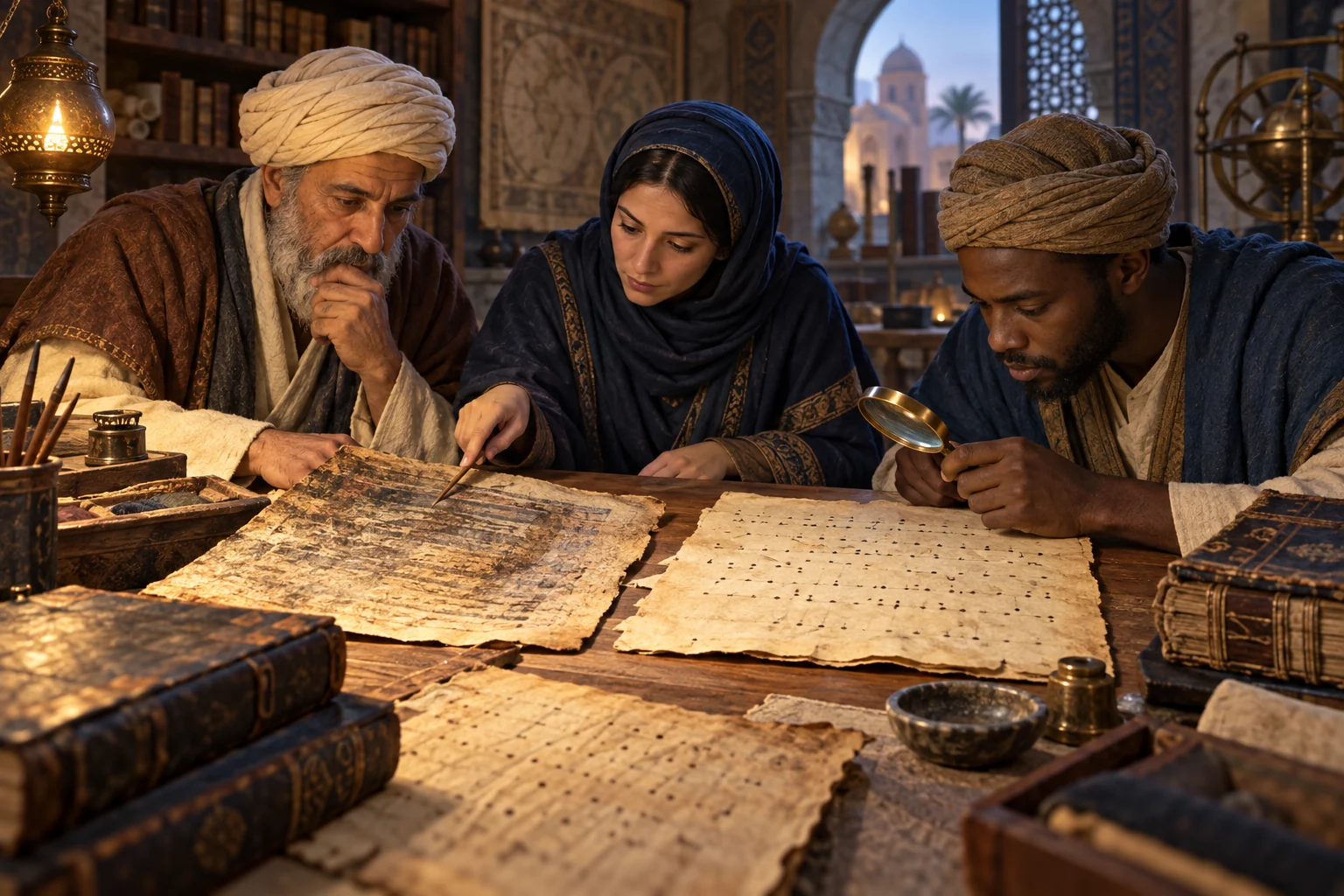
The evidence supports an early and influential ʿUthmānic consonantal profile, but it does not support the stronger popular claim that every letter, vowel, and reading has remained physically uniform from the seventh century to the present. Early Arabic rasm frequently lacked the dots and vowel signs needed to determine a single reading; companion traditions record differences; manuscripts show corrections; and the canonical qirāʾāt preserve regulated plurality.
Modern uniformity also reflects technological and institutional standardization, especially the 1924 Cairo edition based on the Ḥafṣ ʿan ʿĀṣim reading. Historical precision requires avoiding both extremes: the Qurʾān was not simply invented centuries later, yet the oldest consonantal witnesses are not identical to the fully vocalized, single-reading printed text commonly treated as the original form.
Key Claims
- An early consonantal archetype is historically plausible. Oldest witnesses substantially support an early ʿUthmānic textual family.
- Rasm is not a complete vocalized text. Defective orthography allowed more than one grammatical and semantic realization.
- Canonical readings preserve genuine plurality. Qirāʾāt cannot be reduced to accent or pronunciation alone.
- Physical manuscripts were corrected. Erasures, additions, overwriting, and scribal repairs complicate pristine-copy claims.
- Print culture created new uniformity. Cairo 1924 privileged one reading and helped globalize its visual form.
Interpretive Context
The evidence supports an early and widely shared ʿUthmānic consonantal archetype more readily than either a ninth-century invention or perfect identity at every graphic and oral level. Carbon dating concerns parchment rather than the moment of inscription, while corrections, companion reports, the Ṣanʿāʾ lower text, and canonical readings must be classified separately; none alone establishes total instability, but together they qualify maximalist preservation claims.
The appraisal draws on paleography, codicology, the Ṣanʿāʾ palimpsest, reports of companion codices, manuscript corrections, and the history of reading traditions. Revisionist late-canon theories and popular claims of absolute sameness are both tested against the material record. The theological comparison distinguishes Islamic inlibration—revelation centered in an uncreated Arabic book—from biblical incarnation and promise-plan revelation, where textual transparency can coexist with documented manuscript variation.
Selected Scholarship
- Brubaker, D. (2019). Corrections in Early Qurʾānic Manuscripts.
- Déroche, F. (2014). Qurʾans of the Umayyads; Déroche (2022), related manuscript studies.
- Jeffery, A. (1937). Materials for the History of the Text of the Qurʾān.
- Sinai, N. (2017). The Qurʾan: A Historical-Critical Introduction.
- Sadeghi, B., & Goudarzi, M. Studies of the Ṣanʿāʾ palimpsest.
Scripture Connections
Genesis 3; Jeremiah 31; Ezekiel 36; John 1; Genesis 4; 1 John 1; Acts 17
Continue on Substack
The complete article and its available video material remain on Rabbit Room Apologetics at Substack.
Originally published August 18, 2026. This WordPress page is a discovery guide; the complete article is hosted on Substack.