ARTICLE GUIDE
At a Glance
Contemporary Christian ethics faces the persistent challenges of fragmented legalism and culturally accommodated liberalism. The Enlightenment-inspired effort to base ethics on universal, autonomous human reason has failed, resulting in a moral discourse characterized by disconnected fragments devoid of their original teleological significance.
Read moreShow less
What This Study Explores
Kingdom Ethics
Direct Answer: How can a prophetic grid guide Christian ethics without overriding the rest of Scripture?
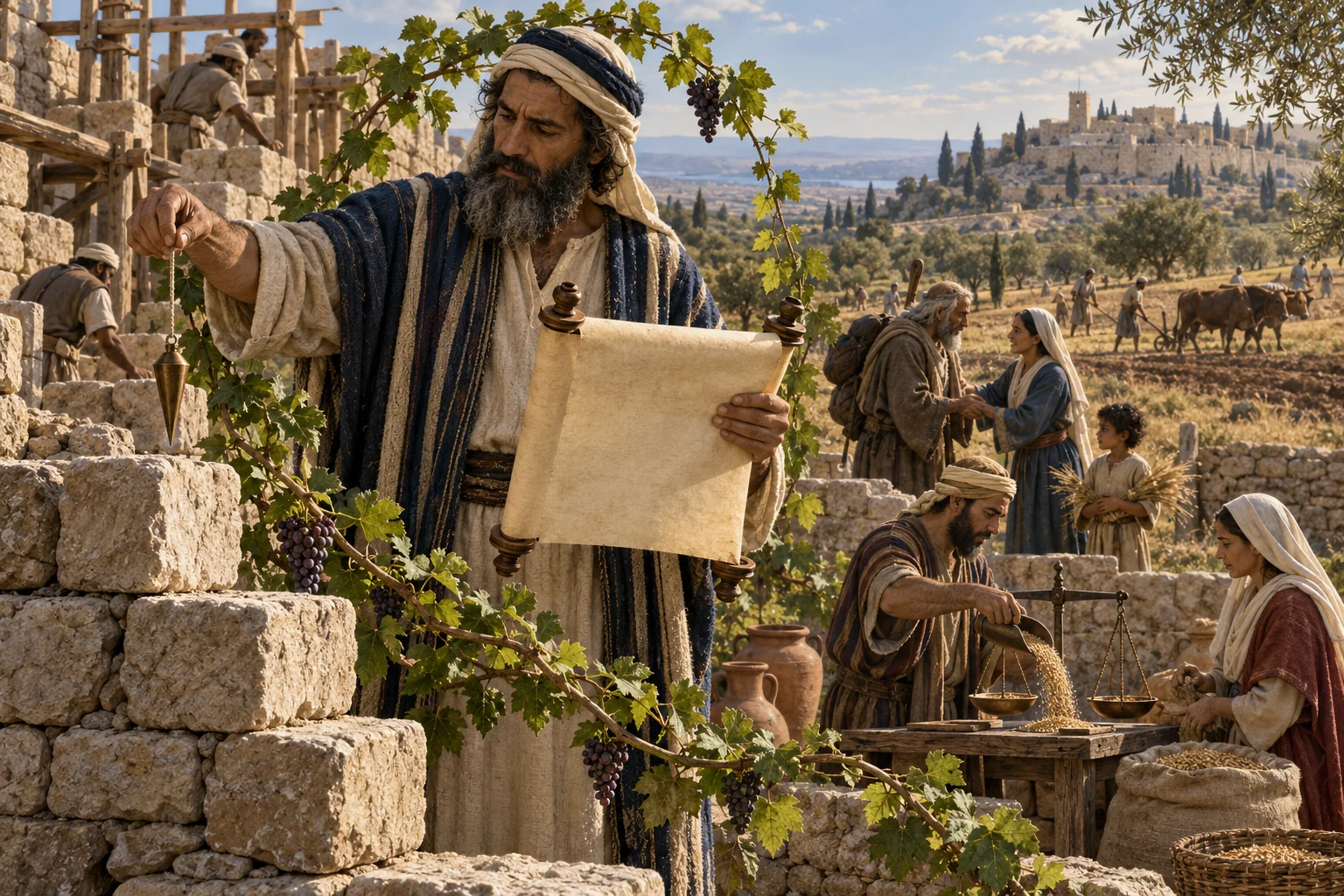
A prophetic grid reads commands through the priorities Scripture itself emphasizes: covenant faithfulness expressed in justice, mercy, love of God, and love of neighbor. Jesus’ “weightier matters” identify moral center and proportion, not a license to discard inconvenient texts.
The whole canon then supplies the historical and redemptive setting of each command. Christian ethics asks how a law functions in Israel’s covenant, how prophets and wisdom interpret it, how Christ fulfills and authoritatively teaches it, and how the apostles apply it to the new-covenant community.
Key Claims
- Jesus and the prophets expose religious observance that neglects justice, mercy, faithfulness, and neighbor-love.
- Moral priorities order biblical commands without making the remainder of Scripture irrelevant.
- Individual laws must be read within covenant, genre, historical setting, and the canon’s progressive development.
- Christ is the culmination and authoritative interpreter of the promise-plan, not a rival to Israel’s Scriptures.
- Christian ethics resists both fragmented proof-texting and accommodation to contemporary preference.
Interpretive Context
The distinction between moral, civil, and ceremonial law can be useful, but the Torah itself does not always divide its commands into those later categories. Prophetic critique ordinarily calls Israel back to faithful worship rather than opposing ethics to cult. Debates about continuity and discontinuity therefore require patient textual argument, especially when moving from Israel’s national covenant to the multinational church.
The prophetic grid orders rather than abolishes biblical instruction: justice, mercy, faithfulness, and love expose ritual practice severed from covenant loyalty. Joined to the promise-plan, Jesus’ teaching becomes the authoritative maturation of Israel’s Scriptures, guiding communities to discern continuity, transformation, and Spirit-enabled obedience without flattening Torah into either timeless rules or obsolete ceremony.
Selected Scholarship
- David P. Gushee and Glen H. Stassen, Kingdom Ethics — develops a Jesus-centered framework for moral formation.
- Christopher J. H. Wright, Old Testament Ethics for the People of God — reads Israel’s law within its theological and social world.
- Walter C. Kaiser Jr., Toward Old Testament Ethics — argues for moral coherence across the Old Testament.
- Richard B. Hays, The Moral Vision of the New Testament — models synthetic, canonical moral reasoning.
- Alasdair MacIntyre, After Virtue — the collapse of shared moral ends in modernity and the importance of tradition-shaped practices for moral coherence.
Scripture Connections
Matthew 5:17–20; Amos 5:21–24; Amos 5:24; Mark 12:33–34; Matthew 23:23; Leviticus 19; Leviticus 19:9–10; Deuteronomy 24:17–22
Continue on Substack
The complete article and its available video material remain on Rabbit Room Apologetics at Substack.
Originally published May 16, 2026. This WordPress page is a discovery guide; the complete article is hosted on Substack.