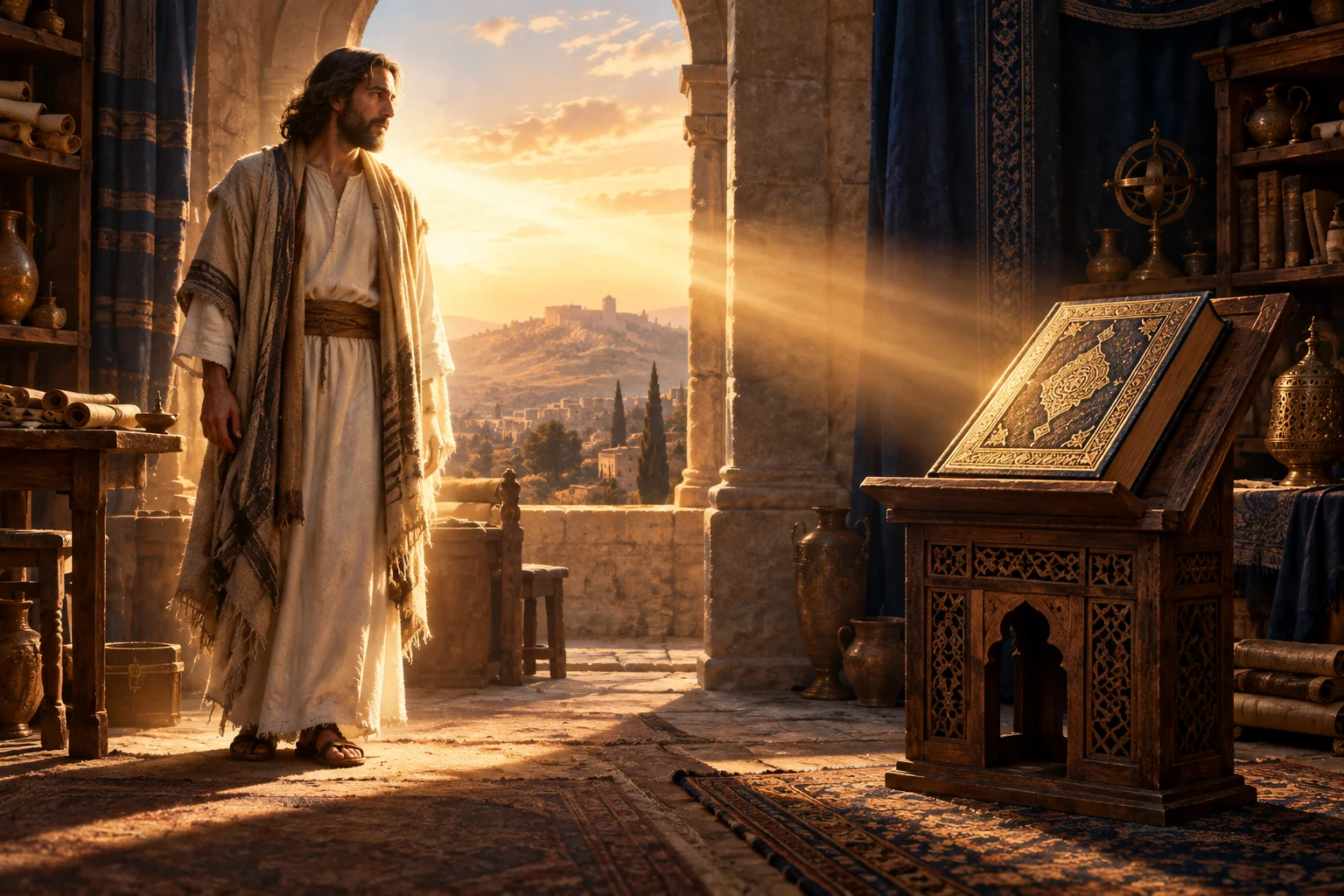
ARTICLE GUIDE
At a Glance
This study contrasts Islamic inlibration with biblical incarnation and examines Jesus as Kalimatuhū, the Miḥna, Johannine Logos theology, and the Islamic Dilemma.
What This Study Explores
The article places Qurʾān 3:45 and 4:171 in conversation with classical tafsīr, the Abbasid Miḥna, the Jewish background of John 1, the textual history of Scripture, and the promise-plan from Genesis to Romans 11.
How Do Incarnation and Inlibration Differ?
The primary difference is the location of definitive revelation. Classical Islamic theology centers revelation in divine speech made book: the Qurʾān as the inlibrated Word. Biblical theology centers revelation in the eternal Word made flesh. Scripture is the inspired historical witness to God’s covenant acts and to Jesus Messiah, not a celestial codex mechanically deposited into history.
The Qurʾān uniquely calls Jesus a Word from God, while its majority interpreters explain the title through the creative command “Be.” That interpretation protects Islamic monotheism but leaves a question: if every creature exists by divine command, why does Jesus receive the personal title? The later Sunni insistence that God’s speech is uncreated sharpens this tension without proving that the Qurʾān teaches Nicene Christology.
Key Claims
- Incarnation and inlibration are different revelatory models. Christianity locates God’s supreme self-disclosure in a person; Islam locates it in a book.
- Jesus’ Qurʾānic title creates an internal bridge. Kalimatuhū has a unique personal application that the universal command kun does not fully explain.
- The Miḥna exposes a structural tension. Islamic debate over uncreated divine speech recognized implications similar to Christian claims about the Word.
- John’s Logos belongs within Israel’s Scriptures. Divine dabar, Targumic Memra, tabernacle imagery, and Daniel 7 illuminate John 1 without replacing the canon.
- The Islamic Dilemma is text-immanent. Qurʾānic confirmation of prior Scripture presses against later claims of wholesale textual corruption.
Interpretive Context
The argument distinguishes logical pressure from proof-texting. Kalām and kalima are not identical lexemes, and Ashʿarī theology distinguishes eternal speech from temporal recitation. Likewise, Targumic material illuminates a Jewish cognitive environment but is not treated as an authority alongside Scripture.
Historical criticism must be applied symmetrically. Biblical manuscript plurality does not defeat a dual-authored, historically mediated model of inspiration; Qurʾānic rasm, readings, and early variants challenge only simplistic claims of letter-perfect mechanical transmission. The Christian alternative remains the living Word who enters history, bears suffering, and accomplishes the promise.
Selected Scholarship
- Tanagho, S. (2017). Glad News! God Loves You, My Muslim Friend.
- Wolfson, H. A. (1976). The Philosophy of the Kalam.
- Griffith, S. H. (2008). The Bible in Arabic.
- Bauckham, R. (2008). Jesus and the God of Israel.
- Nickel, G. (2011). Narratives of Tampering in the Earliest Commentaries on the Qurʾān.
Scripture Connections
Genesis 3:15; Psalm 33:6; 107:20; Isaiah 55:10–11; Daniel 7:13–14; John 1:1–18; 8:58; 10:11–18; Mark 2:5–12; 4:35–41; Hebrews 1:1–3; Colossians 1:15–17; Romans 11:17–29
Continue on Substack
The complete article remains on Rabbit Room Apologetics at Substack.
Originally published September 23, 2026. This WordPress page is a discovery guide; the complete article is hosted on Substack.
Leave a Reply