ARTICLE GUIDE
At a Glance
Contemporary New Testament scholarship remains divided over the nature and boundaries of early Christian devotion. Many interpreters, shaped by post-Enlightenment rationalism and Hellenistic philosophical categories, struggle to explain how the earliest Jewish followers of Jesus maintained strict monotheism while extending unprecedented devotion to the crucified and risen Messiah.
Read moreShow less
What This Study Explores
Promise-Plan Theology
Direct Answer: Why is early Christian prayer to Jesus evidence for a high Christology?
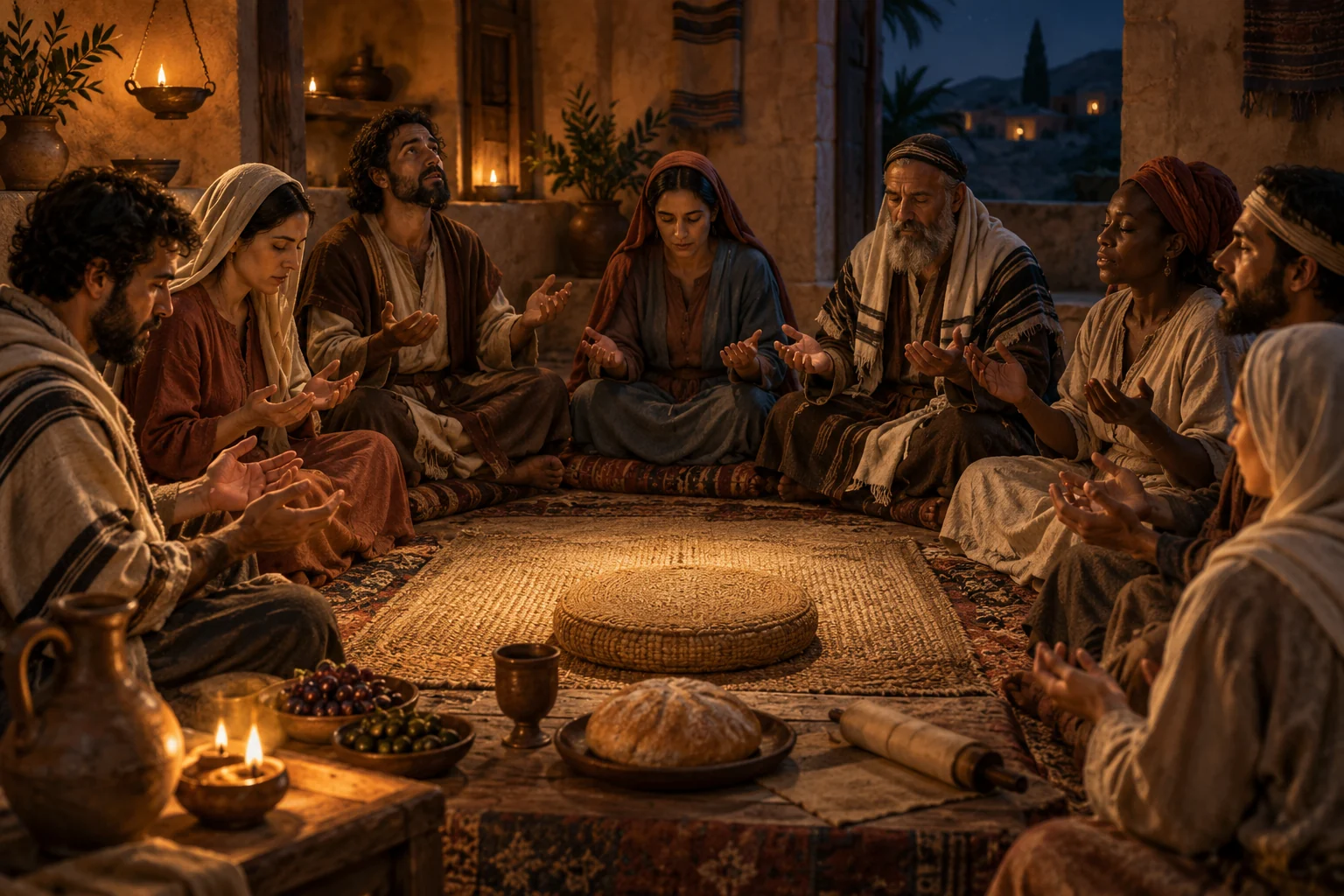
Within Jewish monotheistic practice, prayer and cultic invocation belong uniquely to Israel’s God. When the earliest believers call upon Jesus, appeal to him in distress, invoke his name in baptism and assembly, and coordinate him with the Father in blessing, they place him within the devotional life reserved for Yahweh.
This is not merely admiration for an exalted agent. The pattern appears early and within Jewish communities, indicating that devotion to Jesus grew from convictions about resurrection, scriptural fulfillment, and divine identity rather than from a late pagan transformation.
Key Claims
- The Hebrew Scriptures sharply distinguish prayer to Yahweh from illicit devotion to created powers.
- Early Christian assemblies are characterized as those who call upon the name of Jesus Christ.
- New Testament prayers, doxologies, benedictions, hymns, and invocations coordinate Jesus with God in worship.
- The Aramaic appeal Maranatha witnesses to early prayer directed toward the returning Lord.
- Devotional practice supplies historical evidence that high Christology was embodied before later conciliar formulation.
Interpretive Context
Individual prayer texts can be grammatically debated, so the argument is cumulative rather than dependent upon one verse. Jewish intermediary traditions offer background categories, but the sustained corporate devotion given to Jesus requires explanation within the boundaries of Second Temple monotheism.
This devotional pattern neither adds a second deity beside Yahweh nor treats Jesus as a replaceable intermediary. The earliest assemblies reread Israel’s scriptural language of the divine name, presence, throne, and saving invocation around the risen Son, producing a christologically differentiated monotheism in which prayer to Jesus participates in honoring the one God.
Selected Scholarship
- Larry W. Hurtado, Lord Jesus Christ (2003).
- Richard Bauckham, Jesus and the God of Israel (2008).
- Robert M. Bowman Jr. and J. Ed Komoszewski, Putting Jesus in His Place (2007).
- Gordon D. Fee, Pauline Christology (2007).
- Robert M. Bowman Jr. and J. Ed Komoszewski, The Incarnate Christ and His Critics (2024).
Scripture Connections
Joel 2:32; Romans 10:9–13; 1 Corinthians 1:2; Acts 9:14; Acts 7:59–60; Luke 23:34; 2 Corinthians 12:8–9; John 14:14
Continue on Substack
The complete article and its available video material remain on Rabbit Room Apologetics at Substack.
Originally published June 11, 2026. This WordPress page is a discovery guide; the complete article is hosted on Substack.