ARTICLE GUIDE
At a Glance
The historical validity of Christian theology rests upon verifiable occurrences within the space-time continuum, most foundational among which are the physical existence, earthly ministry, and Roman execution of Jesus of Nazareth.
Read moreShow less
What This Study Explores
Promise-Plan Theology • Historical Method
What can secular and hostile sources establish about the historical Jesus?
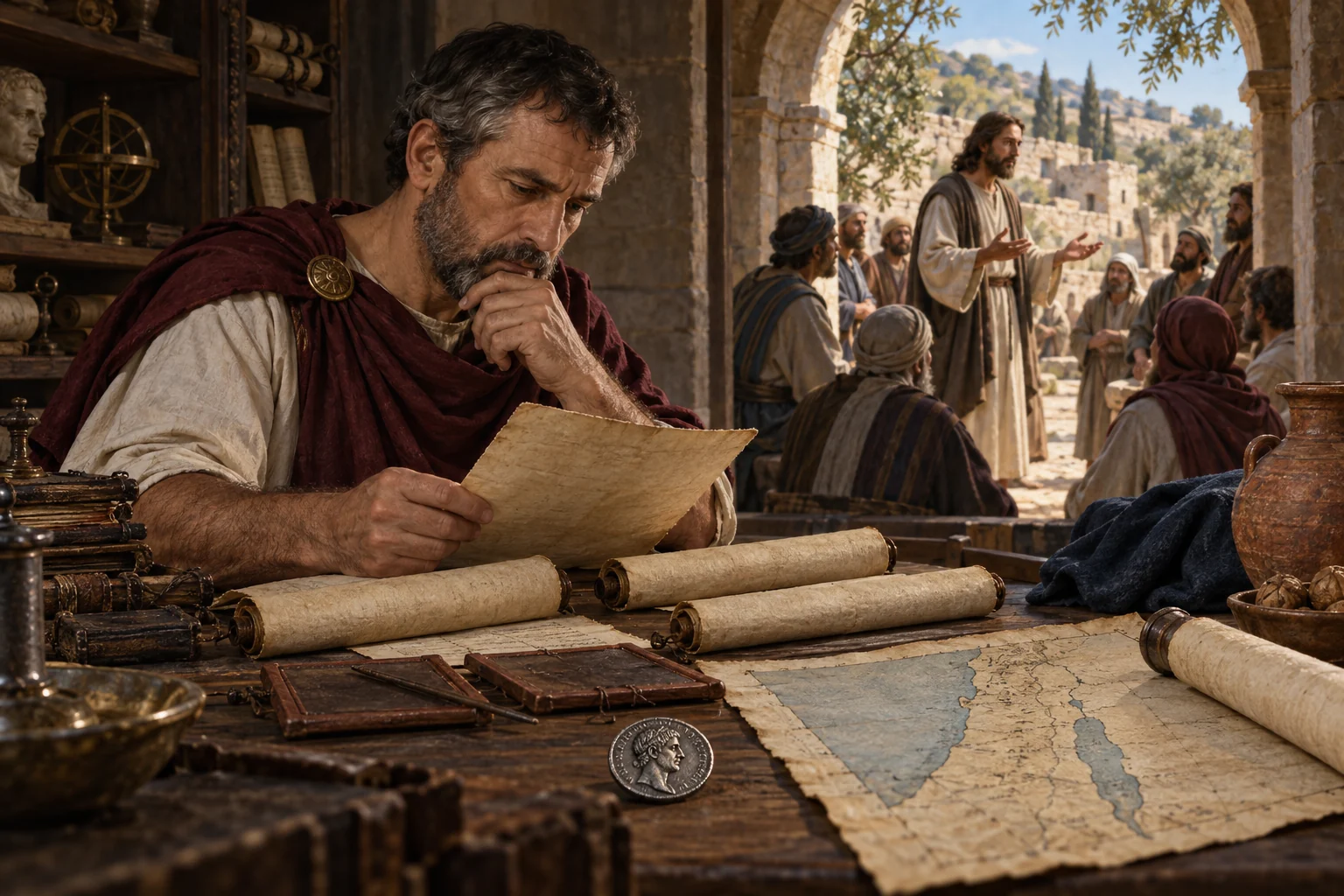
Non-Christian writers independently locate Jesus and the early movement within first-century Judea and the Roman world. Josephus, Tacitus, Pliny, Suetonius, Lucian, and related witnesses corroborate selected public facts without sharing Christian theological commitments.
These sources do not prove every Gospel episode or the resurrection. Their value is cumulative: they make a wholly mythical or purely late literary Jesus historically implausible and confirm the space-time setting in which the canonical claims must be assessed.
Key Claims
- Josephus identifies James as the brother of Jesus called Christ and preserves a disputed but recoverable notice about Jesus.
- Tacitus places Christus’s execution under Pontius Pilate during Tiberius’s reign.
- Pliny documents early worship of Christ as divine and disciplined communal ethics.
- Suetonius and other witnesses attest early conflict and rapid geographic spread of the movement.
- Hostile and neutral testimony is strongest when combined with early Christian sources and archaeological context.
Interpretive Context
Ancient sources must be weighed by date, dependence, genre, bias, and textual transmission. Hostility does not automatically guarantee accuracy, and later testimony may confirm reception rather than supply independent access to Jesus.
The promise-plan insists on public history: Israel’s Messiah appears under known rulers, is crucified in Roman Judea, and is proclaimed within living memory. External corroboration supports but does not replace the canonical witness.
Selected Scholarship
- John P. Meier, A Marginal Jew, Volume 1 (1991).
- Craig A. Evans, Jesus and His World (2012).
- Robert E. Van Voorst, Jesus Outside the New Testament (2000).
- Paul R. Eddy and Gregory A. Boyd, The Jesus Legend (2007).
- N. T. Wright, Jesus and the Victory of God (1996).
Scripture Connections
Romans 11; Genesis 3:15; Jeremiah 31:31–34; Ezekiel 36:24–28; Acts 18:2; 1 Corinthians 15:3–8; John 10:37–38; 1 Corinthians 15:14–19
Continue on Substack
The complete article remains on Rabbit Room Apologetics at Substack.
Originally published August 25, 2026. This WordPress page is a discovery guide; the complete article is hosted on Substack.