ARTICLE GUIDE
At a Glance
This article contends that the “grammar” of early Christian devotion—its structure of worship, honor, and exclusive address—demonstrates that the earliest believers included Jesus within Yahweh’s unique identity. Rather than presenting Jesus as a second deity or merely an exalted intermediary, early Jewish Christians identified Him as the incarnate Son who shares the Creator’s throne, name, and exclusive worthiness of worship.
Read moreShow less
What This Study Explores
Biblical Theology • Canonical Interpretation • The Promise-Plan of God
Direct Answer: What pattern of devotion shows that the earliest Christians treated Jesus as divine?
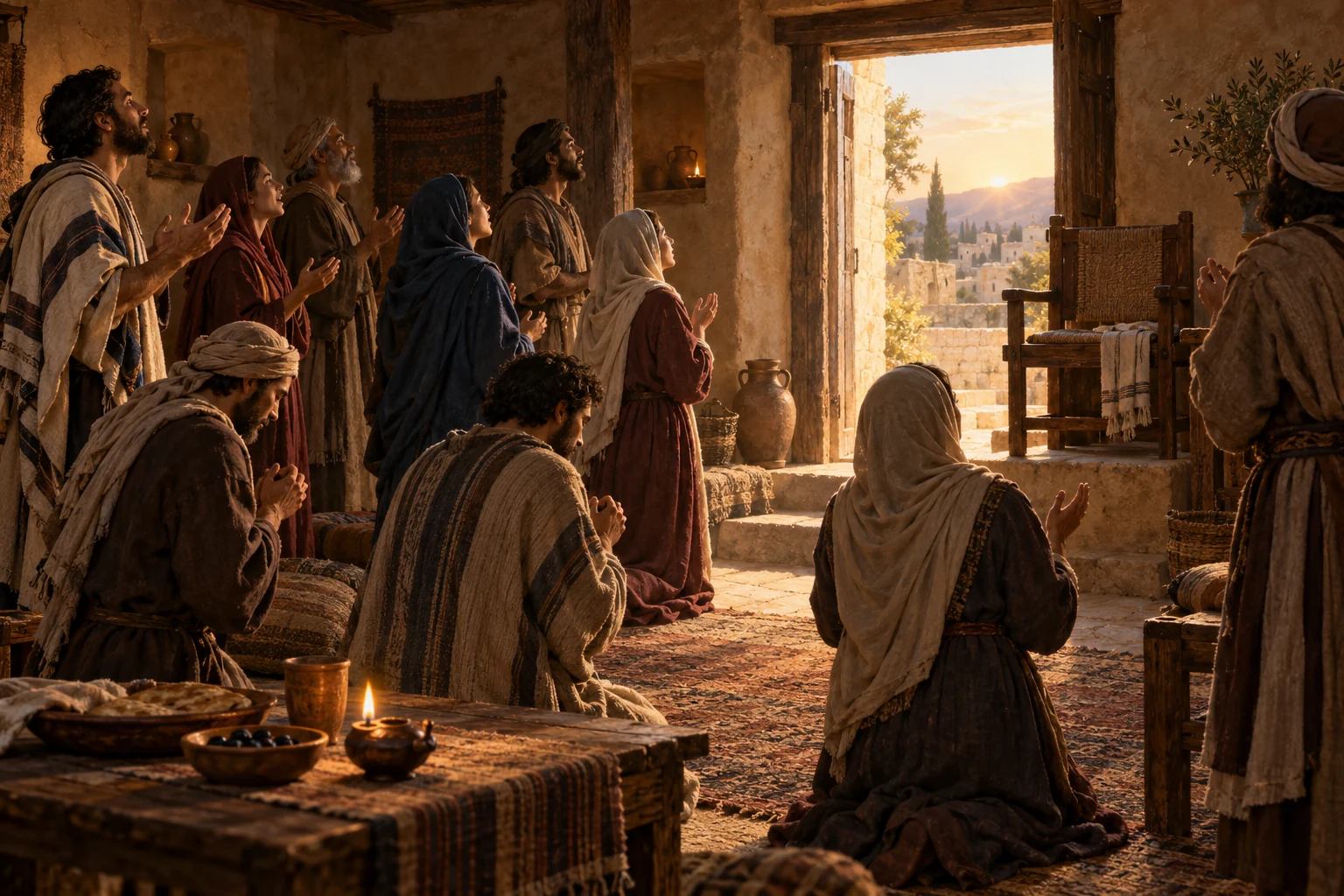
The decisive evidence is not one isolated use of the word “worship,” but a sustained devotional pattern. Early believers invoked Jesus in prayer and baptism, sang to him, confessed his name, appealed to him for salvation, assigned him God’s works and titles, and portrayed him sharing the divine throne—all within communities committed to Israel’s one God.
This grammar of devotion does not introduce Jesus as a second deity alongside Yahweh. It includes the distinguished Son within the unique identity and worship of Israel’s God, while retaining the personal distinction between Father and Son.
Key Claims
- Israel’s Scriptures reserve ultimate cultic devotion, creation, sovereign rule, and the divine name for Yahweh.
- The New Testament applies those divine prerogatives to Jesus in a cumulative and mutually reinforcing pattern.
- Prayer, invocation, hymnic praise, baptism, and the Lord’s Supper place Jesus within the earliest Christian devotional life.
- The HANDS taxonomy organizes the evidence under Honors, Attributes, Names, Deeds, and Seat.
- Early high Christology arose within Jewish monotheism rather than through a simple adoption of pagan polytheism.
Interpretive Context
The Greek verb proskyneō can denote homage to human authorities as well as worship of God, so no occurrence should bear the argument alone. Jewish agency traditions also allowed exalted representatives to speak and act for God. The question is whether the whole pattern crosses the Creator–creature boundary. Scholars disagree about developmental timelines, but the cumulative devotional evidence is earlier and broader than a late legendary explanation can easily account for.
The article’s case depends on convergence: divine names and deeds, prayer and invocation, sacramental practice, and throne imagery reinforce one another across several early sources. That cumulative method is stronger than equating every act of homage with worship, because it asks whether Jesus consistently receives the devotion and prerogatives reserved for Israel’s God.
Selected Scholarship
- Larry W. Hurtado, Lord Jesus Christ — documents the early emergence of Jesus-devotion within Jewish monotheistic communities.
- Richard Bauckham, Jesus and the God of Israel — argues that Jesus is included in the unique divine identity.
- Robert M. Bowman Jr. and J. Ed Komoszewski, Putting Jesus in His Place — presents the HANDS taxonomy for New Testament evidence.
- James F. McGrath, The Only True God — offers a critical agency-based alternative that helps test the argument.
- Chris Tilling, Paul’s Divine Christology — argues from Paul’s pattern of relating believers to Christ in ways structurally analogous to their relation to God.
Scripture Connections
Psalm 97:7; Acts 7:59; Acts 10:25–26; Psalm 107; John 9:38; Luke 4:8; Luke 24:52; Luke 24:53
Continue on Substack
The complete article and its available video material remain on Rabbit Room Apologetics at Substack.
Originally published April 29, 2026. This WordPress page is a discovery guide; the complete article is hosted on Substack.