ARTICLE GUIDE
At a Glance
This essay examines the corporate, embodied, and vocational dimensions of the imago Dei through Carmen Joy Imes’s account of “the Beloved Community” in Being God’s Image 2023, ch. 9 , locating that account within Walter C. Kaiser Jr.’s promise-plan theology.
Read moreShow less
What This Study Explores
Promise-Plan Theology • Imago Dei • Christian Love
What does it mean for the church to become the Beloved Community?
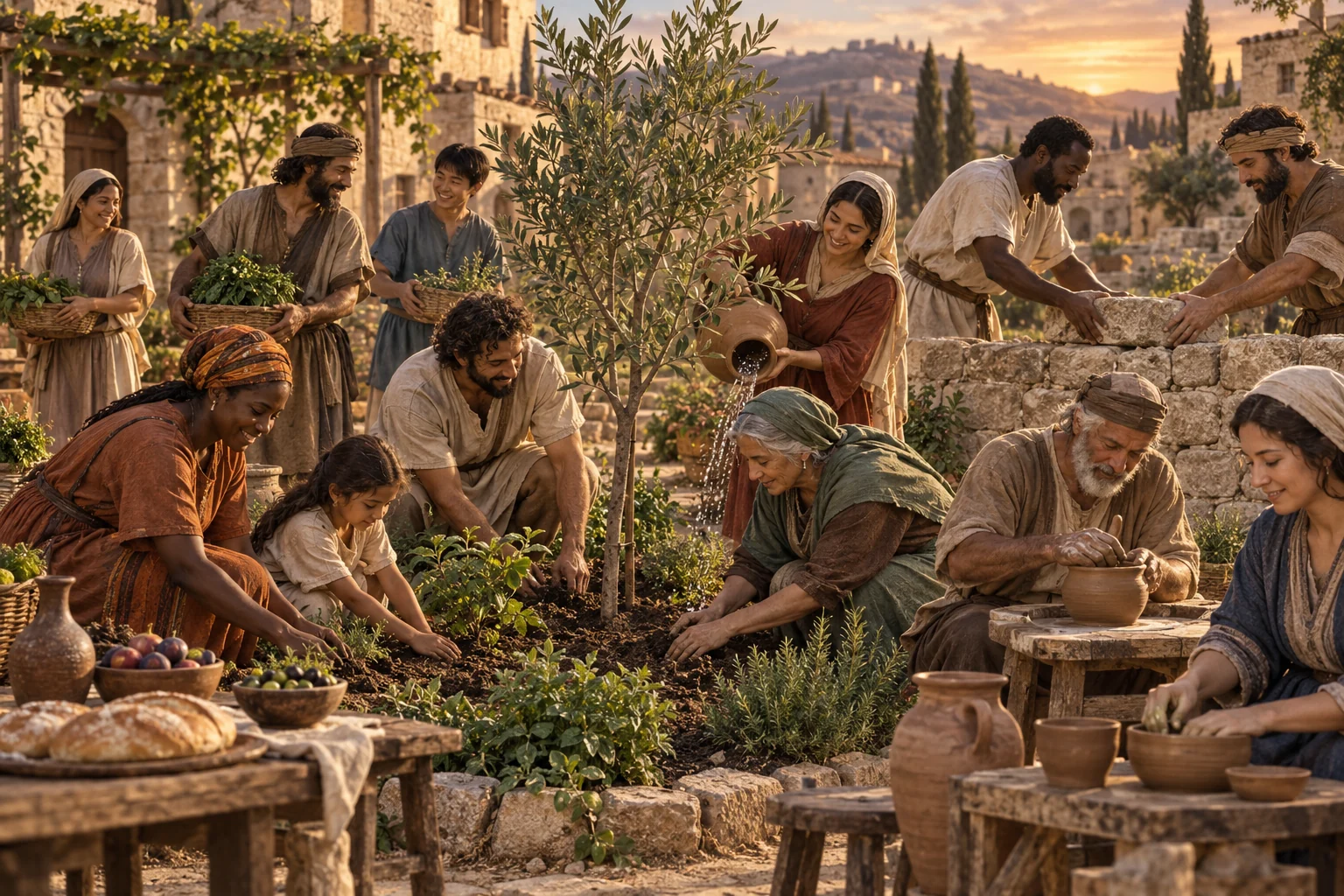
The church embodies the corporate image of God through reconciled, bodily, interdependent life. Image-bearing is not an individual possession measured by autonomy, productivity, cognition, or physical ability; it is a Creator-given vocation practiced together under Messiah.
Shared worship, table fellowship, care, memory, accessibility, and co-laboring make reconciliation visible. The community does not merely include disabled or cognitively impaired persons as recipients of care but receives them as indispensable members whose gifts belong to the body.
Key Claims
- The plural vocation of Genesis 1 points toward corporate royal-priestly representation.
- The Eucharistic assembly must discern both Messiah’s sacramental body and the socioeconomic reality of his corporate body.
- Digital connection can assist fellowship but cannot replace embodied presence, shared space, and the physical table.
- Disability never diminishes image-bearing or postpones Christian vocation until healing occurs.
- When dementia disrupts self-memory, identity remains held in God’s memory and in the remembering practices of the community.
Interpretive Context
The argument resists functional accounts that tie personhood to rational performance or independence. It also avoids romanticizing impairment: creation still groans, but dignity and ecclesial membership do not wait for normalization.
The Beloved Community participates in the promise-plan’s movement toward reconciled creation. Jew and Gentile, strong and weak, remembered and forgetful become a living temple in whom the Spirit anticipates God’s final dwelling with humanity.
Selected Scholarship
- Carmen Joy Imes, Being God’s Image (2023).
- Dietrich Bonhoeffer, Life Together (critical ed., 2005).
- John Swinton, Dementia (2012).
- Thomas E. Reynolds, Vulnerable Communion (2008).
- Nancy L. Eiesland, The Disabled God (1994).
Scripture Connections
Romans 8; Genesis 3; Jeremiah 31; Ezekiel 36; Genesis 1; 1 Corinthians 12; Ephesians 4; Ephesians 2
Continue on Substack
The complete article remains on Rabbit Room Apologetics at Substack.
Originally published September 1, 2026. This WordPress page is a discovery guide; the complete article is hosted on Substack.