ARTICLE GUIDE
At a Glance
This essay examines David A. Brondos’ interpretation of Pauline participatory language and atonement as articulated in Chapter 6 and the Conclusion of
Read moreShow less
What This Study Explores
Atonement • Pauline Studies
What Does Participation “in Christ” Mean for Paul’s Atonement Theology?
Paul’s language of being “in Christ,” dying with Christ, and rising with him describes a real relocation of identity, allegiance, community, and conduct. David Brondos rightly insists that participatory language cannot be detached from baptismal commitment, apostolic suffering, and concrete obedience. The cross is the climax of Jesus’ faithful mission, not an isolated mechanism operating apart from his life and resurrection.
Yet participation need not be reduced to ethical imitation alone. Paul joins relational and communal transformation to divine action: believers are incorporated into Messiah’s death and resurrection, receive the Spirit, enter a new creation, and share a corporate identity grounded in what God has accomplished. Narrative, forensic, apocalyptic, covenantal, and participatory dimensions illuminate one another.
Key Claims
- Participation is embodied and ethical. Union with Messiah generates a new pattern of allegiance, suffering, service, and hope.
- The cross belongs to a larger narrative. Jesus’ faithful life, death, resurrection, vindication, and Spirit-giving mission form one saving movement.
- Baptism marks transferred identity. Romans 6 depicts entrance into Messiah’s story and liberation from sin’s lordship.
- Community is integral to salvation. “In Christ” creates a multi-ethnic covenant people rather than merely private mystical experience.
- Multiple atonement dimensions are compatible. Participation need not exclude justification, representation, victory over powers, or sacrificial reconciliation.
Interpretive Context
Ethical and ontological accounts of participation need not be mutually exclusive: baptismal allegiance, Spirit-enabled practice, corporate belonging, and God’s transforming action converge in Paul’s “with Christ” and “in Christ” language. Brondos rightly restores narrative and vocation, but the passive and divine-action dimensions of Romans 6, Galatians 2, and 2 Corinthians 5 resist making participation chiefly the believer’s moral identification with Jesus’ cause.
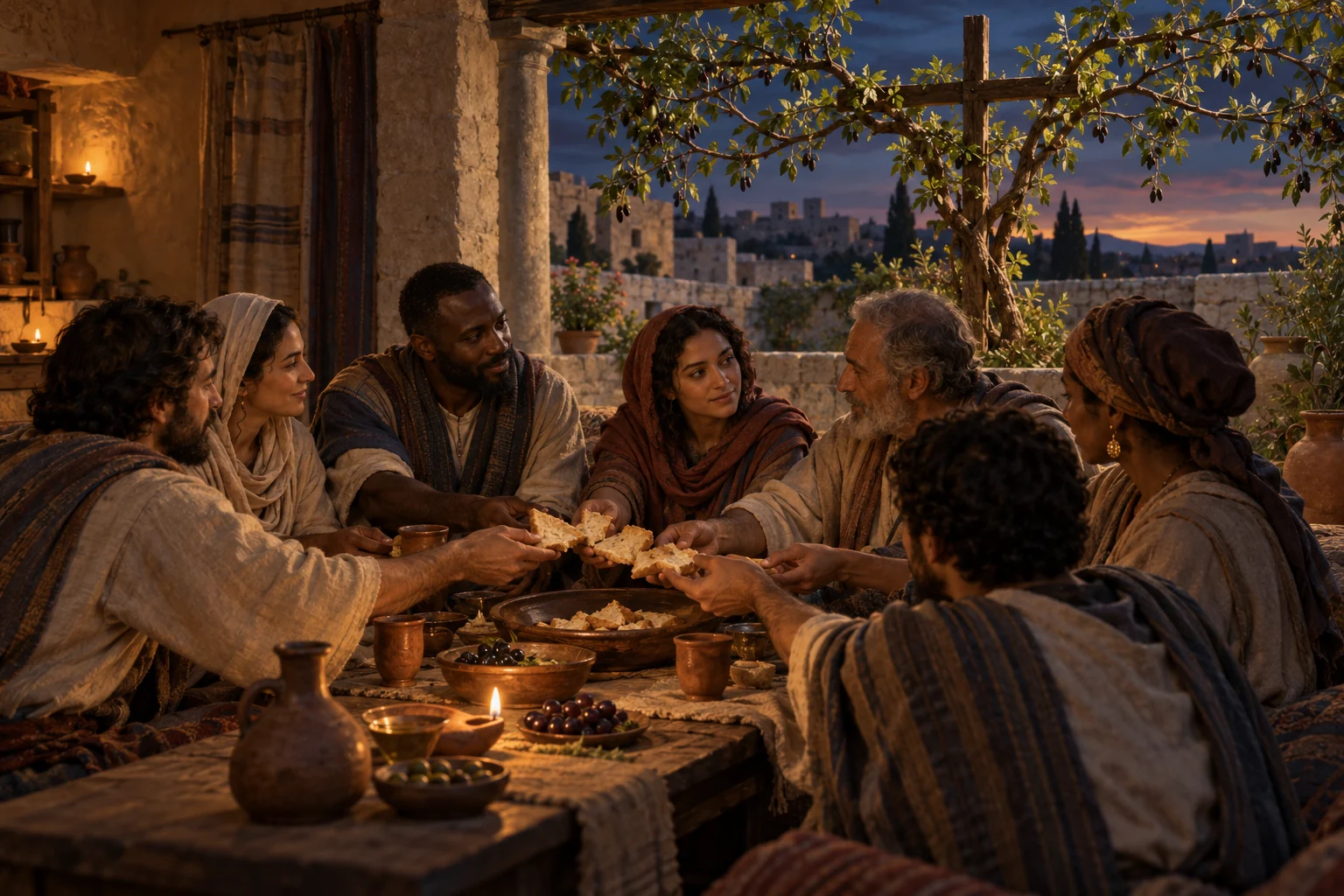
The essay locates Brondos alongside Sanders, Dunn, Campbell, and Martyn, whose models emphasize covenantal incorporation, Spirit-transformed community, apocalyptic liberation, and divine intervention. Brondos supplies a needed corrective to abstract metaphysics, but Pauline texts resist reducing participation to human commitment. Kaiser’s promise-plan roots the whole discussion in Abraham, Sinai, David, the new covenant, and the non-supersessionist olive tree.
Selected Scholarship
- Brondos, D. A. (2006). Paul on the Cross.
- Campbell, D. A. (2009). The Deliverance of God.
- Dunn, J. D. G. (1998). The Theology of Paul the Apostle.
- Martyn, J. L. (1997). Galatians.
- Sanders, E. P. (1977). Paul and Palestinian Judaism.
Scripture Connections
Genesis 3:15; Jeremiah 31; Ezekiel 36; Romans 11; Romans 6:3–8; Galatians 2:20; 2 Corinthians 4:10; 1 Corinthians 15:31
Continue on Substack
The complete article remains on Rabbit Room Apologetics at Substack.
Originally published August 11, 2026. This WordPress page is a discovery guide; the complete article is hosted on Substack.