ARTICLE GUIDE
At a Glance
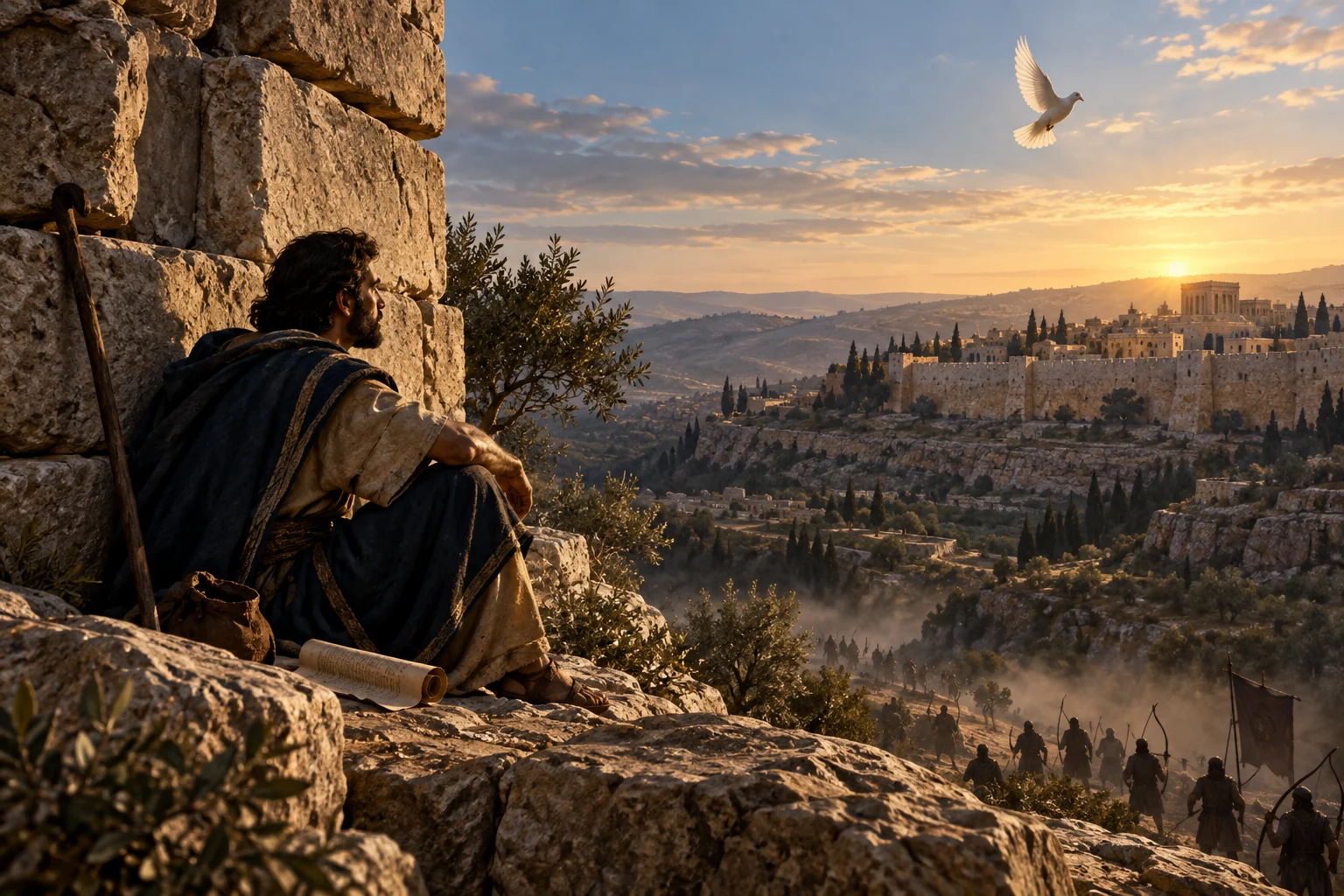
Positioned within the early Davidic collection of the Psalter, Psalm 11 functions as a psalm of confidence framed within the genre of lament. Traditionally associated with David’s period of wilderness exile and flight from King Saul, the psalm emerges from a concrete historical crisis where physical violence and systemic collapse threaten the anointed servant of Yahweh.
Read moreShow less
What This Study Explores
Biblical Theology • Canonical Interpretation • The Promise-Plan of God
What Should the Righteous Do When Society’s Foundations Collapse?
Psalm 11 answers political violence and institutional collapse by relocating confidence from visible circumstances to Yahweh’s heavenly throne. David’s advisers see hidden archers, destroyed foundations, and flight as the only prudent response. David does not deny the danger; he denies that earthly instability has displaced the divine King. Yahweh remains in his holy temple, observes every person, and judges violence.
The psalm is not a prohibition against every strategic retreat. Its target is fear-driven counsel that treats threatened institutions as the whole of reality and abandons covenant trust. The righteous can endure testing because Yahweh’s scrutiny refines fidelity, while those who love violence face retributive judgment. The final hope is relational and beatific: the upright will behold his face.
Key Claims
- Refuge is theological before it is geographical. Security begins with Yahweh’s kingship rather than access to an earthly stronghold.
- Collapsed foundations do not collapse heaven’s throne. Human courts may fail while divine sovereignty remains intact.
- God’s seeing is active. Yahweh tests the righteous and evaluates the violent rather than observing passively.
- Violence is morally decisive. The psalm identifies love of violence, not merely hostile group identity, as the object of divine hatred.
- The promise culminates in presence. The upright person’s future is to behold Yahweh’s face.
Interpretive Context
The psalm does not require a securely reconstructed episode from David’s life, and its image of destroyed foundations may describe social order, covenantal justice, or both. Its decisive contrast is spatial and theological: violence is visible on earth, but Yahweh remains enthroned in the heavenly temple, examining human conduct and reserving judgment to himself.
Psalm 11 is read as a psalm of confidence framed by lament and traditionally associated with Davidic danger. Its temple and throne imagery belong to the cosmic-kingship worldview of the Psalter, while its Davidic setting places personal trust within the unfolding royal promise. The violent imagery of judgment should be read poetically and covenantally, not converted into authorization for private vengeance.
Primary Textual Anchors
- Psalm 11:1–3 — refuge, counsel to flee, and collapsing foundations.
- Psalm 11:4–5 — heavenly temple, divine scrutiny, and hatred of violence.
- Psalm 11:6–7 — retributive judgment, righteousness, and beholding God.
- 1 Samuel 18–24 — Davidic persecution and restrained response.
- Psalm 2; 2 Samuel 7 — divine kingship and the Davidic promise.
Selected Scholarship
- John Goldingay, Psalms, Volume 1 — literary and theological exposition of Psalm 11’s trust and judgment.
- Frank-Lothar Hossfeld and Erich Zenger, Psalms 1–50 — detailed critical analysis within the Psalter’s shaping.
- Nancy L. deClaissé-Walford, Rolf A. Jacobson, and Beth Laneel Tanner, The Book of Psalms — canonical and theological commentary on divine kingship and refuge.
- Gerald H. Wilson, The Editing of the Hebrew Psalter — a major study of the Psalter’s canonical arrangement and royal theology.
- Peter C. Craigie, Psalms 1–50 — examines Psalm 11’s form, imagery, and confession of trust within the early Psalter.
Scripture Connections
Psalm 11; Matthew 10:28; Romans 2:6–8; Psalm 11:6; Hebrews 11:10; Revelation 20:11–13; Psalm 11:6–7
Continue on Substack
The complete article remains on Rabbit Room Apologetics at Substack.
Originally published September 12, 2026. This WordPress page is a discovery guide; the complete article is hosted on Substack.