ARTICLE GUIDE
At a Glance
Matthew 8 marks a decisive transition in the Gospel narrative, shifting from the Messiah’s authoritative proclamation in the Sermon on the Mount to His authoritative demonstration of kingdom power through mighty deeds.
Read moreShow less
What This Study Explores
Gospel Studies
What Does Matthew 8 Reveal about the Authority and Reach of Jesus’ Kingdom?
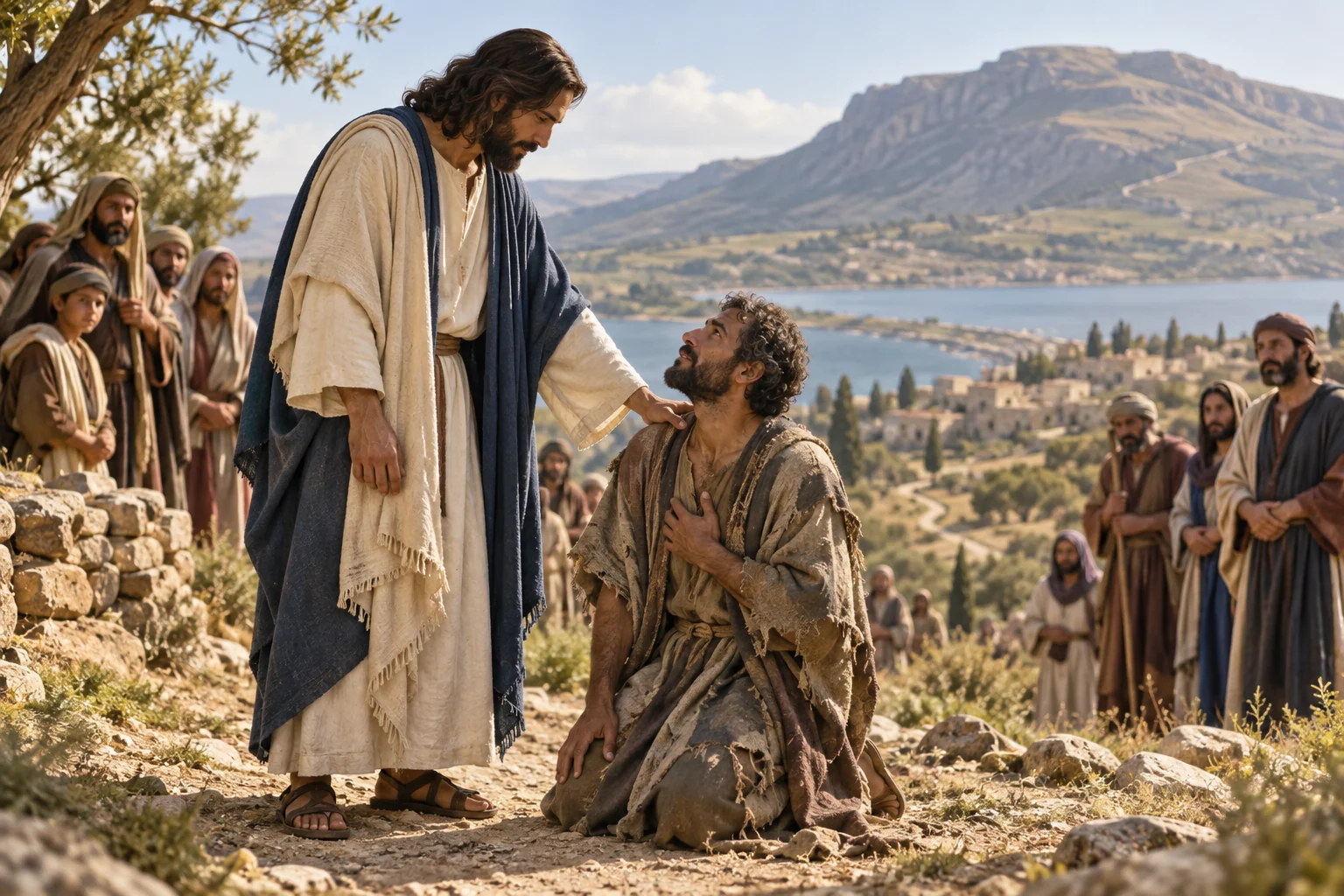
Matthew 8 moves from Jesus’ authoritative teaching to deeds that reverse the effects of sin, impurity, sickness, chaos, and demonic oppression. His touch cleanses the leper without making Jesus unclean; his word heals the centurion’s servant at a distance; his command stills the sea; and his presence drives hostile spirits from occupied territory. These acts identify him as more than a healer: he embodies God’s restorative reign.
The centurion episode also anticipates the Abrahamic ingathering of the nations. Gentiles recline with Abraham, Isaac, and Jacob because they trust Israel’s Messiah, not because Israel’s story has been discarded. Jesus’ command that the cleansed leper follow Mosaic procedure affirms Torah, while the warnings about unbelieving “sons of the kingdom” deny that ancestry without allegiance guarantees participation.
Key Claims
- Messiah’s holiness is contagious. Rather than contracting impurity, Jesus restores the excluded person to embodied and communal life.
- Jesus honors Torah while surpassing ordinary categories. Priestly verification remains, yet the effective cleansing proceeds from him.
- Gentile faith fulfills the Abrahamic promise. Inclusion occurs at Israel’s patriarchal table, not in a replacement community detached from Israel.
- Creation recognizes its Lord. The calming of the sea evokes Yahweh’s authority over cosmic chaos.
- Deliverance reclaims contested space. Exorcism demonstrates the kingdom’s advance against rebellious spiritual powers.
Interpretive Context
The biblical “leprosy” terminology covers a broader range of skin conditions than modern Hansen’s disease, so diagnosis should remain cautious. The centurion and banquet sayings anticipate Gentile inclusion but do not erase Israel; the warning addresses presumed privilege without allegiance. The demon narratives also affirm Jesus’ authority while leaving some geographical and supernatural details debated rather than inviting speculative reconstruction.
The miracle sequence follows the Sermon on the Mount and echoes Moses’ descent, but Matthew portrays Jesus as the personal source of cleansing and authority. Isaiah’s servant imagery interprets the healings as messianic burden-bearing without reducing Matthew 8:17 to a formula promising immediate freedom from every illness. Second Temple purity, Gentile boundary, demonology, and eschatological-banquet expectations illuminate the narratives within the wider promise-plan.
Selected Scholarship
- Davies, W. D., & Allison, D. C., Jr. (1991). Matthew 8–18.
- France, R. T. (2007). The Gospel of Matthew.
- Hagner, D. A. (1993). Matthew 1–13.
- Keener, C. S. (2009). The Gospel of Matthew.
- Kaiser, W. C., Jr. (2008). The Promise-Plan of God.
Scripture Connections
Matthew 8; Isaiah 53:4; Daniel 7:13; Matthew 8:17; Genesis 12:3; Isaiah 25:6–8; Matthew 8:11–12; Daniel 7:13–14
Continue on Substack
The complete article remains on Rabbit Room Apologetics at Substack.
Originally published August 17, 2026. This WordPress page is a discovery guide; the complete article is hosted on Substack.