ARTICLE GUIDE
At a Glance
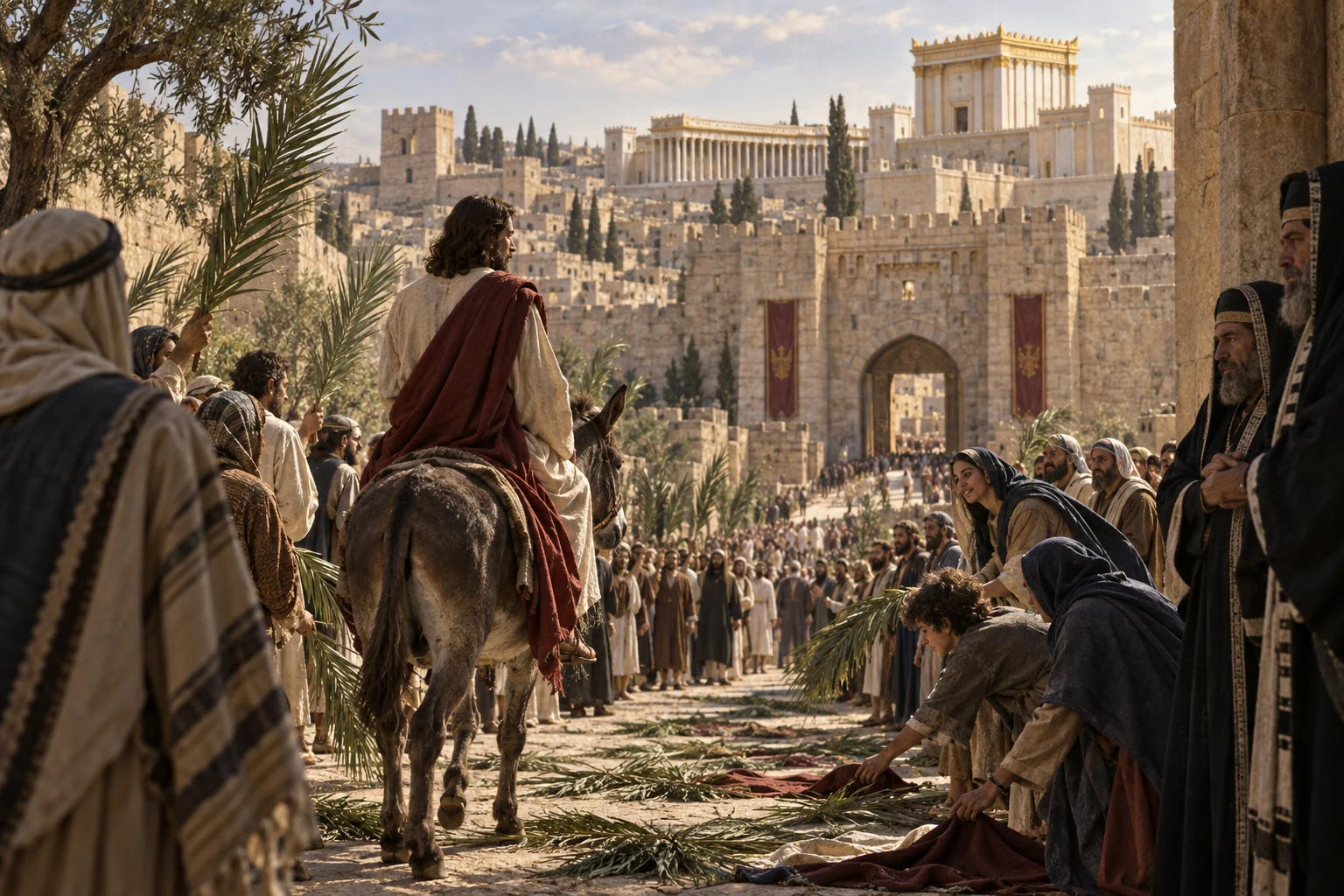
Matthew 21 marks a pivotal transition in the First Gospel as Jesus shifts his ministry from Galilee to the cultic and political epicenter of first-century Judaism: Jerusalem. Within the overarching architecture of God’s promise-plan, this chapter presents the long-anticipated arrival of the Davidic Messiah to claim his royal rights, confront corrupt covenantal stewardship, and enact prophetic judgment upon the temple system.
Read moreShow less
What This Study Explores
Promise-Plan Theology • Gospel Studies
What is Jesus doing when he enters Jerusalem and confronts the temple establishment?
Jesus arrives as the humble Davidic King and performs a covenant lawsuit against corrupt stewardship. His royal entry, temple action, fig-tree sign, and vineyard parables announce judgment upon leaders who display religious leaves without the fruit of justice, mercy, and faithful allegiance.
The judgment transfers stewardship, not Israel’s identity or God’s patriarchal promises. Messiah becomes the rejected cornerstone of a living, multiethnic temple while the door of repentance remains open to Israel.
Key Claims
- The donkey entry combines Zechariah’s peaceable king with Solomonic royal accession imagery.
- The temple action invokes Isaiah’s house of prayer and Jeremiah’s den of robbers as prophetic judgment.
- Healing the blind and lame demonstrates Messiah’s contagious holiness within the contested sanctuary.
- The fruitless fig tree symbolizes the unproductive temple establishment, not an ethnic curse upon Israel.
- The wicked tenants condemn unfaithful rulers, while the rejected Son becomes the cornerstone.
Interpretive Context
Matthew’s scenes draw upon Passover expectation, temple economics, prophetic sign acts, and Second Temple debates over authority. Jesus’ actions are more than administrative reform and less than a violent zealot seizure.
The promise-plan moves from Edenic sanctuary through tabernacle and temple to the incarnate Son and Spirit-built community. Romans 11 prevents the leadership judgment from being converted into Gentile boasting or replacement theology.
Selected Scholarship
- R. T. France, The Gospel of Matthew (2007).
- Craig L. Blomberg, Interpreting the Parables (2nd ed., 2012).
- E. P. Sanders, Jesus and Judaism (1985).
- N. T. Wright, Jesus and the Victory of God (1996).
- Walter C. Kaiser Jr., The Promise-Plan of God (2008).
Scripture Connections
Matthew 21; Isaiah 62:11; Zechariah 9:9; 1 Kings 1:38; Psalm 118:25–26; Isaiah 56:7; Jeremiah 7:11; Psalm 8:2
Continue on Substack
The complete article remains on Rabbit Room Apologetics at Substack.
Originally published August 31, 2026. This WordPress page is a discovery guide; the complete article is hosted on Substack.