ARTICLE GUIDE
At a Glance
), moving directly toward the climactic fulfillment of God’s redemptive architecture. Situated immediately following the promise of cosmic renewal (
What This Study Explores
Biblical Theology • Canonical Interpretation • The Promise-Plan of God
How does Matthew 20 redefine greatness, reward, and messianic authority?
The chapter overturns merit-based status through the generous vineyard owner, exposes the disciples’ pursuit of rank, and locates true royal power in the Son of Man who serves and gives his life as a ransom for many.
Grace is not an unfair wage added to human achievement; it is the landowner’s sovereign goodness. Likewise, kingdom leadership does not imitate Gentile domination but follows Messiah’s downward path toward suffering, service, and restoration.
Key Claims
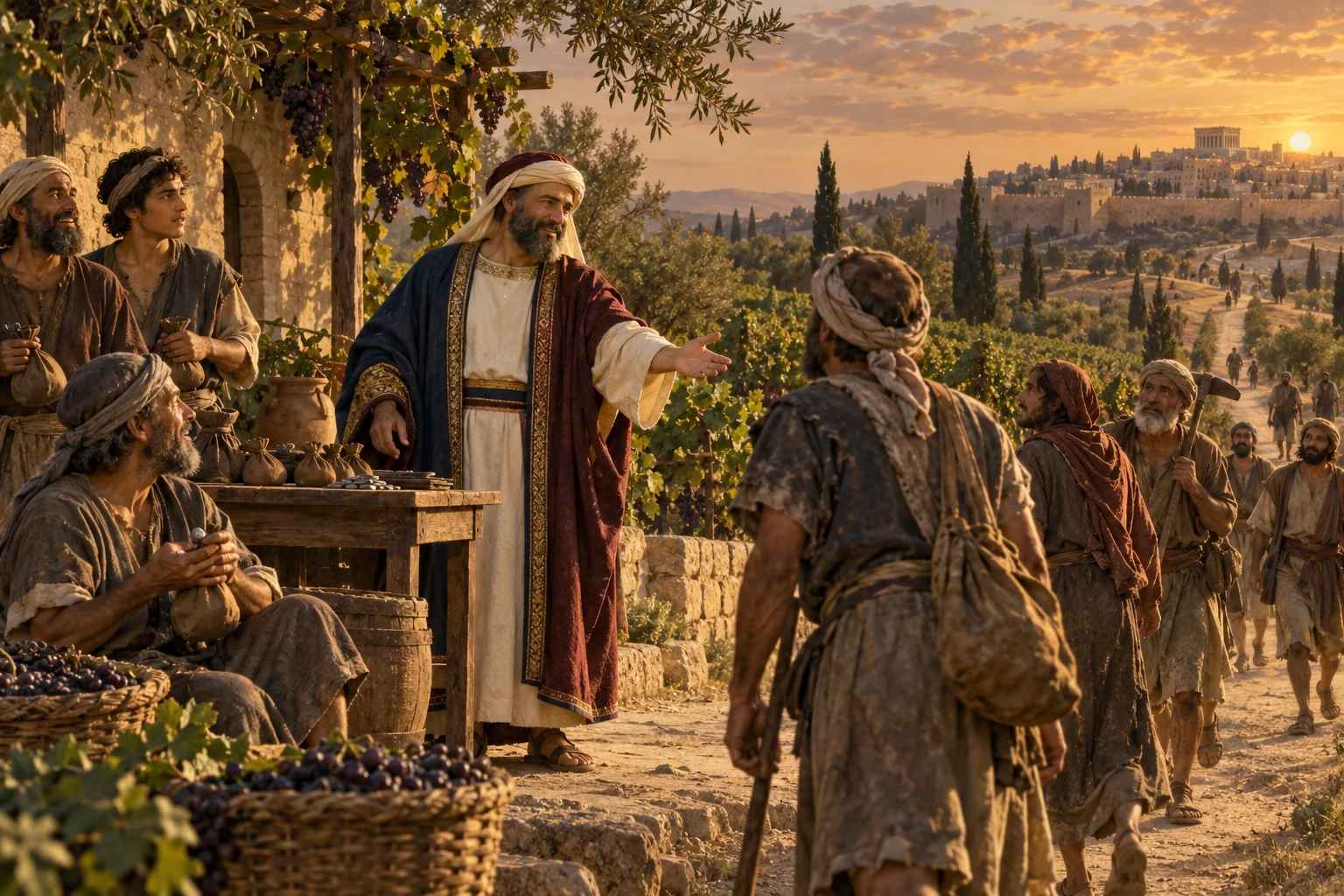
- The vineyard workers explain how the last become first under divine generosity.
- The “evil eye” identifies envy and stinginess toward another person’s reception of grace.
- Jesus’ third passion prediction joins rejection, death, and resurrection to the journey toward Jerusalem.
- The request for chief seats reveals persistent imperial assumptions within the disciple community.
- The ransom saying presents Jesus’ voluntary service as representative deliverance rather than coercive rule.
Interpretive Context
The parable follows Matthew 19’s encounter with wealth and reward, while the leadership teaching addresses honor competition in a Roman imperial world. Both challenge attempts to convert covenant privilege into entitlement.
Within the promise-plan, the Davidic King secures his reign through self-giving service. His restored community sees clearly, receives grace without boasting, and exercises authority for the flourishing of others.
Selected Scholarship
- R. T. France, The Gospel of Matthew (2007).
- Craig S. Keener, A Commentary on the Gospel of Matthew (1999).
- W. D. Davies and Dale C. Allison Jr., Matthew 19–28 (1997).
- Joel B. Green, The Death of Jesus (1988).
- Walter C. Kaiser Jr., The Promise-Plan of God (2008).
Scripture Connections
Matthew 20; Matthew 19:30; Matthew 26; Hosea 6:2; Matthew 1:1; Romans 11:6; Philippians 2:5–11; 1 Timothy 2:5–6
Continue on Substack
The complete article remains on Rabbit Room Apologetics at Substack.
Originally published August 31, 2026. This WordPress page is a discovery guide; the complete article is hosted on Substack.