ARTICLE GUIDE
At a Glance
Matthew 15 marks a pivotal turning point in the Gospel’s narrative architecture, situated within the unfolding conflict over messianic authority and the expanding scope of the divine promise-plan.
Read moreShow less
What This Study Explores
Promise-Plan Theology • Gospel Studies
What does Matthew 15 teach about purity, Israel’s priority, and Gentile inclusion?
Jesus distinguishes God’s commands from traditions that nullify them and locates true defilement in the heart’s corrupt output rather than eating with ritually unwashed hands. He fulfills Torah by recovering its covenantal and ethical intent, not by endorsing lawlessness.
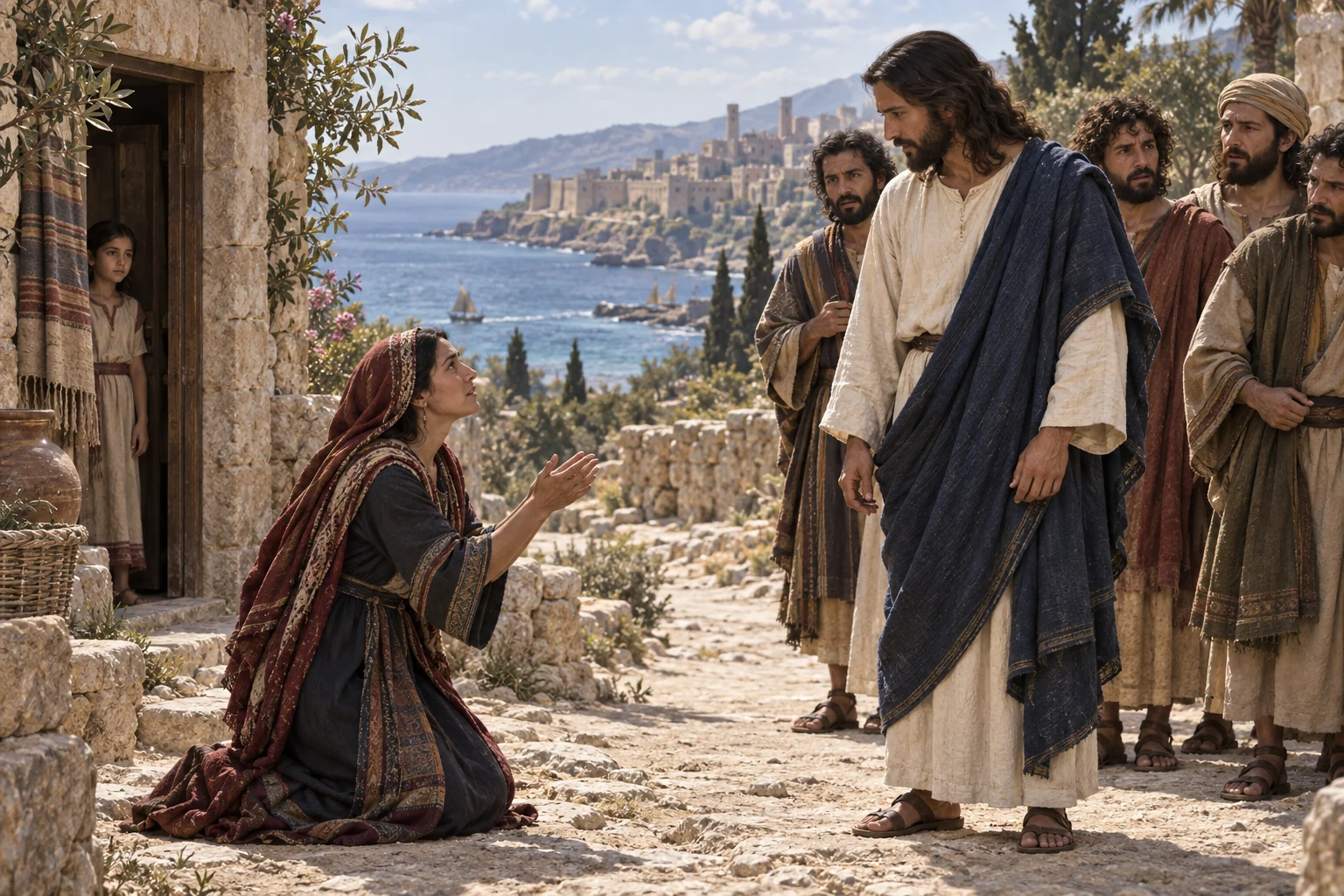
The Canaanite woman accepts Israel’s historical priority while trusting the abundance of Israel’s Messiah. Her daughter’s healing and the feeding in Gentile territory reveal Abrahamic blessing overflowing to the nations without displacing the children.
Key Claims
- The handwashing dispute concerns elders’ tradition, not a simple abolition of biblical dietary instruction.
- The corban example shows how religious tradition can evade the command to honor and support parents.
- Jesus identifies murder, adultery, theft, false witness, and slander as heart-generated defilements.
- The Canaanite woman’s “great faith” recognizes both Davidic identity and covenantal priority.
- The healings and seven-basket feeding anticipate full Gentile participation in messianic provision.
Interpretive Context
Matthew’s narrative moves from a Jerusalem delegation to Tyre, Sidon, and predominantly Gentile space. This geography dramatizes the contrast between privileged resistance and outsider trust.
The pattern is “to Israel first” in order that blessing reach the nations. Romans 11 clarifies the result: Gentiles are grafted into Israel’s root, while Israel’s calling remains irrevocable.
Selected Scholarship
- R. T. France, The Gospel of Matthew (2007).
- Craig S. Keener, A Commentary on the Gospel of Matthew (1999).
- W. D. Davies and Dale C. Allison Jr., Matthew 8–18 (1991).
- David Instone-Brewer, Traditions of the Rabbis from the Era of the New Testament (2004–2009).
- Walter C. Kaiser Jr., The Promise-Plan of God (2008).
Scripture Connections
Matthew 15; Exodus 20:12; Isaiah 29:13; Matthew 14; Genesis 10; Exodus 21:17; Matthew 15:8–9; Isaiah 35:5–6
Continue on Substack
The complete article remains on Rabbit Room Apologetics at Substack.
Originally published August 24, 2026. This WordPress page is a discovery guide; the complete article is hosted on Substack.