ARTICLE GUIDE
At a Glance
Genesis 43 marks a pivotal turning point within the overarching Joseph narrative (Gen 37–50) and the broader progressive unfolding of God’s promise-plan. Positioned at the center of the literary structure stretching from Genesis 42 through 45, this chapter records the second journey of Jacob’s sons to Egypt.
Read moreShow less
What This Study Explores
Promise-Plan Theology
How Does Genesis 43 Show Judah Becoming a Covenant Leader?
Famine forces Jacob’s household to return to Egypt, but Joseph’s demand that Benjamin accompany them exposes unresolved fear and favoritism. Reuben’s reckless offer of his sons had failed; Judah now accepts personal, lasting responsibility for Benjamin. The brother who once proposed selling Joseph offers himself as surety for Rachel’s remaining son, demonstrating genuine moral transformation.
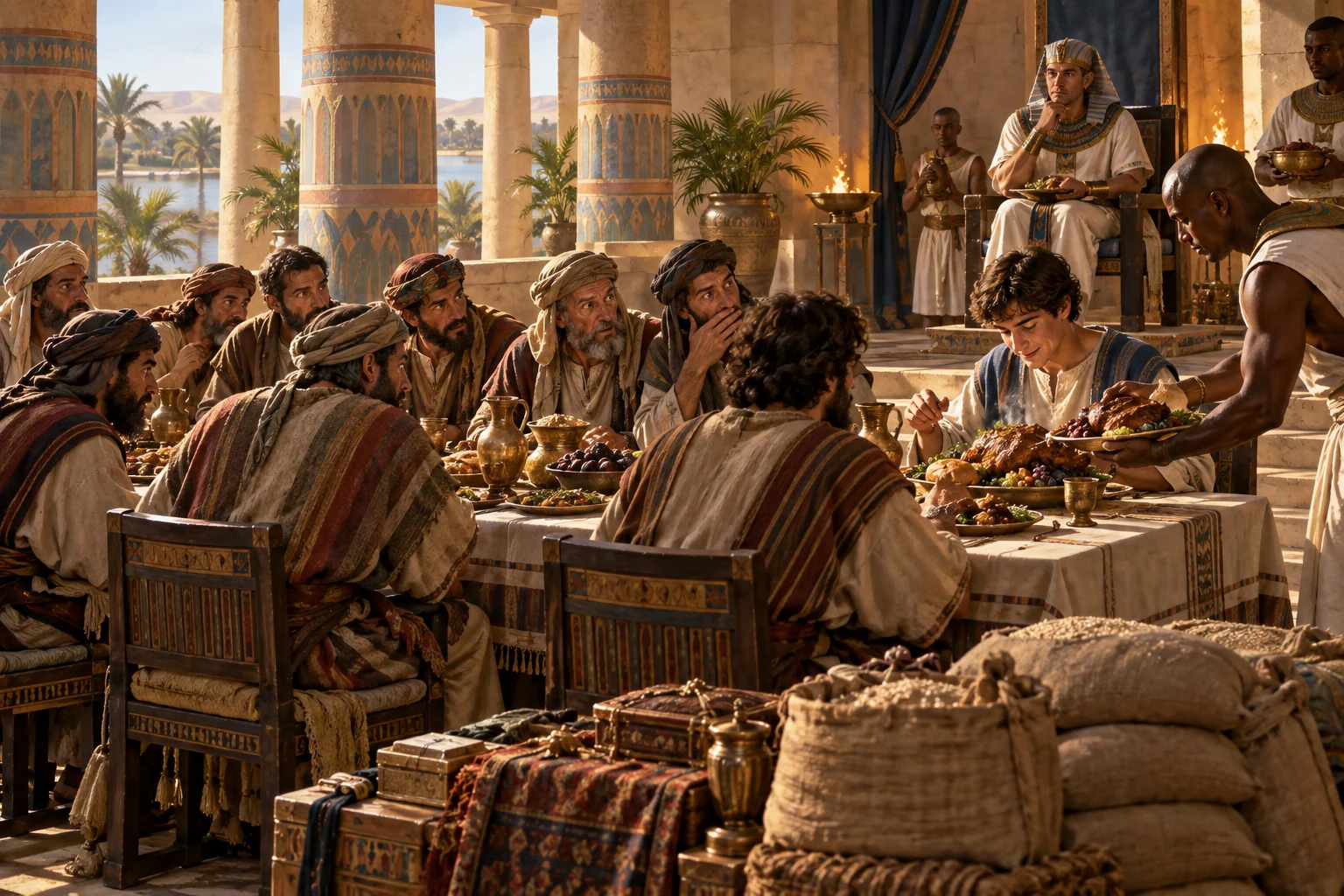
In Egypt, fear of the returned money gives way to hospitality, Simeon’s release, and a feast in which the brothers are seated by birth order. Joseph’s fivefold portion for Benjamin quietly retests their response to favoritism. Instead of recorded jealousy, the brothers celebrate together. Providence is rebuilding the covenant family before Joseph’s identity is disclosed.
Key Claims
- Judah replaces reckless leadership with responsible surety. He pledges his own standing rather than another person’s life.
- Jacob’s shift to “Israel” marks covenantal action. The patriarch releases Benjamin while appealing to El Shaddai’s mercy.
- Fear interprets ambiguous providence negatively. The brothers assume accusation where Joseph is preparing hospitality.
- Joseph’s emotions reveal enduring kinship. Administrative testing has not extinguished love or grief.
- Benjamin’s portion tests transformed desire. The family faces favoritism again without repeating its earlier hatred.
Interpretive Context
The fivefold portion given to Benjamin recreates the earlier conditions of favoritism, allowing Joseph to observe whether jealousy still governs the brothers. Their shared meal and later solidarity indicate movement toward a renewed family, but the banquet should not be treated as a direct sacramental prediction. Canonical connections are strongest through recurring patterns of provision, table fellowship, surety, repentance, and reconciliation.
Ancient surety law, gift protocol, household meals, and Egyptian social boundaries clarify the episode. Joseph’s concealment and testing should be read as a structured process aimed at truth and reconciliation, not arbitrary cruelty. The famine advances Genesis 15’s sojourn trajectory, while Judah’s emerging substitutionary posture prepares for his royal blessing in Genesis 49.
Selected Scholarship
- Hamilton, V. P. (1995). The Book of Genesis, Chapters 18–50.
- Kaiser, W. C., Jr. (2008). The Promise-Plan of God.
- Sarna, N. M. (1989). Genesis.
- Waltke, B. K. (2001). Genesis.
- Wenham, G. J. (1994). Genesis 16–50.
Scripture Connections
Genesis 43; Genesis 42; Genesis 15:13–14; Hebrews 7:22; Philemon 1:18–19; John 6:35; Matthew 26:26–29; Romans 11:25–26
Continue on Substack
The complete article remains on Rabbit Room Apologetics at Substack.
Originally published August 1, 2026. This WordPress page is a discovery guide; the complete article is hosted on Substack.