ARTICLE GUIDE
At a Glance
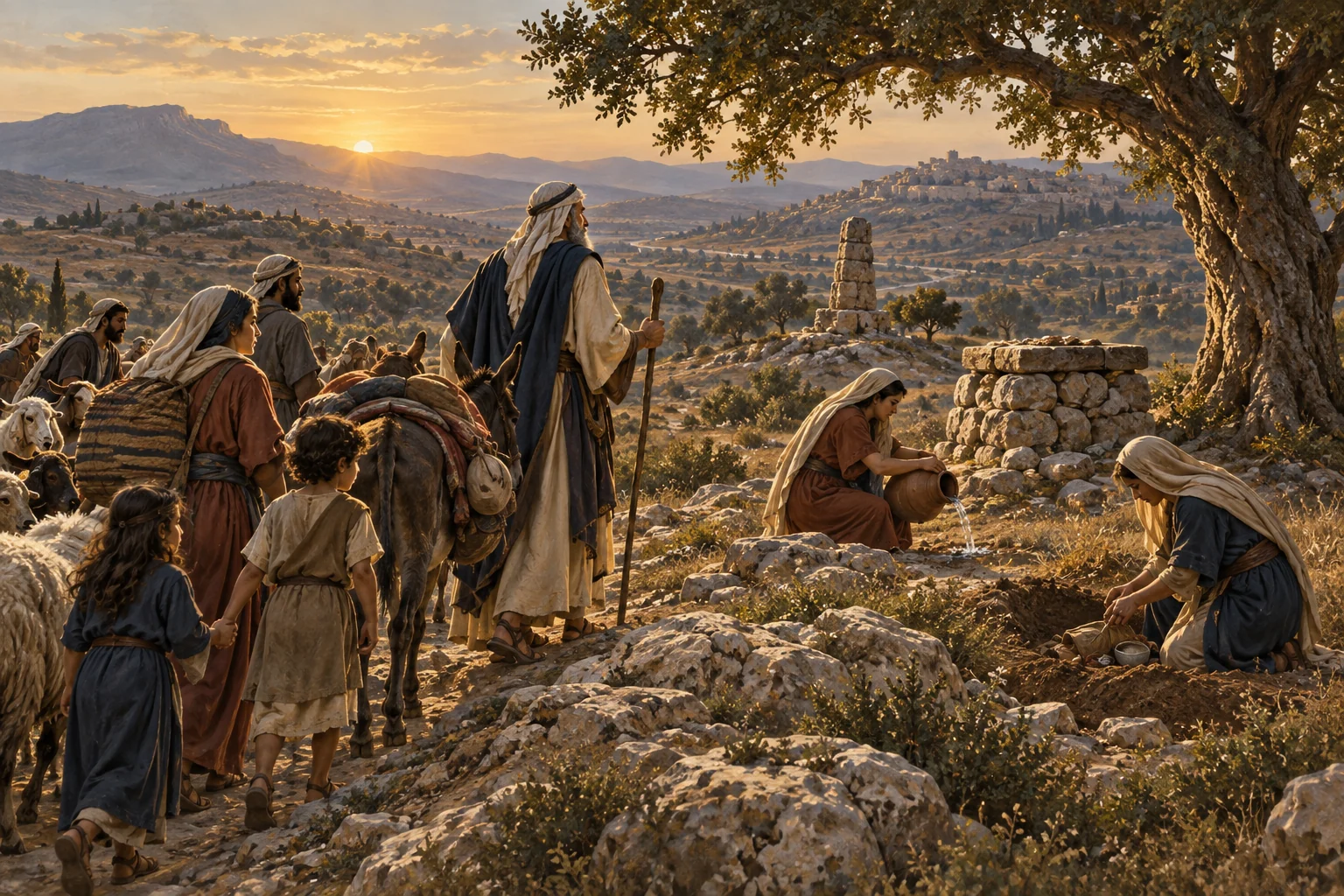
Genesis 35 functions as a vital geographical and theological transition within the patriarchal narrative, recording Jacob’s journey from Shechem back to Hebron and marking the conclusion of his long wanderings away from the Promised Land.
Read moreShow less
What This Study Explores
Biblical Theology • Canonical Interpretation • The Promise-Plan of God
Direct Answer: Why must Jacob’s household bury its foreign gods before returning to Bethel?
Bethel is the place where Yahweh first confirmed the ancestral promise to the fleeing Jacob. Returning there requires more than geographic movement: Jacob’s household must renounce rival allegiances, purify itself, and resume its vocation as the distinct family through whom the promise will advance.
The buried idols, changed garments, altar, and renewed name together mark a covenantal reset after Shechem. Yet the chapter’s deaths and Reuben’s offense show that renewal does not erase human mortality or family fracture; God continues the promise through them.
Key Claims
- God’s command to return to Bethel rescues the family from the aftermath of the Shechem massacre.
- Putting away foreign gods turns external pilgrimage into a renewal of exclusive allegiance.
- The divinely induced terror on neighboring cities protects Jacob’s vulnerable household from retaliation.
- God repeats the Israel name and the promises of fruitfulness, nations, kings, and land.
- Rachel’s death in childbirth and Benjamin’s naming hold sorrow and covenantal future together.
Interpretive Context
Purification practices and changed garments belong to the ancient symbolic world of preparation for sacred encounter. They should not be flattened into mere hygiene or treated as magical mechanisms. The theological emphasis is the household’s transfer from divided loyalties to renewed worship at the remembered place of promise.
The chapter’s sequence of altar, reaffirmed promise, birth, bereavement, sexual disorder, and burial holds renewal together with the continuing effects of the curse. Covenant fidelity does not mean immunity from death or family failure; it means that God carries the promised line through those realities toward the Messiah and resurrection.
Selected Scholarship
- Gordon J. Wenham, Genesis 16–50 (1994).
- Victor P. Hamilton, The Book of Genesis, Chapters 18–50 (1995).
- Nahum M. Sarna, Genesis (1989).
- John H. Walton, Genesis (2001).
- Bruce K. Waltke, Genesis: A Commentary (2001).
Scripture Connections
Genesis 35; Matthew 2:16–18; Galatians 3:16; Romans 11:25–29; Ephesians 2:11–22; 1 Corinthians 15:45–49; Genesis 3; Genesis 1:1–2
Continue on Substack
The complete article remains on Rabbit Room Apologetics at Substack.
Originally published June 30, 2026. This WordPress page is a discovery guide; the complete article is hosted on Substack.