ARTICLE GUIDE
At a Glance
God’s unilateral covenant with Abraham, initially articulated in Genesis 12 and expanded in Genesis 15, guarantees both a seed and a territorial inheritance. Following the severe testing of the seed promise in the Akedah (Genesis 22), the narrative of Genesis 23 pivots to test the reality of the land promise.
Read moreShow less
What This Study Explores
Biblical Theology • Canonical Interpretation • The Promise-Plan of God
Direct Answer: Why is Sarah’s burial plot important to the promise of the land?
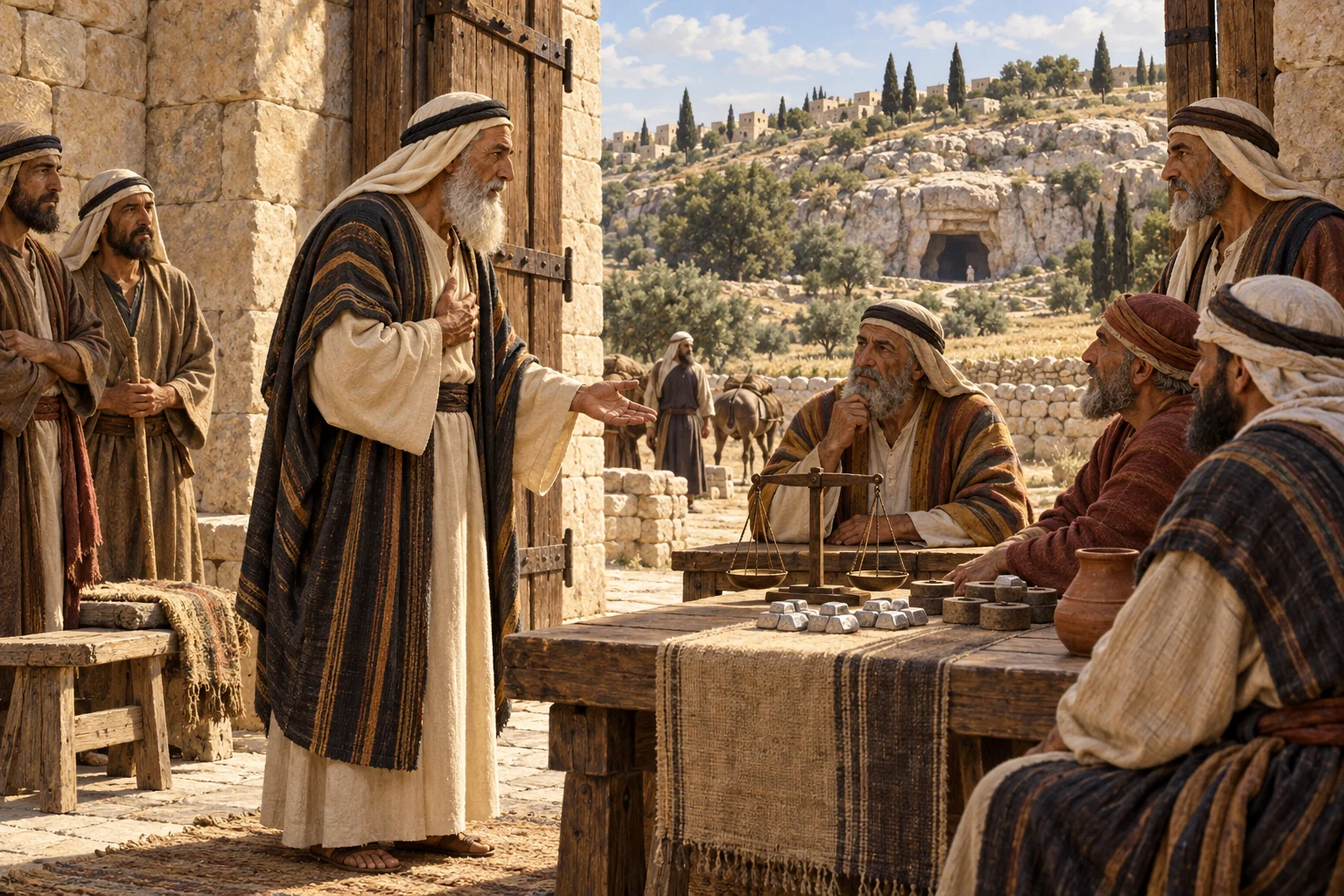
Machpelah is the first legally secured piece of Canaan owned by Abraham’s household. At Sarah’s death, the promise of land becomes materially anchored in a field, cave, trees, witnessed negotiation, and burial place.
Abraham remains a resident alien and refuses to seize the promise prematurely. By paying the stated price and receiving public title, he acts in hope that God—not coercion—will bring the wider inheritance to fulfillment.
Key Claims
- Sarah’s death forces the land promise into the concrete realities of grief, burial, and legal ownership.
- Abraham identifies himself as both a sojourner and resident among the Hittites.
- The gate negotiation and repeated property description establish a publicly witnessed transfer.
- The cave of Machpelah becomes the ancestral burial place linking Abraham’s family to Canaan across generations.
- The small foothold anticipates fuller inheritance without dissolving the promise into a merely spiritual abstraction.
Interpretive Context
Descriptions of the exchange as either aggressive bargaining or generous courtesy should be tempered by ancient negotiation conventions. Whatever judgment is made about the price, the narrator’s repeated legal formula emphasizes undisputed acquisition and covenantal geography.
Paul’s language of Abraham as heir of the world and Hebrews’ forward-looking city do not dissolve Machpelah’s concrete geography. They expand the promise’s horizon from its first purchased foothold toward renewed creation, where resurrection permits the patriarchs and their descendants to receive what death seemed to place beyond reach.
Selected Scholarship
- Nahum M. Sarna, Genesis (1989).
- Gordon J. Wenham, Genesis 16–50 (1994).
- Victor P. Hamilton, The Book of Genesis, Chapters 18–50 (1995).
- Kenneth A. Mathews, Genesis 11:27–50:26 (2005).
- John H. Walton, Genesis (2001).
Scripture Connections
Genesis 23; Genesis 12; Genesis 15; Genesis 22; Romans 4:13; Hebrews 11:9–10; Galatians 3:16; Genesis 12:7
Continue on Substack
The complete article remains on Rabbit Room Apologetics at Substack.
Originally published June 15, 2026. This WordPress page is a discovery guide; the complete article is hosted on Substack.