ARTICLE GUIDE
At a Glance
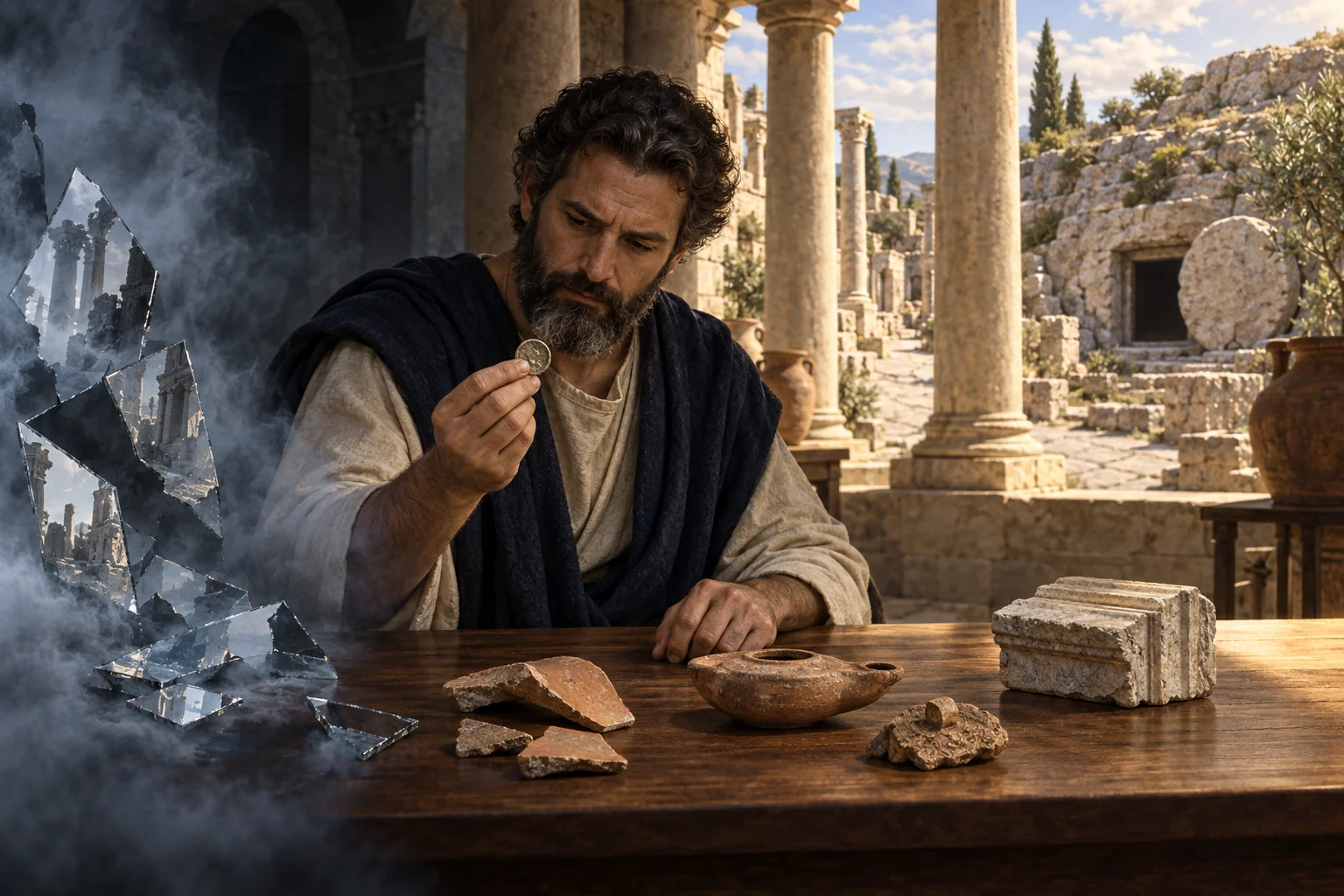
The investigation into the historical Jesus, especially the verification of his death and resurrection, is grounded in the presupposition that the past is ultimately knowable. In contemporary historiography, this assumption has been vigorously challenged by proponents of historical postmodernism.
Read moreShow less
What This Study Explores
Resurrection • Historical Method
Direct Answer: If every historian interprets evidence through a personal horizon, can we still know what happened in the past?
Yes. Interpretation is unavoidable, but it does not follow that every reconstruction is equally warranted or that evidence has no power to correct the historian. Surviving documents, artifacts, multiple attestation, causal fit, and public criticism place real constraints on historical claims.
Critical realism therefore rejects both naive objectivism and radical relativism. It seeks warranted correspondence with the past while remaining explicit about assumptions, degrees of probability, and the revisability of conclusions.
Key Claims
- The inability to observe the past directly does not make the past unreal or historical knowledge impossible.
- Radical historical relativism is self-undermining when it presents its own genealogy and claims about scholarship as historically true.
- Evidence is theory-laden but not infinitely pliable; some explanations account for the data better than others.
- Peer criticism, source comparison, explanatory criteria, and independent corroboration reduce individual bias.
- Christian claims about incarnation, crucifixion, and resurrection require engagement with public space-time history rather than retreat into private meaning.
Interpretive Context
Critical realism is a family of positions rather than a single infallible method. It offers disciplined confidence proportional to evidence, not absolute certainty. Applied to resurrection research, it permits supernatural explanations to be assessed without assuming them true or ruling them out before the historical argument begins.
For Christian historiography, this method matters because incarnation and resurrection are claims about public events, not symbols insulated from investigation. A responsible inquiry neither inserts miracle by default nor excludes it by metaphysical decree; it compares hypotheses by explanatory scope, plausibility, and fit with the available historical data.
Selected Scholarship
- Gary R. Habermas, On the Resurrection, Volume 1: Evidences (2024).
- C. Behan McCullagh, Justifying Historical Descriptions (1984).
- Michael R. Licona, The Resurrection of Jesus (2010).
- Aviezer Tucker, Our Knowledge of the Past (2004).
- Ernst Breisach, Historiography: Ancient, Medieval, and Modern, 3rd ed. (2007).
Scripture Connections
1 Corinthians 15; Deuteronomy 32:8–9; Psalm 82; 1 Corinthians 15:3–7; Luke 24:34; Romans 1:3–4; Genesis 3; Genesis 1:1–2
Continue on Substack
The complete article remains on Rabbit Room Apologetics at Substack.
Originally published June 25, 2026. This WordPress page is a discovery guide; the complete article is hosted on Substack.