Genesis Article Guide
At a Glance
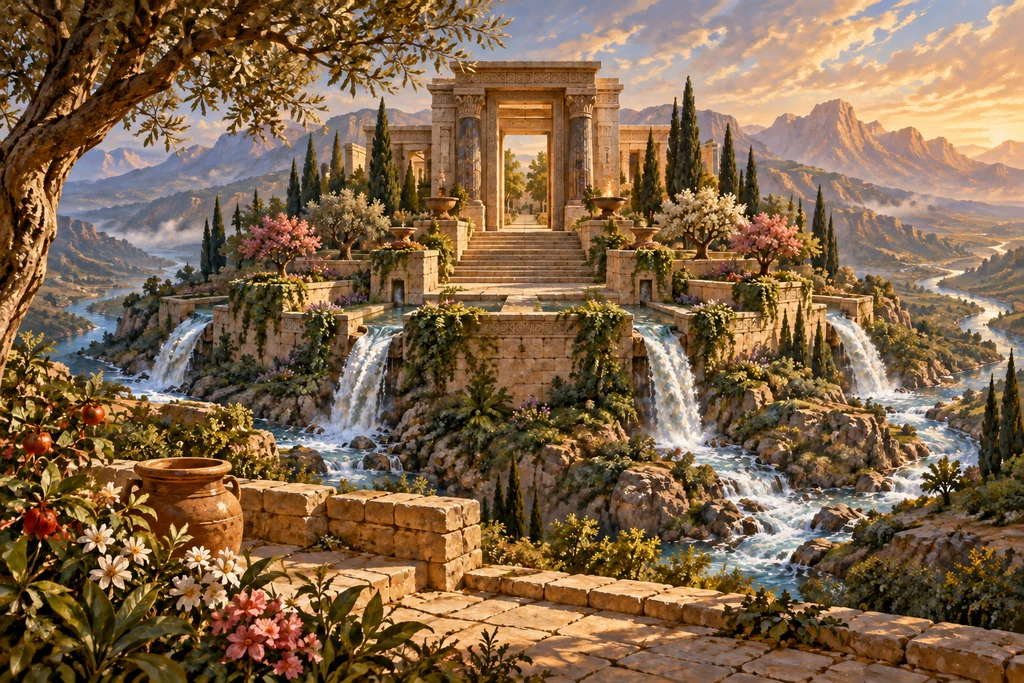
This study presents Eden as the center of biblical sacred-space theology: the primordial temple mountain where God dwelt with humanity and commissioned human beings as royal priests. It traces the garden’s sanctuary imagery, Adam’s vocation, the serpent’s divine-council setting, Second Temple interpretations of cosmic rebellion, and the promise-plan’s movement toward Christ and the New Jerusalem.
Read moreShow less
What This Study Explores
- Eden as the archetypal temple and cosmic mountain
- Adam and Eve’s royal-priestly commission to serve and guard sacred space
- The serpent as a rebellious divine throne guardian
- The three cosmic rebellions in Second Temple Jewish interpretation
- Tabernacle and Temple patterns as movements back toward Eden
- Christ as the last Adam, priest-king, and restored sanctuary
- The New Jerusalem as creation’s final, restored Holy of Holies
Direct Answer: Why should Eden be understood as the Bible’s primordial temple?
Eden functions as the archetypal sacred center where God dwells, life flows outward, humanity serves and guards holy space, and cherubim protect the eastern entrance after exile. Later tabernacle and temple imagery echoes these features, presenting Israel’s sanctuaries as patterned movements back toward lost divine presence.
This temple setting explains the larger conflict: humanity’s royal-priestly vocation is compromised by rebellion, sacred space is lost, and the promise-plan advances toward its restoration. Christ enters as faithful image, priest-king, and Last Adam; the story culminates when the New Jerusalem becomes a worldwide Holy of Holies filled with God’s presence.
Key Claims
- Eden shares major sanctuary motifs with later biblical temples, including divine presence, sacred geography, life imagery, cherubim, and eastward orientation.
- The paired commands to serve and guard connect humanity’s garden vocation with later priestly responsibilities.
- The serpent episode involves human rebellion within a wider supernatural conflict and results in exile from sacred space.
- Tabernacle, temple, incarnation, and the Spirit-filled community progressively advance the promise of restored presence.
- Revelation’s garden-city completes the biblical movement from localized sanctuary to creation wholly filled by God.
Interpretive Context
Genesis does not explicitly call Eden a “temple” or Adam a “high priest”; those descriptions arise from canonical comparison and ancient Near Eastern sacred-space patterns. Ezekiel 28’s relationship to Eden and a supernatural rebel is debated because its immediate oracle addresses the king of Tyre. Divine-council interpretation should preserve human responsibility and distinguish the Bible’s unique Creator from all created spiritual beings.
The study’s argument is cumulative: mountain geography, eastward access, cherubic guardians, life-giving waters, arboreal imagery, and the paired verbs “serve” and “guard” connect Eden to later sanctuary patterns. Second Temple traditions and divine-council texts deepen that canonical reading, but they should illuminate rather than replace the literary claims of Genesis and the prophets.
Selected Scholarship
- G. K. Beale, The Temple and the Church’s Mission — a comprehensive canonical argument for Eden and worldwide sacred space.
- John H. Walton, The Lost World of Genesis One — develops cosmic-temple inauguration within ancient Near Eastern context.
- T. Desmond Alexander, From Eden to the New Jerusalem — traces divine presence, temple, and new creation across Scripture.
- Michael S. Heiser, The Unseen Realm — relates Eden, the divine council, cosmic rebellion, and the recovery of the nations.
- L. Michael Morales, Who Shall Ascend the Mountain of the Lord? — traces Levitical sacred-space theology from Edenic mountain imagery through sanctuary access and the restoration of divine presence.
Scripture Connections
Genesis 1–3; Numbers 3:7–8; Psalm 82; Isaiah 6 and 14; Ezekiel 28; Deuteronomy 32:8–9; John 1:14; 1 Corinthians 15; Colossians 2:15; and Revelation 21–22.
Continue on Substack
The complete article and its video introduction remain on Rabbit Room Apologetics at Substack.
Originally published April 19, 2026. This WordPress page is a discovery guide; the complete article is hosted on Substack.