ARTICLE GUIDE
At a Glance
Genesis 12 functions as the definitive canonical hinge within the Pentateuch, pivoting the narrative from the universal primeval history of humanity (Genesis 1–11) to the particular, patriarchal focus of God’s redemptive purposes (Genesis 12–50).
Read moreShow less
What This Study Explores
Promise-Plan Theology
Direct Answer: Why does Genesis 12 inaugurate the biblical promise-plan?
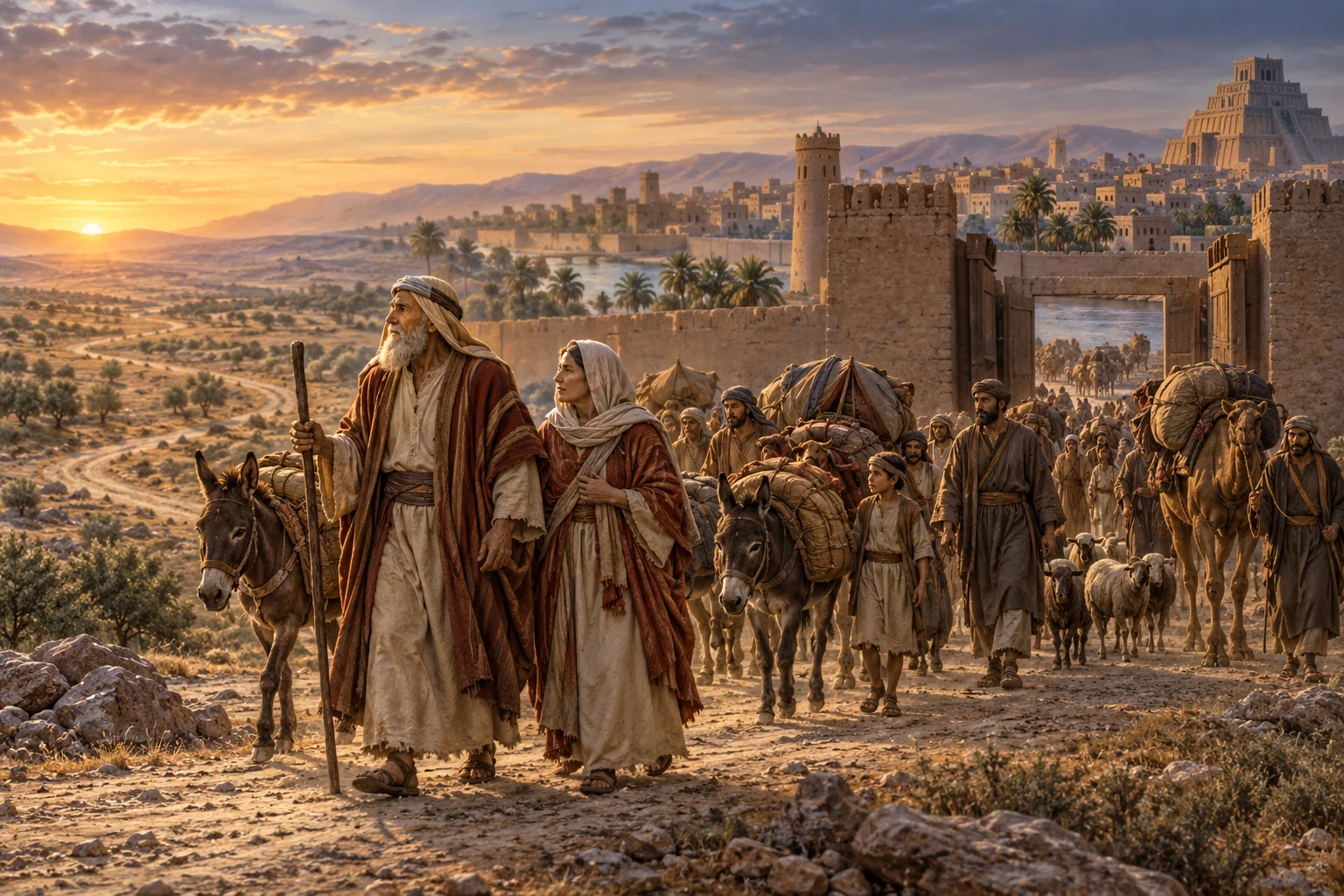
Genesis 12 answers the fractures of Genesis 1–11 by calling one family through whom God will bless all the families of the earth. Abram’s election is therefore particular in its historical form—land, offspring, name, and protection—but universal in its intended reach.
The chapter also establishes the pattern of promise, obedient response, worship, human failure, and divine preservation. Abram builds altars in the promised land yet fails under famine in Egypt; nevertheless, God protects Sarai and keeps the promised seed and worldwide mission intact.
Key Claims
- Abram’s call redirects the primeval narrative from scattered nations to a chosen family for universal blessing.
- God’s promise of a great name reverses Babel’s human attempt to manufacture a name.
- Land, seed, blessing, and protection form the durable architecture of the Abrahamic promise.
- Abram’s altars mark worship and divine presence within the land of promise.
- The Egypt episode makes clear that fulfillment depends on God’s faithfulness rather than patriarchal moral perfection.
Interpretive Context
Genesis 12:1–3 supports a mission to the nations without dissolving the concrete promises made to Abram and his descendants. Read canonically, Gentile inclusion participates in Abrahamic blessing rather than replacing Israel. Discussions of Babel and divine allotment draw particular force from Deuteronomy 32:8–9 and its textual history; that wider divine-council frame enriches, but should not eclipse, Genesis 12’s explicit language.
The call of Abram answers Babel’s scattering without beginning a second, unrelated religious program. Land, seed, and blessing form one historical commission through which Yahweh will reclaim the nations; the New Testament’s Gentile mission therefore participates in Israel’s Abrahamic vocation rather than canceling the concrete promises that carry it.
Selected Scholarship
- Walter C. Kaiser Jr., The Promise-Plan of God — canonical development of the Abrahamic promise.
- Gordon J. Wenham, Genesis 1–15 — literary and exegetical analysis of call, blessing, and Egypt.
- Victor P. Hamilton, The Book of Genesis: Chapters 1–17 — detailed treatment of the promise formula.
- John H. Walton, Genesis — ancient Near Eastern and theological context for Abram’s call.
- Nahum M. Sarna, Genesis (1989).
Scripture Connections
Genesis 12; Genesis 1; Genesis 11; Genesis 10; Acts 7:2–4; Hebrews 11:8; Galatians 3:6–8; Genesis 12:3
Continue on Substack
The complete article remains on Rabbit Room Apologetics at Substack.
Originally published June 4, 2026. This WordPress page is a discovery guide; the complete article is hosted on Substack.