ARTICLE GUIDE
At a Glance
This essay examines the historical, architectural, epigraphic, and theological setting of the Dome of the Rock (Qubbat al-Ṣakhra), constructed in Jerusalem under the Umayyad caliph ʿAbd al-Malik ibn Marwān and dated by its mosaic inscription to 72 AH 691 692 CE .
Read moreShow less
What This Study Explores
Promise-Plan Theology
What Was the Dome of the Rock Originally Built to Communicate?
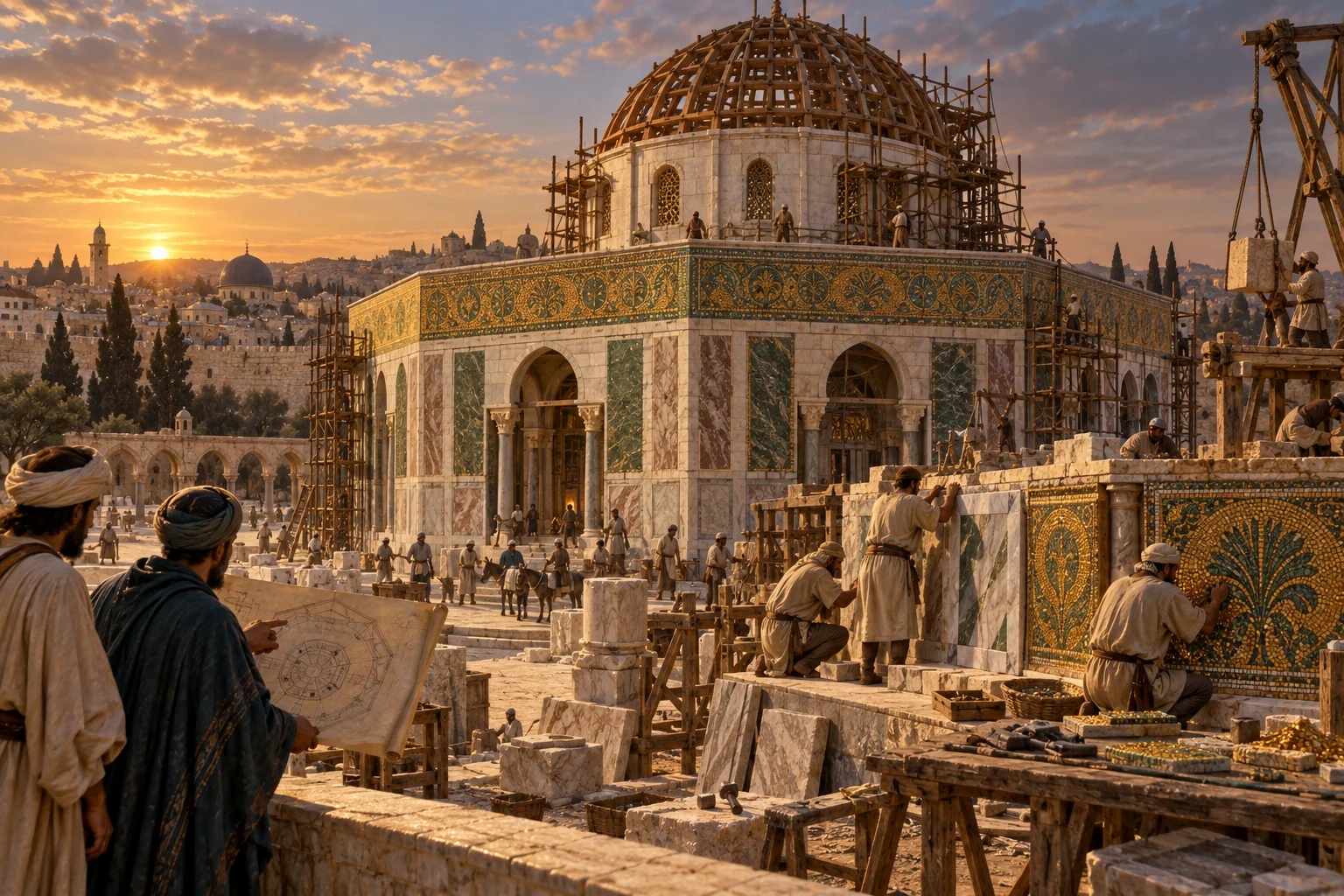
The Dome of the Rock, completed under ʿAbd al-Malik and dated by its mosaic inscription to 72 AH (691–692 CE), is best understood as an imperial commemorative shrine in architectural and theological dialogue with late antique Christian Jerusalem. Its octagonal plan, ambulatories, dome, mosaics, and skyline relationship to the Anastasis place it within the regional martyrium tradition rather than the ordinary form of a congregational mosque.
Its earliest inscriptions proclaim divine unity and directly contest Christian claims about Jesus while incorporating Qurʾānic and para-Qurʾānic wording. They do not mention Muhammad’s Night Journey or Ascension; that association becomes prominent in later tradition. The monument therefore supplies early evidence of Marwanid religious self-definition, imperial legitimacy, and Christological polemic, while cautioning against projecting later etiologies backward into 72 AH.
Key Claims
- The monument is securely anchored in the Marwanid period. The foundation inscription preserves the date even though al-Maʾmūn later substituted his name.
- Architecture indicates commemorative purpose. The building marks and monumentalizes the Rock through a late antique shrine vocabulary.
- The Anastasis provides an important comparison. Similar dimensions and skyline rivalry suggest dialogue, not a simplistic act of copying.
- The inscriptions are explicitly Christological. They affirm tawḥīd and reject divine sonship and Trinitarian confession.
- The Miʿrāj explanation is later. Its absence from the original epigraphic program limits claims about the building’s first meaning.
Interpretive Context
The Dome’s purpose should not be reduced to one explanation: dynastic legitimacy, Jerusalem’s sacred geography, rivalry and dialogue with Christian monuments, and proclamation of Qurʾānic monotheism can operate together. Similar dimensions or forms do not alone prove direct architectural imitation, while the inscriptions provide firmer evidence that the monument publicly honored Jesus yet rejected central Christian claims about his sonship and divine identity.
The interpretation distinguishes physical and epigraphic evidence from Abbasid-era literary memories. Reports about pilgrimage diversion, the dungheap, qibla orientation, or rivalry with Christian shrines must be weighted according to date and genre. The theological comparison then contrasts Islamic inlibration with the biblical claim that the Word became flesh. Kaiser’s promise-plan traces God’s dwelling from the patriarchal promises and Israel’s sanctuary to Messiah and the renewed creation, without relocating the canonical center to a seventh-century monument or canceling ethnic Israel.
Selected Scholarship
- Blair, S. S. (1992). Study of the Dome’s inscriptions and chronology.
- Grabar, O. (1959; 1996). Studies of the Umayyad Dome of the Rock and early Islamic Jerusalem.
- Milwright, M. (2016). The Dome of the Rock and Its Umayyad Mosaic Inscriptions.
- Rabbat, N. (1989). “The Meaning of the Umayyad Dome of the Rock.”
- Kaiser, W. C., Jr. (2008). The Promise-Plan of God.
Scripture Connections
Genesis 3; Jeremiah 31; Ezekiel 36; John 1; Genesis 12; Exodus 19; Romans 11; John 2
Continue on Substack
The complete article remains on Rabbit Room Apologetics at Substack.
Originally published August 19, 2026. This WordPress page is a discovery guide; the complete article is hosted on Substack.