ARTICLE GUIDE
At a Glance
This essay examines the relationship between the physical resurrection of Jesus Christ and the destiny of human identity, drawing primarily on Carmen Joy Imes’s
Read moreShow less
What This Study Explores
Promise-Plan Theology • Resurrection
What Does Jesus’ Bodily Resurrection Mean for Human Identity?
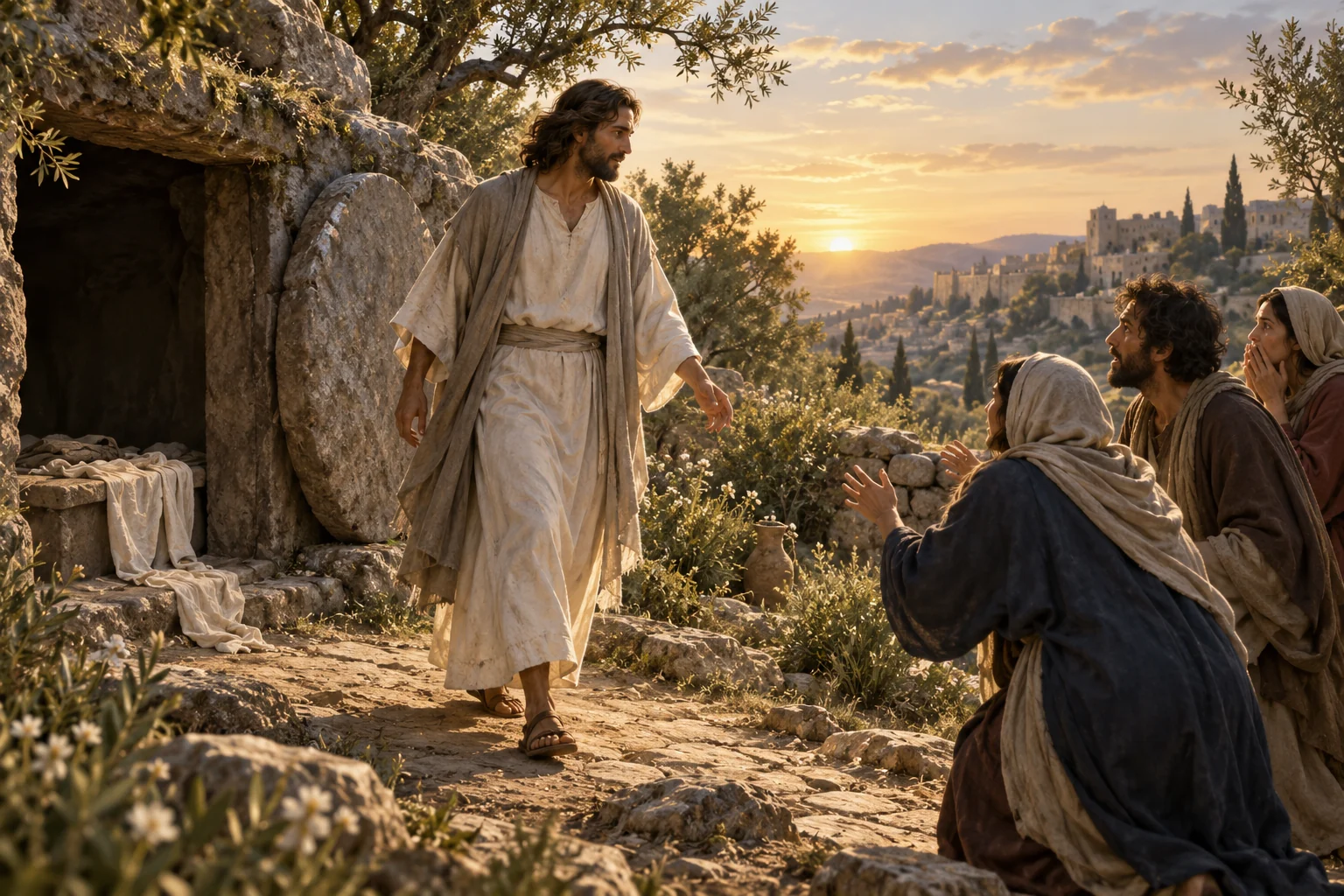
Jesus’ resurrection reveals that God’s goal is not escape from embodied existence but the renewal and glorification of human life within restored creation. The risen Jesus remains physically identifiable, eats, speaks, bears continuity with his crucified body, and yet possesses transformed, Spirit-animated life. Paul therefore calls him the firstfruits and Last Adam: his resurrection is the beginning and pattern of the future resurrection of his people.
Human identity rests in the ontological status of being God’s image, not in a detachable soul or a changing capacity such as cognition, productivity, or bodily ability. Resurrection vindicates the goodness of creation, preserves personal identity through transformation, restores humanity’s royal-priestly vocation, and grounds present care for bodies, creation, justice, and the vulnerable.
Key Claims
- Resurrection is bodily transformation. Paul’s “spiritual body” means a body animated and empowered by the Spirit, not an immaterial existence.
- The risen Messiah is firstfruits. His victory guarantees and patterns the resurrection awaiting those who belong to him.
- The imago Dei is an endowed status. Human dignity does not rise or fall with physical or cognitive capacity.
- Ascension enthrones glorified humanity. Jesus’ embodied exaltation confirms humanity’s intended royal-priestly destiny.
- New creation preserves covenant history. Resurrection completes the promise-plan without canceling God’s irrevocable commitments to Israel.
Interpretive Context
Paul’s contrast between a psychikos body and a pneumatikos body concerns the source and mode of life, not a transition from material embodiment to immaterial spirit. Resurrection preserves personal identity through radical transformation: continuity is grounded in God’s faithful re-creation of the person, while incorruption, glory, power, and Spirit-directed life mark the body’s genuinely new condition.
The synthesis resists both reductive physicalism and Hellenistic body-soul dualism. Hebraic anthropology presents the human person as an integrated embodied life; the intermediate state is real but provisional, awaiting resurrection. Genesis, the Gospel resurrection narratives, Romans 5 and 8, and 1 Corinthians 15 form a single canonical trajectory from creation and Adam through Messiah to renewed creation. Carmen Joy Imes’s account of humanity as God’s image and N. T. Wright’s resurrection research provide major conversation partners.
Selected Scholarship
- Farris, J. R. (2020). An Introduction to Theological Anthropology.
- Imes, C. J. (2023). Being God’s Image.
- Kaiser, W. C., Jr. (2008). The Promise-Plan of God.
- Walton, J. H. (2009). The Lost World of Genesis One.
- Wright, N. T. (2003). The Resurrection of the Son of God.
Scripture Connections
1 Corinthians 15; Jeremiah 31; Ezekiel 36; Romans 11; Luke 24:36–43; Luke 24:39; Luke 24:42–43; John 20:27
Continue on Substack
The complete article remains on Rabbit Room Apologetics at Substack.
Originally published August 19, 2026. This WordPress page is a discovery guide; the complete article is hosted on Substack.