ARTICLE GUIDE
At a Glance
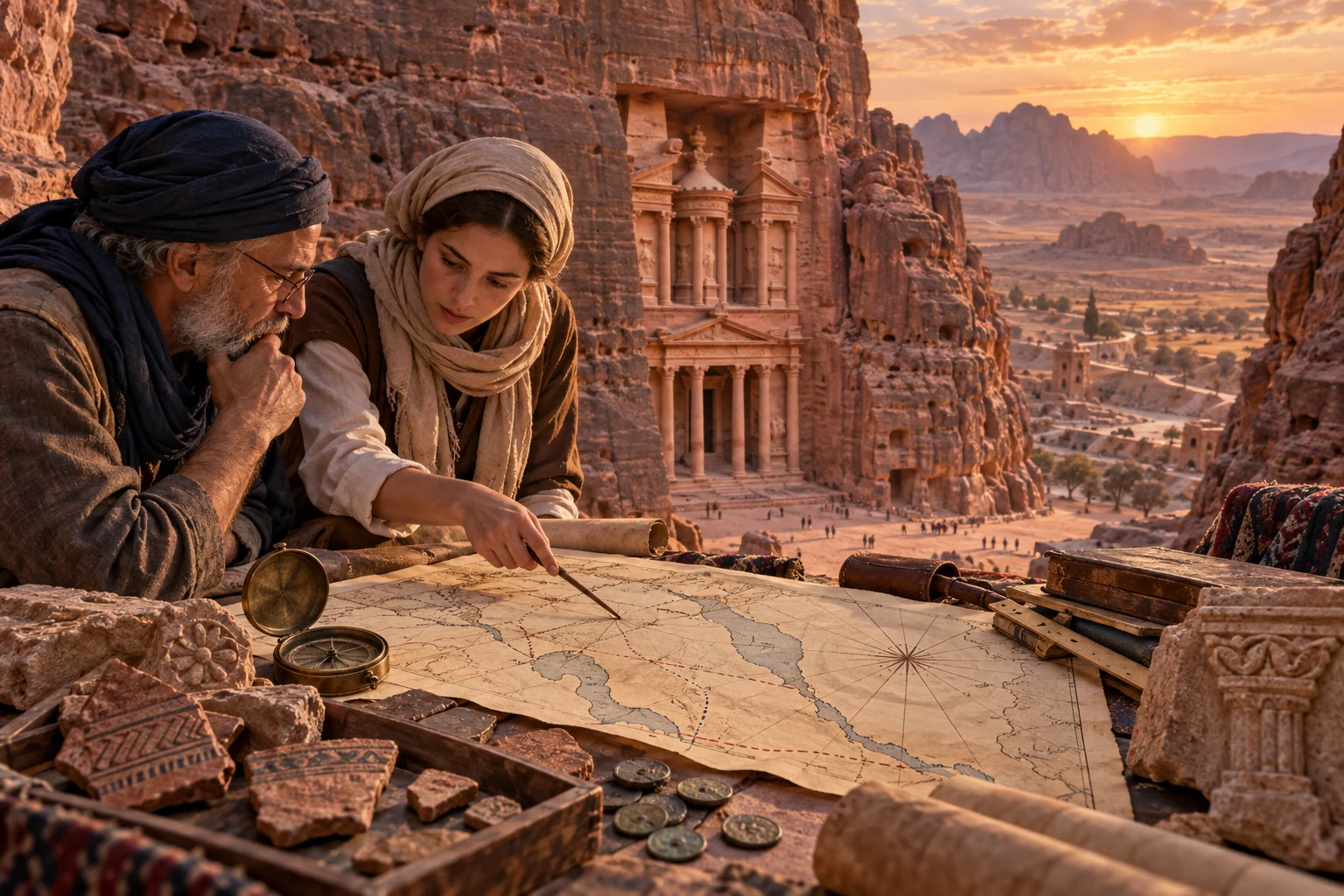
This essay examines historical-critical challenges to the Standard Islamic Narrative S.I.N.) regarding the origins of Islam, focusing on geographical, archaeological, and textual arguments that situate early Islamic sanctuaries in northern Arabia and the Levant—particularly the Nabataean region around Petra—rather than in the Hijaz of Mecca as in later tradition.
Read moreShow less
What This Study Explores
Christian–Muslim Polemics
Does the evidence prove that Islam began in Petra rather than Mecca?
No. Revisionist arguments raise legitimate questions about early qiblas, trade routes, geography, and the late literary sources, but the surviving evidence does not establish Petra as the demonstrated birthplace of Islam. Architectural orientations are imprecise and can reflect regional methods rather than a single hidden sanctuary.
The stronger conclusion is methodological: the traditional narrative must be tested against archaeology, manuscripts, inscriptions, and non-Muslim witnesses. Critical scrutiny can expose tensions without replacing one overly confident reconstruction with another.
Key Claims
- Some early mosque orientations do not point precisely toward modern Mecca, but neither do they consistently converge on Petra.
- Ancient builders often used cardinal directions, sunrise alignments, or approximate regional bearings.
- Patricia Crone’s critique of Meccan commerce prompted needed reassessment, though later scholarship defended meaningful Arabian trade.
- The Qurʾān’s environmental language cannot by itself locate its entire genesis in one northern city.
- Later Islamic histories preserve valuable traditions but require source criticism because of their chronological distance and theological shaping.
Interpretive Context
The debate often turns on how much weight to place on converging circumstantial clues. A historical case must distinguish anomalies that unsettle a received account from positive evidence that uniquely identifies an alternative.
For Christian apologetics, accuracy matters more than novelty. Islam’s origins remain historically contestable at several points, but responsible critique should state the degree of confidence each line of evidence can actually bear.
Selected Scholarship
- Dan Gibson, Qur’anic Geography
- David A. King, studies on early Islamic sacred geography and qibla
- Patricia Crone, Meccan Trade and the Rise of Islam
- R. B. Serjeant, studies on Meccan commerce
- Robert G. Hoyland, Seeing Islam as Others Saw It
Scripture Connections
Genesis 3; Romans 11; Luke 1; John 1; Acts 13; Romans 9; Jeremiah 31; Ezekiel 36
Continue on Substack
The complete article remains on Rabbit Room Apologetics at Substack.
Originally published August 22, 2026. This WordPress page is a discovery guide; the complete article is hosted on Substack.