ARTICLE GUIDE
At a Glance
The historical validity of Christian theology is bound to verifiable occurrences in space-time history, most foundational among which are the earthly ministry, public trial, Roman execution, and bodily resurrection of Jesus of Nazareth.
Read moreShow less
What This Study Explores
Promise-Plan Theology • Resurrection • Gospel Studies
What can archaeology establish about the historical reliability of the Gospels?
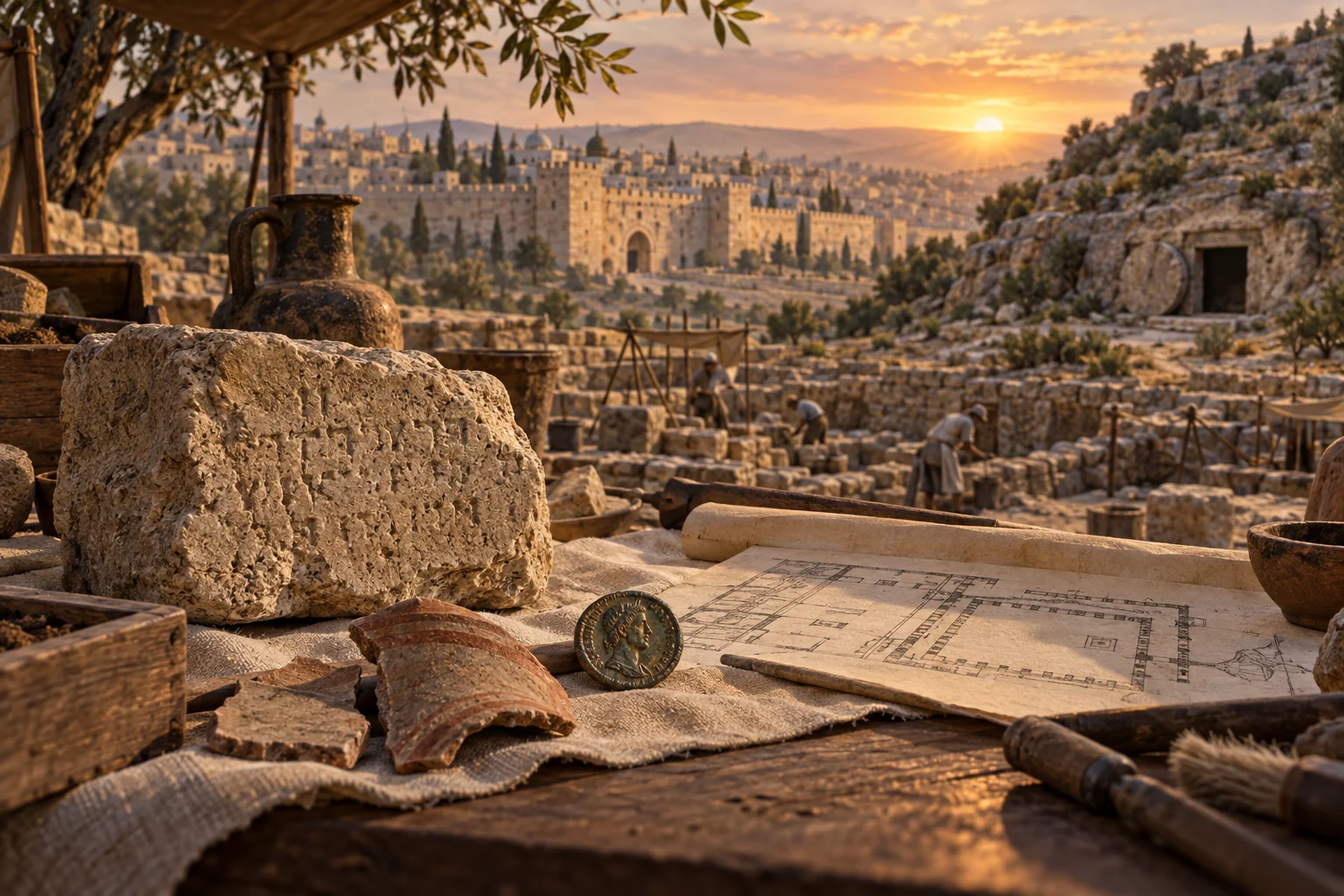
Archaeology cannot prove theological claims such as incarnation or resurrection by itself, but it can test whether the narratives are anchored in the people, offices, places, customs, and political conditions they describe. Repeated convergence raises the historical cost of dismissing the Gospels as late, placeless legend.
Epigraphic and material witnesses corroborate figures such as Pontius Pilate, Caiaphas, Gallio, and Herodian rulers, while excavated pools, roads, synagogues, and burial practices illuminate narrative details. Such evidence supports critical realism rather than demanding uncritical acceptance.
Key Claims
- The Pilate inscription confirms his prefectural title and Judean administration under Tiberius.
- The Caiaphas ossuary and Jerusalem tomb evidence fit the priestly and burial world of the Passion narratives.
- The Gallio inscription provides an external chronological anchor for Paul’s Corinthian ministry.
- Excavations at Bethesda, Siloam, Capernaum, and first-century Nazareth correct earlier claims of invented geography.
- Archaeological corroboration is cumulative and contextual; no single artifact proves the gospel as a whole.
Interpretive Context
The method avoids both maximalism and skepticism. Material evidence is fragmentary, interpretations remain revisable, and silence is not automatically disproof; nevertheless, accurate incidental detail is historically significant.
Within the promise-plan, revelation is rooted in public space-time history. The incarnation joins theological meaning to datable rulers, Jewish institutions, and physical places rather than locating salvation in an ahistorical myth.
Selected Scholarship
- Craig A. Evans, Jesus and the Remains of His Day (2015).
- James H. Charlesworth, ed., Jesus and Archaeology (2006).
- Jodi Magness, Stone and Dung, Oil and Spit (2011).
- Lawrence Mykytiuk, Identifying Biblical Persons in Northwest Semitic Inscriptions (2004).
- Walter C. Kaiser Jr., The Promise-Plan of God (2008).
Scripture Connections
Genesis 3; Jeremiah 31; Ezekiel 36; Matthew 2; Luke 3; Matthew 14; Mark 6; John 19
Continue on Substack
The complete article remains on Rabbit Room Apologetics at Substack.
Originally published September 2, 2026. This WordPress page is a discovery guide; the complete article is hosted on Substack.