ARTICLE GUIDE
At a Glance
Matthew 1–2 is not a cluster of isolated proof-texts but a typological tapestry in which Jesus of Nazareth recapitulates Israel’s story and brings God’s single promise-plan to its next, irreversible stage.
Read moreShow less
What This Study Explores
Promise-Plan Theology • Israel and the Nations
How does Matthew 1–2 present Jesus as the fulfillment of Israel’s story?
Matthew constructs a typological tapestry rather than a collection of isolated predictions. Jesus retraces Israel’s history as David’s son, Abraham’s seed, Immanuel, the threatened child, the Son called from Egypt, and the bearer of exile-ending hope.
These patterns preserve the first meaning of Isaiah, Micah, Hosea, and Jeremiah while bringing them to a heightened messianic realization. Jesus fulfills Israel’s vocation from within; he does not erase Israel or transfer her concrete promises to a replacement people.
Key Claims
- Biblos geneseōs announces a new-creation overture linked to Genesis.
- The genealogy joins Davidic kingship and Abrahamic blessing while using literary structure to mark royal purpose.
- Matthew’s exceptional women display providential preservation, irregular grace, and Gentile inclusion within Israel’s story.
- The five fulfillment citations operate through typology, escalation, and synthesis rather than flat predictive correspondence.
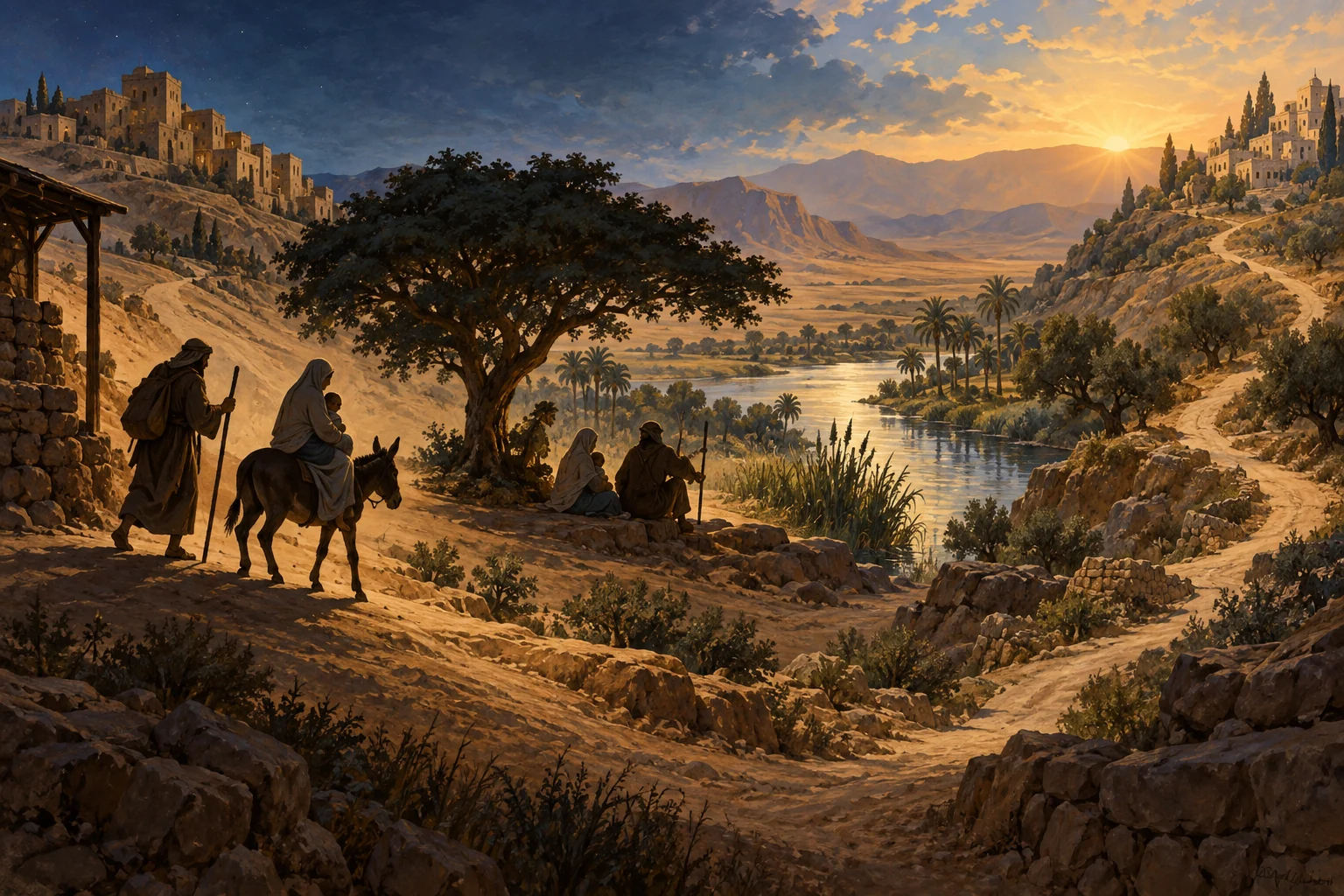
- The Egypt, Ramah, and Nazareth movements enact a New Exodus that carries Israel’s particular calling toward the nations.
Interpretive Context
Figural interpretation depends on real historical patterns: the earlier event remains meaningful in its own setting and becomes fuller through divinely ordered recurrence. This differs from allegory that abandons history and proof-texting that ignores original context.
The infancy narrative is non-supersessionist. Gentile Magi come to Israel’s Messiah, while Romans 11 clarifies that the nations join the cultivated olive tree rather than replacing its root.
Selected Scholarship
- R. T. France, The Gospel of Matthew (2007).
- Richard B. Hays, Echoes of Scripture in the Gospels (2016).
- David B. Capes, Matthew through Old Testament Eyes (2024).
- W. D. Davies and Dale C. Allison Jr., Matthew 1–7 (1988).
- Walter C. Kaiser Jr., The Promise-Plan of God (2008).
Scripture Connections
Matthew 1; Hosea 11:1; Jeremiah 31; Genesis 3:15; Jeremiah 31:31–34; Ezekiel 36:24–28; Jeremiah 31:15; Romans 11:28–29
Continue on Substack
The complete article remains on Rabbit Room Apologetics at Substack.
Originally published September 3, 2026. This WordPress page is a discovery guide; the complete article is hosted on Substack.