ARTICLE GUIDE
At a Glance
Exodus 6 marks a pivotal turning point in the Pentateuchal narrative, transitioning from Israel’s intensified suffering in Egypt to YHWH’s active, historical intervention within the unfolding promise-plan of God.
Read moreShow less
What This Study Explores
Promise-Plan Theology • Israel and the Nations
What Changes in Exodus 6?
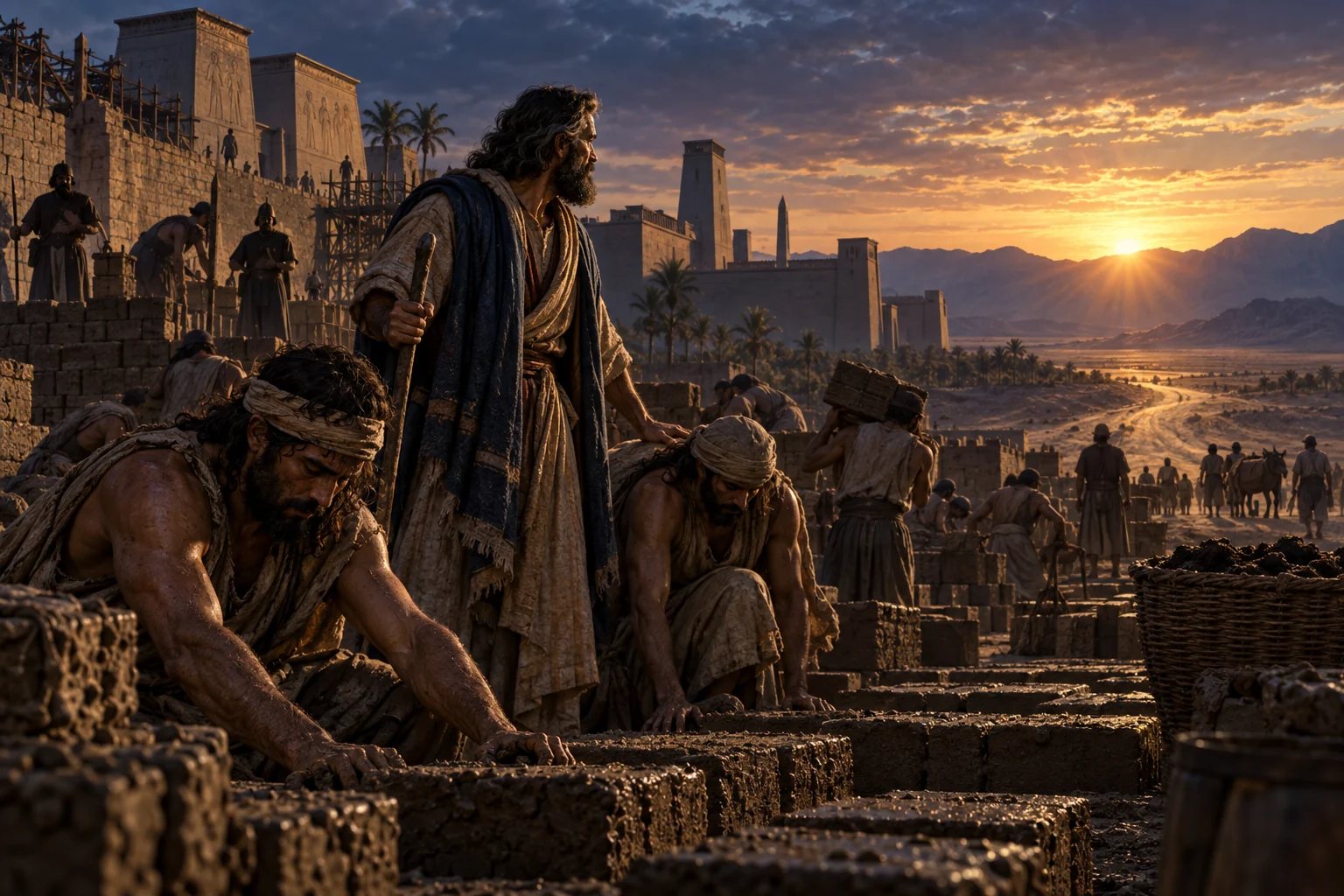
Exodus 6 turns the narrative from intensified oppression toward Yahweh’s active covenant fulfillment. Israel’s deliverance does not depend on Moses’ confidence, Pharaoh’s cooperation, or the people’s emotional strength. It rests on Yahweh’s identity, covenant memory, and sworn commitment to Abraham, Isaac, and Jacob. “I am Yahweh” becomes an experiential declaration: the generation will know the redemptive power and faithfulness bound to the divine name.
The four programmatic promises—“I will bring out,” “I will deliver,” “I will redeem,” and “I will take you as my people”—describe liberation, kinship redemption, covenant adoption, and restored divine presence. Israel’s inability to hear because of “shortness of spirit” is treated compassionately as the consequence of crushing slavery, not as proof that God’s promise has failed.
Key Claims
- Covenant remembrance means action. Yahweh does not recover forgotten information; he intervenes loyally to execute his oath.
- Redemption is divine before it is human. The repeated “I will” declarations center salvation in Yahweh’s initiative.
- The divine name is known through history. The patriarchs knew the name, but the Exodus generation experiences its covenant-fulfilling force.
- Trauma constrains Israel’s hearing. The text recognizes despair produced by systemic oppression.
- The genealogy legitimates priestly leadership. Moses and Aaron are located within Levi’s family before confronting Pharaoh publicly.
Interpretive Context
The statement that the patriarchs did not know Yahweh by this name is best read as a claim about experienced covenantal significance rather than simple lexical ignorance, since the divine name appears throughout Genesis. The genealogy likewise interrupts the action deliberately: it identifies Moses and Aaron within Levi and anticipates the priestly institutions through which redeemed Israel will approach the divine presence.
The commentary situates Exodus 6 after the apparent failure of Moses’ first audience with Pharaoh. Ancient covenant language, kinship redemption, the later Passover tradition, and the sanctuary vocation clarify the chapter’s place in the promise-plan. New Testament appropriation extends rather than erases this pattern: Messiah’s Exodus-shaped work brings redemption and covenant presence toward their canonical climax.
Primary Textual Anchors
- Exodus 6:1–9 — divine self-disclosure and four promises of redemption.
- Exodus 6:10–13, 28–30 — Moses’ protest and renewed commission.
- Exodus 6:14–27 — Levitical genealogy and Aaronid legitimacy.
- Genesis 15:13–14 — the pledged pattern of oppression, deliverance, and possession.
- Luke 9:31; Titus 2:14; Revelation 1:5–6 — Exodus imagery in messianic redemption.
Selected Scholarship
- Brevard S. Childs, The Book of Exodus — treats the renewed commission and divine-name theology canonically.
- William H. C. Propp, Exodus 1–18 — detailed philological work on the genealogies, covenant speech, and hardening narrative.
- Douglas K. Stuart, Exodus — evangelical exegesis of promise, redemption, and Moses’ renewed objections.
- John I. Durham, Exodus — emphasizes Yahweh’s presence, name, and covenant action in the deliverance story.
- Terence E. Fretheim, Exodus — explores divine presence, covenant memory, human resistance, and the theology of deliverance.
Scripture Connections
Exodus 6; Exodus 5; Exodus 6:1–3; Exodus 6:4–5; Exodus 6:6–8; Exodus 6:10–12; Exodus 6:13; Exodus 6:14–20
Continue on Substack
The complete article remains on Rabbit Room Apologetics at Substack.
Originally published September 14, 2026. This WordPress page is a discovery guide; the complete article is hosted on Substack.