ARTICLE GUIDE
At a Glance
This essay constructs a theological account of human cultural identity—operationalized across vocation, race and ethnicity, and disability—by reading Joshua R. Farris’s treatment of culture in
Read moreShow less
What This Study Explores
Theological Anthropology
How Does Biblical Anthropology Shape Work, Ethnicity, and Disability?
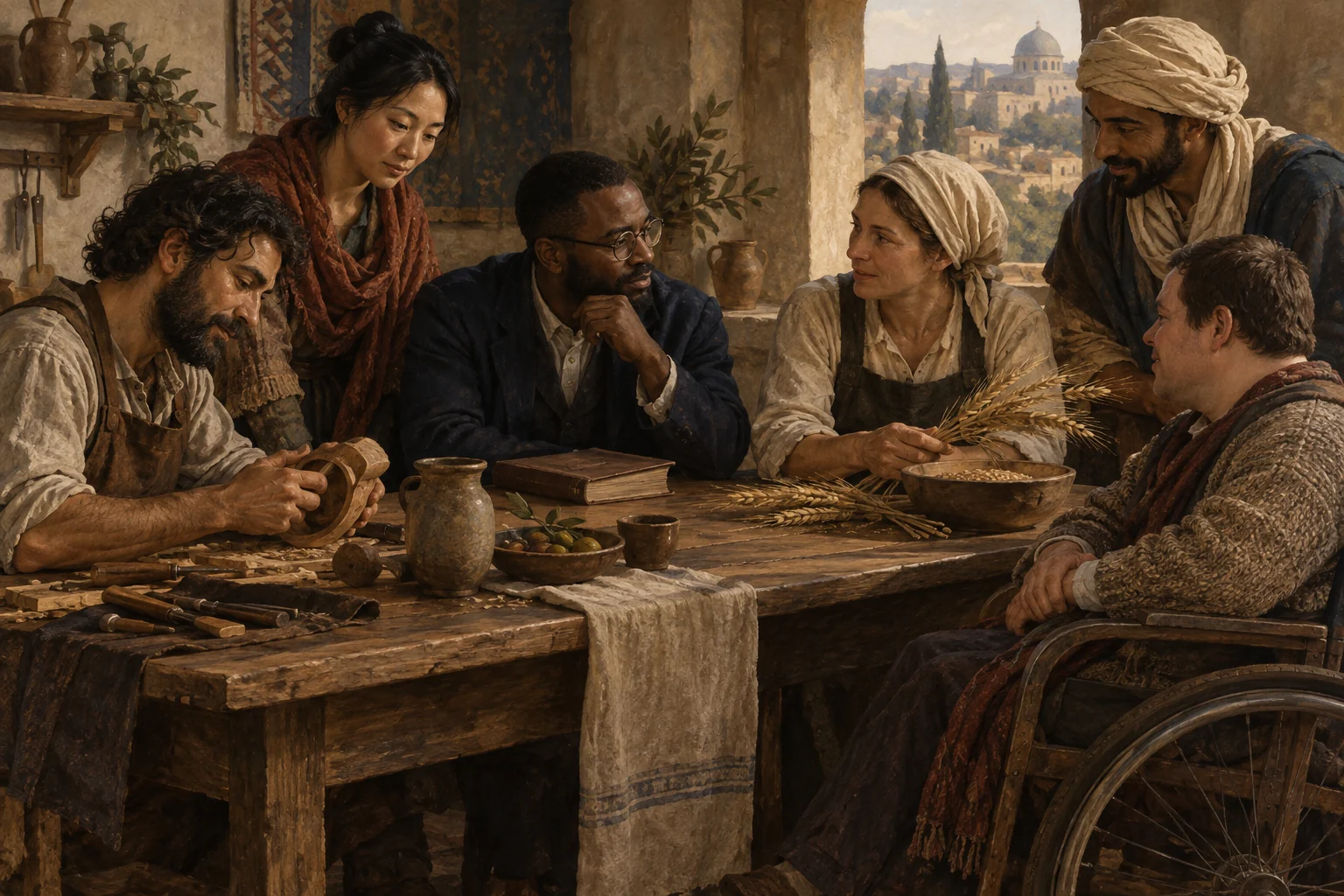
Human cultural identity is grounded first in God’s declaration that all human beings are his living images. The imago Dei is an endowed ontological status, not a capacity earned through intelligence, productivity, independence, or bodily performance. That foundation protects dignity across every stage and condition of life while locating culture within humanity’s royal-priestly vocation in creation.
Work, ethnicity, and disability are therefore neither spiritually irrelevant nor ultimate identities. Work is creaturely stewardship corrupted by toil but renewed toward service; ethnic diversity is gathered and reconciled without flattening difference or superseding Israel; disability must be distinguished from ordinary finitude and included within resurrection hope without erasing the personal histories of disabled image-bearers.
Key Claims
- The image of God is bestowed rather than achieved. Human dignity does not rise or fall with presently exercisable capacities.
- Culture belongs to sacred vocation. The garden commission frames labor, creativity, governance, and community as extensions of royal-priestly service.
- Work is good before it becomes toil. Redemption restores labor’s orientation toward neighbor, creation, and God without making occupation an idol.
- Ethnic plurality can persist without hierarchy. The nations are gathered in Messiah while Israel’s historical and covenantal particularity remains intact.
- Resurrection heals without depersonalizing. Christian hope opposes the idolization of ability while anticipating transformed embodied life.
Interpretive Context
The essay engages Joshua Farris on culture, Carmen Imes and John Kilner on the image of God, and ancient Near Eastern image and temple backgrounds. These sources clarify Genesis’s public anthropology without permitting comparative materials to control the canon.
The promise-plan traces humanity’s cultural vocation through creation, cosmic rebellion, Abraham, Israel’s priestly calling, Messiah, and the New Jerusalem. Romans 11 and Revelation’s multinational city together resist both ethnic erasure and tribal domination.
Selected Scholarship
- Farris, J. R. (2020). An Introduction to Theological Anthropology. Baker Academic.
- Imes, C. J. (2023). Being God’s Image. IVP Academic.
- Kilner, J. F. (2015). Dignity and Destiny. Eerdmans.
- Middleton, J. R. (2005). The Liberating Image. Brazos Press.
- Volf, M. (2001). Work in the Spirit. Wipf & Stock.
Scripture Connections
Genesis 3:15; Jeremiah 31; Ezekiel 36; Genesis 1:26–28; Genesis 6:1–4; Deuteronomy 32:8–9; Genesis 5:1–3; Genesis 9:6
Continue on Substack
The complete article remains on Rabbit Room Apologetics at Substack.
Originally published September 9, 2026. This WordPress page is a discovery guide; the complete article is hosted on Substack.