ARTICLE GUIDE
At a Glance
Within the progressive unfolding of the divine promise-plan, Psalm 2 functions alongside Psalm 1 as a deliberate two-part gateway to the Psalter. It joins Torah-shaped faithfulness to allegiance to Yahweh’s anointed king and extends the Davidic promise toward the Messiah’s rule over the nations.
Read moreShow less
What This Study Explores
Promise-Plan Theology
Direct Answer: Why does Psalm 2 place the Davidic king at the center of the nations’ rebellion?
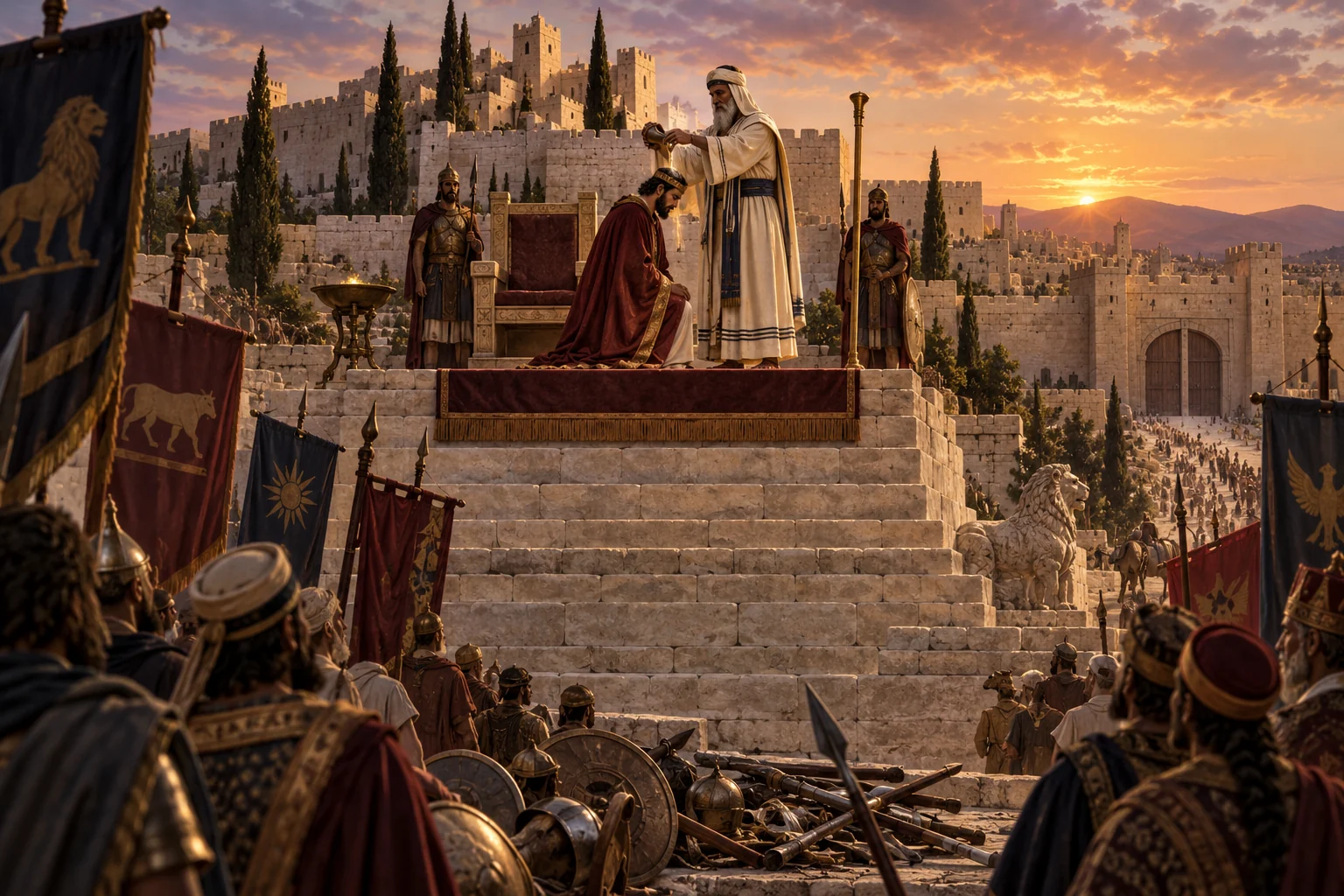
Psalm 2 presents rebellion against Yahweh and rebellion against his anointed king as one political and theological revolt. The Davidic ruler is installed on Zion as Yahweh’s authorized representative, and the nations’ fury cannot overturn the divine decree.
The psalm reaches beyond any single coronation because its promised inheritance is the ends of the earth. The New Testament therefore applies its royal language to Jesus’ resurrection, enthronement, mission to the nations, and final defeat of hostile powers.
Key Claims
- Psalms 1 and 2 form a coordinated gateway joining Torah faithfulness to allegiance to Yahweh’s anointed king.
- The nations’ plot is both geopolitical rebellion and resistance to divine rule.
- “Today I have begotten you” is royal-investiture language in its immediate context, not a statement that the divine Son came into existence.
- Zion functions as the earthly seat of Yahweh’s kingship and a sacred-space counterpoint to rebellious cosmic mountains.
- The universal inheritance advances the Abrahamic and Davidic promises toward messianic rule over all nations.
Interpretive Context
The psalm begins in an ancient royal setting but its language exceeds the achievement of ordinary Davidic kings. Canonical reuse in Acts, Hebrews, and Revelation identifies Jesus as the climactic king without canceling the text’s historical, covenantal, or Israel-centered foundations.
Psalm 2’s royal and cosmic horizons belong together. Ancient enthronement language and the Davidic covenant establish the historical referent, while the promised inheritance of all nations exceeds the achievement of ordinary kings. Acts, Hebrews, and Revelation do not erase Zion or Israel when they identify Jesus as the climactic Son; they present his resurrection and enthronement as the organic expansion of Yahweh’s decree toward universal rule.
Selected Scholarship
- John Goldingay, Psalms, Volume 1 (2006).
- J. Clinton McCann Jr., “The Book of Psalms,” in The New Interpreter’s Bible (1996).
- Peter C. Craigie, Psalms 1–50, 2nd ed. (2004).
- Michael S. Heiser, The Unseen Realm (2015).
- Walter C. Kaiser Jr., The Promise-Plan of God (2008).
Scripture Connections
Psalm 2; Psalm 1; Deuteronomy 32; Psalm 82; 2 Samuel 7; Acts 4:25–28; Acts 13:33; Colossians 1:18
Continue on Substack
The complete article remains on Rabbit Room Apologetics at Substack.
Originally published July 10, 2026. This WordPress page is a discovery guide; the complete article is hosted on Substack.