ARTICLE GUIDE
At a Glance
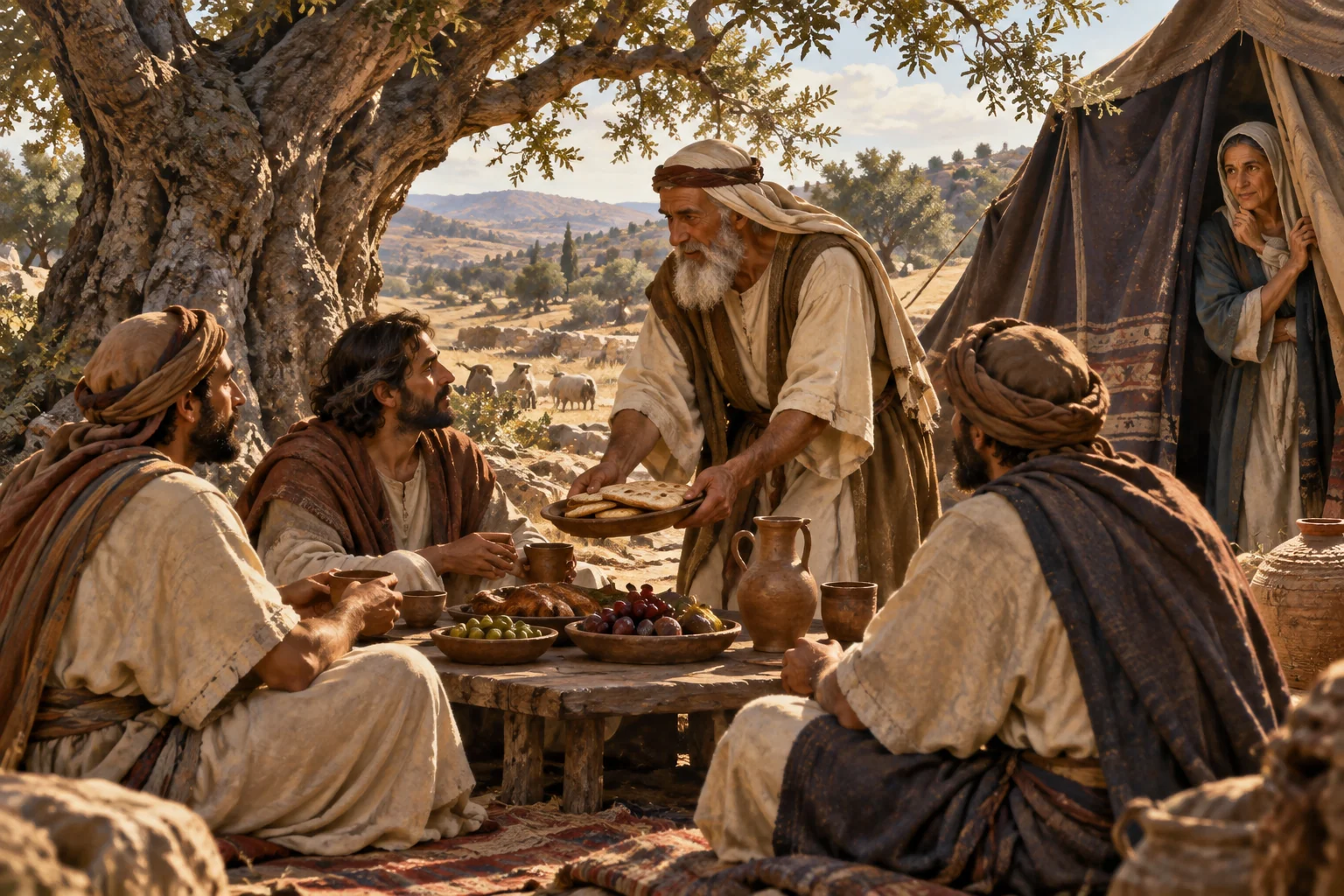
Genesis 18 serves as a pivotal theological junction within the organic, progressive unfolding of God’s redemptive purposes. Following the compounding cosmic rebellions of Eden, the transgression of the Watchers, and the disinheritance of the nations at Babel, Yahweh initiates His restorative agenda by calling Abraham to form a people who will mediate blessing to the world.
Read moreShow less
What This Study Explores
Biblical Theology • Canonical Interpretation • The Promise-Plan of God
Direct Answer: Why does God disclose the investigation of Sodom to Abraham?
Election includes vocation. Abraham is chosen not only to receive blessing but to form a household that practices righteousness and justice, so Yahweh invites him into prophetic understanding and intercession regarding the fate of the cities.
Abraham’s appeal—whether the Judge of all the earth will do justice—does not correct an unjust God. It draws out the compatibility of divine judgment, careful investigation, mercy toward the righteous, and Abraham’s mediating role for the nations.
Key Claims
- The visitors join embodied hospitality, covenant promise, and impending judgment in a single narrative.
- Sarah’s laughter meets the question whether anything is too difficult for Yahweh.
- Genesis 18:19 connects Abrahamic election with teaching righteousness and justice across generations.
- The outcry against Sodom prompts judicial investigation rather than arbitrary destruction.
- Abraham’s descending petitions model bold yet humble intercession grounded in God’s just character.
Interpretive Context
The three visitors have generated Jewish and Christian debate about theophany, angels, and divine plurality. The narrative explicitly identifies Yahweh’s appearance while later distinguishing the two messengers who enter Sodom; systematic conclusions should follow rather than replace that literary movement.
Abraham’s intercession also demonstrates how covenant privilege is ordered toward the welfare of outsiders. The promised family is to embody Yahweh’s justice and mediate blessing among the nations; thus the conversation about Sodom anticipates Israel’s prophetic vocation and the Messiah’s priestly mediation without collapsing Abraham into the divine Judge.
Selected Scholarship
- Gordon J. Wenham, Genesis 16–50 (1994).
- Victor P. Hamilton, The Book of Genesis, Chapters 18–50 (1995).
- Nahum M. Sarna, Genesis (1989).
- John H. Walton, Genesis (2001).
- Kenneth A. Mathews, Genesis 11:27–50:26 (2005).
Scripture Connections
Genesis 18; Genesis 18:18; Genesis 18:19; Galatians 3:8; Genesis 12:3; Romans 4:16–18; Acts 3:25–26; Genesis 3:1–24
Continue on Substack
The complete article remains on Rabbit Room Apologetics at Substack.
Originally published June 11, 2026. This WordPress page is a discovery guide; the complete article is hosted on Substack.