ARTICLE GUIDE
At a Glance
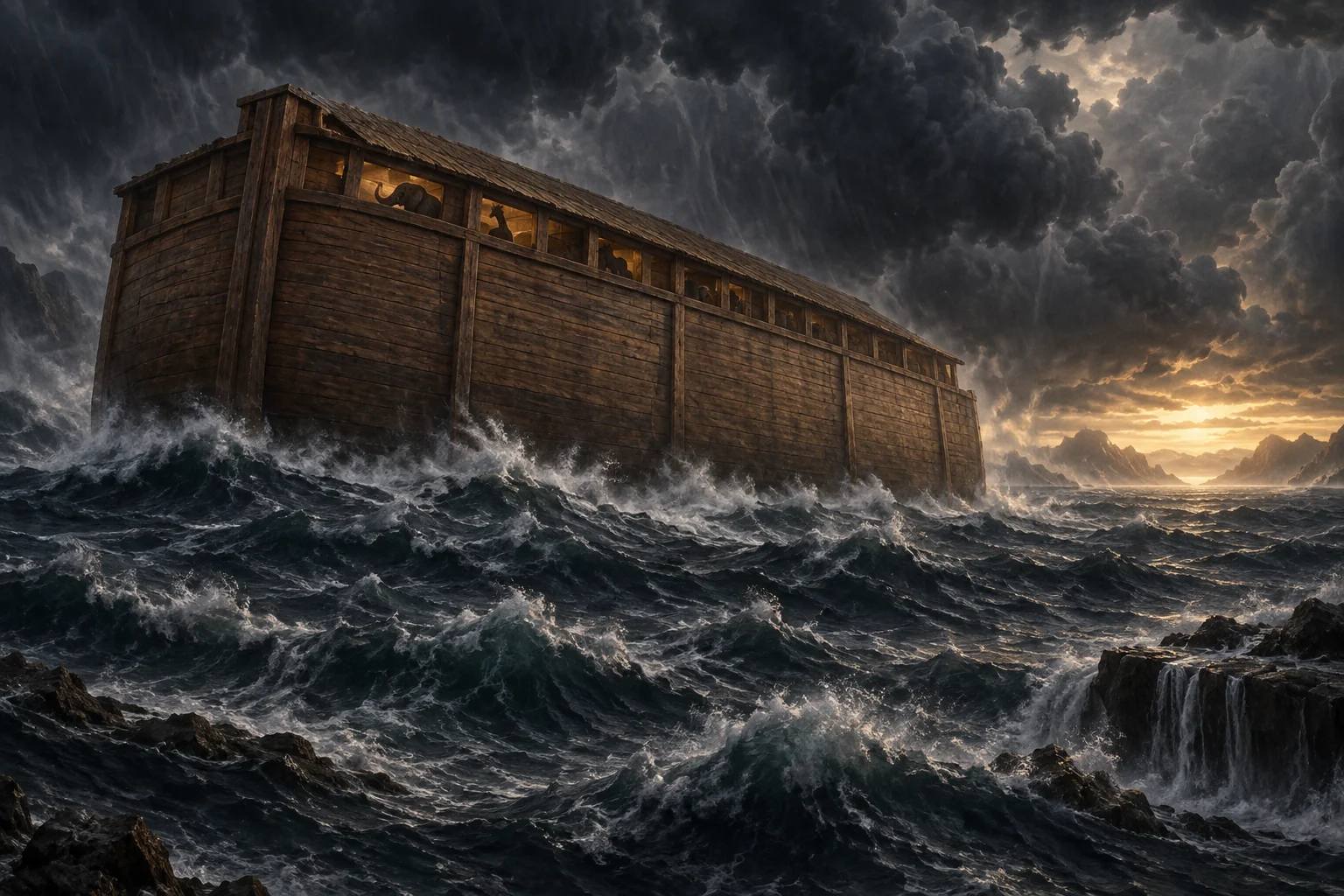
Genesis 7 details the cataclysmic historical event of the global deluge, serving as a critical hinge in the organic, progressive development of God’s redemptive promise-plan. Following the cosmic rebellion of the Watchers and the proliferation of the Nephilim and human wickedness in Genesis 6, the earth was filled with
Read moreShow less
What This Study Explores
Promise-Plan Theology
Direct Answer: Why does Genesis 7 portray the flood as both judgment and preservation?
The flood answers a world saturated with violence by reversing the ordered spaces of creation: waters above and below overwhelm the inhabited land. Yet the same judgment preserves Noah, his household, and animal life, ensuring that God’s purpose for creation and the promised seed continues.
The ark is therefore not an escape from God’s created order but a vessel through judgment toward renewed creation. God sovereignly closes Noah in, remembers the distinction of living creatures, and preserves a remnant from which the earth will be repopulated.
Key Claims
- The flood is a moral judgment on pervasive corruption and violence rather than divine caprice.
- The opening of the deep and the heavens reverses the separations that structured Genesis 1.
- Noah’s obedience includes entering the ark with his household and the appointed animals.
- The clean-animal distinction anticipates sacrifice without importing the entire later Levitical system into the chapter.
- The repeated destruction-and-preservation language makes the survival of life central to the promise-plan.
Interpretive Context
Christians disagree about the geographical extent and physical mechanism of the flood, and the Hebrew language of totality must be interpreted within ancient cosmology, narrative rhetoric, and the canonical claim of comprehensive judgment. Ancient Near Eastern flood traditions provide comparative context but do not determine Genesis’s theology. Watcher traditions illuminate Genesis 6 in Second Temple reception, while Genesis 7 itself foregrounds human violence, divine judgment, and preservation.
The essay interprets the opening of the deep and the heavens as a reversal of creation’s ordered boundaries and Noah’s preservation as the means by which the promised human line survives. Its analogy between flood and sanctuary purgation is a biblical-theological proposal: it highlights violence as pollution of God’s world while remaining distinct from the later ritual procedures of Leviticus.
Selected Scholarship
- Gordon J. Wenham, Genesis 1–15 — structure, chronology, and theology of the flood narrative.
- Victor P. Hamilton, The Book of Genesis: Chapters 1–17 — close lexical and narrative exegesis.
- John H. Walton and Tremper Longman III, The Lost World of the Flood — ancient context and the debate over scope.
- Nahum M. Sarna, Genesis — Jewish literary interpretation and comparison with Mesopotamian flood accounts.
- Jacob Milgrom, Leviticus 1–16 — ritual and moral impurity as a framework for the essay’s account of cosmic purgation.
Scripture Connections
Genesis 7; Genesis 6; Genesis 7:11; Genesis 1; Matthew 24:38–39; Luke 17:27; Hebrews 11:7; 1 Peter 3:20
Continue on Substack
The complete article and its available video material remain on Rabbit Room Apologetics at Substack.
Originally published June 2, 2026. This WordPress page is a discovery guide; the complete article is hosted on Substack.