ARTICLE GUIDE
At a Glance
Genesis 11 functions as the definitive canonical hinge within the Pentateuch, pivoting the narrative from the universal primeval history of humanity (Gen 1–11) to the particular, patriarchal focus of God’s redemptive purposes (Gen 12–50).
Read moreShow less
What This Study Explores
Biblical Theology • Canonical Interpretation • The Promise-Plan of God
Direct Answer: What is the central sin and judgment at Babel?
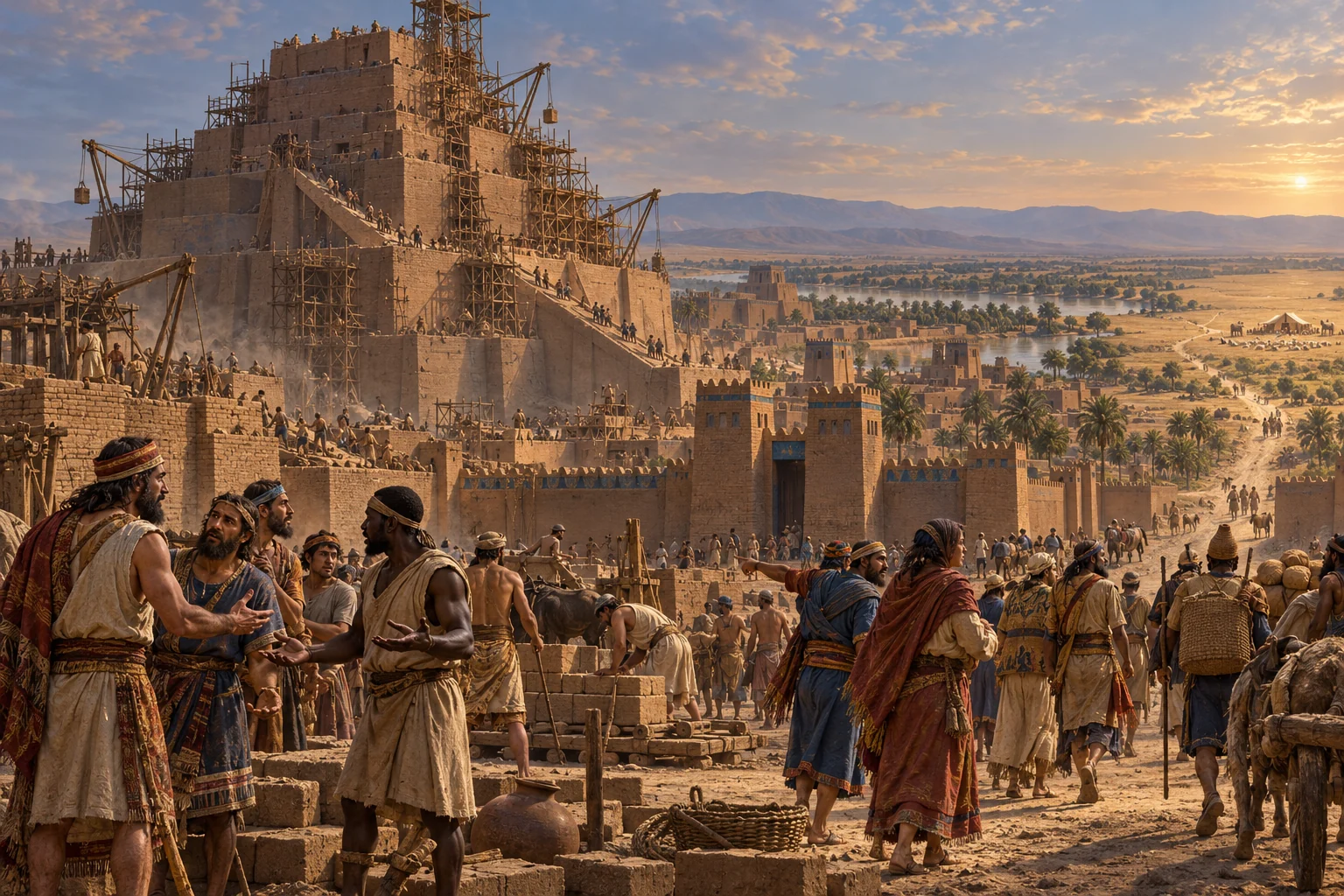
Babel depicts humanity using technological and cultic power to secure centralized permanence and manufacture a name in resistance to God’s mandate to fill the earth. The tower-city project turns unity into an instrument of autonomous security and imperial ambition.
God’s descent exposes the limits of the project, confuses its speech, and scatters its builders. Judgment also redirects the narrative: the genealogy of Shem narrows toward Abram, through whose divinely given name and family the scattered nations will ultimately receive blessing.
Key Claims
- The city and tower represent organized human self-exaltation rather than an innocent construction project.
- Mesopotamian ziggurat imagery helps explain the tower as a sacred center linking city, kingship, and the divine realm.
- The builders seek a self-made name, contrasting with the name God later promises Abram.
- Confused language frustrates coercive centralization and results in the filling of the earth.
- Shem’s genealogy preserves the seed-line and carries the narrative directly toward the Abrahamic promise.
Interpretive Context
The text never says that the builders expected to climb physically into heaven, and its ziggurat background is more precise than a modern skyscraper analogy. Deuteronomy 32:8–9 supplies a later canonical lens for understanding the nations’ allotment, especially in the Dead Sea Scrolls and Septuagint reading “sons of God”; that divine-council dimension should be distinguished from what Genesis 11 states explicitly. The story critiques rebellious unity, not cultural or linguistic diversity itself.
The chapter’s canonical afterlife holds judgment and mission together. Pentecost answers Babel not by erasing languages but by making the one apostolic proclamation intelligible across them, while Luke’s genealogy and Hebrews’ contrast between Babel’s city and God’s city locate Abraham and Messiah within the answer to the nations’ scattering.
Selected Scholarship
- John H. Walton, Ancient Near Eastern Thought and the Old Testament — ziggurats, sacred space, and Mesopotamian urban ideology.
- Gordon J. Wenham, Genesis 1–15 — literary analysis of Babel and the Shemite genealogy.
- Nahum M. Sarna, Genesis — philological and Jewish interpretation of city, name, and scattering.
- Michael S. Heiser, The Unseen Realm — canonical development of Babel, Deuteronomy 32, and the divine council.
- Walter C. Kaiser Jr., The Promise-Plan of God — Babel’s place in the narrowing of the promised seed-line toward Abraham and blessing for the nations.
Scripture Connections
Genesis 11; Deuteronomy 32:8–9; Genesis 12; Acts 2:1–13; Acts 2; Luke 3:34–36; Hebrews 11:8; Leviticus 1
Continue on Substack
The complete article and its available video material remain on Rabbit Room Apologetics at Substack.
Originally published June 3, 2026. This WordPress page is a discovery guide; the complete article is hosted on Substack.