ARTICLE GUIDE
At a Glance
Within the progressive unfolding of the divine promise-plan, the narrative of Isaac functions as a critical structural hinge connecting the foundational covenant made with Abraham to the establishment of the twelve tribes through Jacob.
Read moreShow less
What This Study Explores
Promise-Plan Theology
Direct Answer: What does Genesis 26 reveal about how the Abrahamic promise continues through Isaac?
Yahweh personally renews the promises of land, offspring, presence, and worldwide blessing during famine, establishing Isaac as the covenant heir. The promise survives because God remains faithful even when Isaac repeats Abraham’s fear-driven deception.
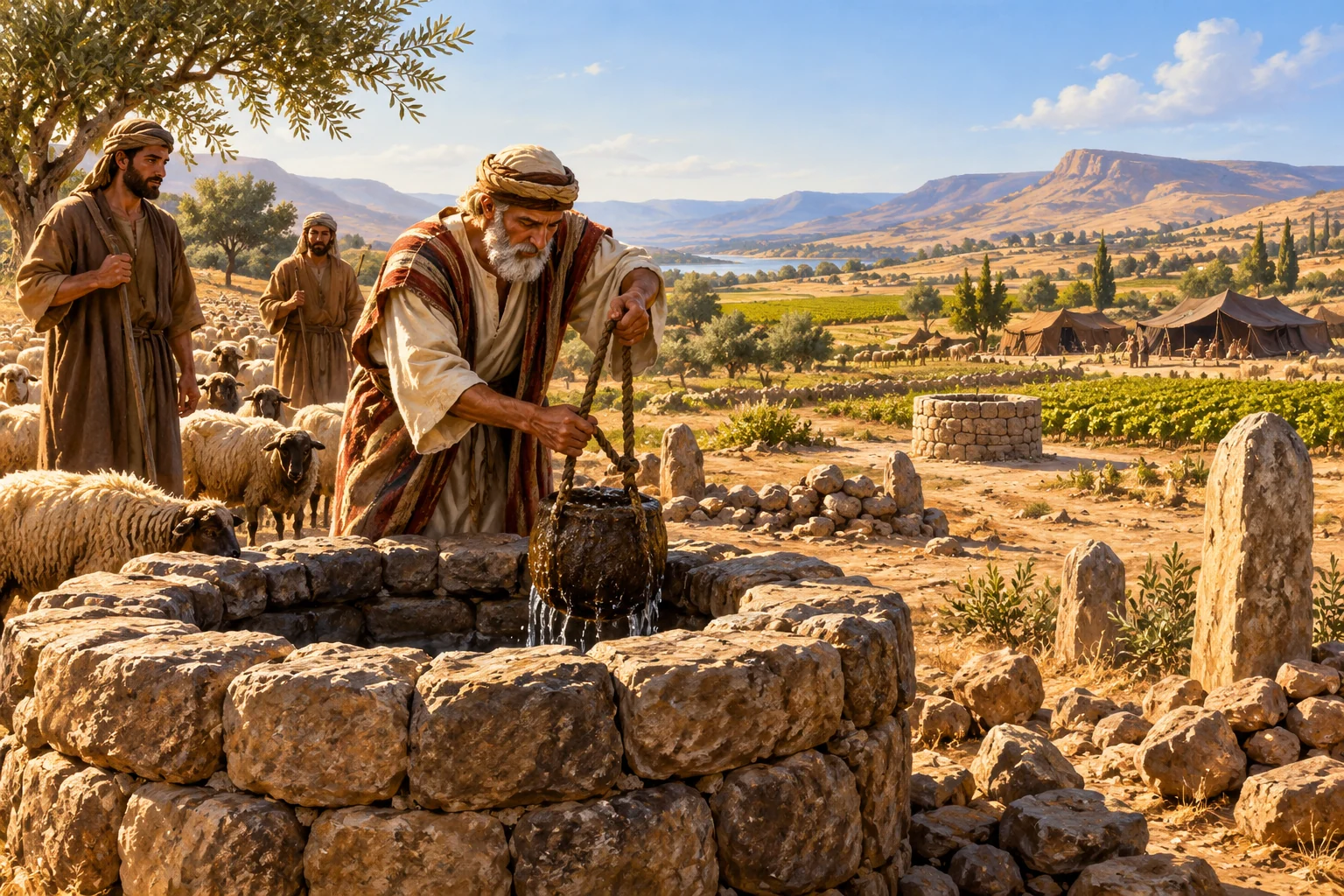
Isaac’s wells, conflicts, withdrawal, worship, and treaty show covenant life taking geographic form. He yields disputed sites without surrendering the promise, and God grants room and recognition in the land.
Key Claims
- The famine links Isaac’s experience with Abraham and later Joseph while testing trust in the promised land.
- God forbids descent to Egypt and reiterates the Abrahamic promise directly to Isaac.
- The sister-wife episode repeats a family pattern but also highlights Isaac’s distinct responsibility and failure.
- The sequence of blocked and reopened wells dramatizes conflict, perseverance, and divine provision.
- The altar at Beersheba and Abimelech’s treaty publicly confirm presence, worship, and peaceful recognition.
Interpretive Context
Literary parallels with Genesis 12 and 20 need not be dismissed as either exact repetition or mere editorial duplication. Genesis uses recurring family patterns to compare generations, expose inherited failures, and demonstrate the promise’s preservation under changing circumstances.
Isaac’s repeated withdrawal from disputed wells is neither passive surrender nor abandonment of the land promise. By reopening inherited wells, naming Rehoboth, building an altar, and receiving recognition from Abimelech, he embodies patient reliance on Yahweh’s provision while the promised inheritance remains historically concrete and not yet fully possessed.
Selected Scholarship
- Gordon J. Wenham, Genesis 16–50 (1994).
- Victor P. Hamilton, The Book of Genesis, Chapters 18–50 (1995).
- Nahum M. Sarna, Genesis (1989).
- Kenneth A. Mathews, Genesis 11:27–50:26 (2005).
- John H. Walton, Genesis (2001).
Scripture Connections
Genesis 26; Genesis 12; Romans 9:6–9; Hebrews 11:17–20; Galatians 3:16; Genesis 3; Genesis 1:1–2
Continue on Substack
The complete article remains on Rabbit Room Apologetics at Substack.
Originally published June 18, 2026. This WordPress page is a discovery guide; the complete article is hosted on Substack.