ARTICLE GUIDE
At a Glance
The narrative of Genesis 29 occurs within a critical cosmic transition in the patriarchal history of the book of Genesis.
Read moreShow less
What This Study Explores
Biblical Theology • Canonical Interpretation • The Promise-Plan of God
Direct Answer: Why does Jacob’s deception by Laban matter to the formation of Israel?
The deceiver is placed in a household governed by a more powerful deceiver. Laban’s substitution of Leah for Rachel turns the rights of the firstborn back upon Jacob and begins a long discipline through which God advances the promise without endorsing Jacob’s manipulation.
From the painful marriages and rivalry comes the expanding family that will become Israel. God sees Leah’s rejection, grants children, and works through a deeply disordered household, showing that election depends upon divine faithfulness rather than an idealized patriarchal family.
Key Claims
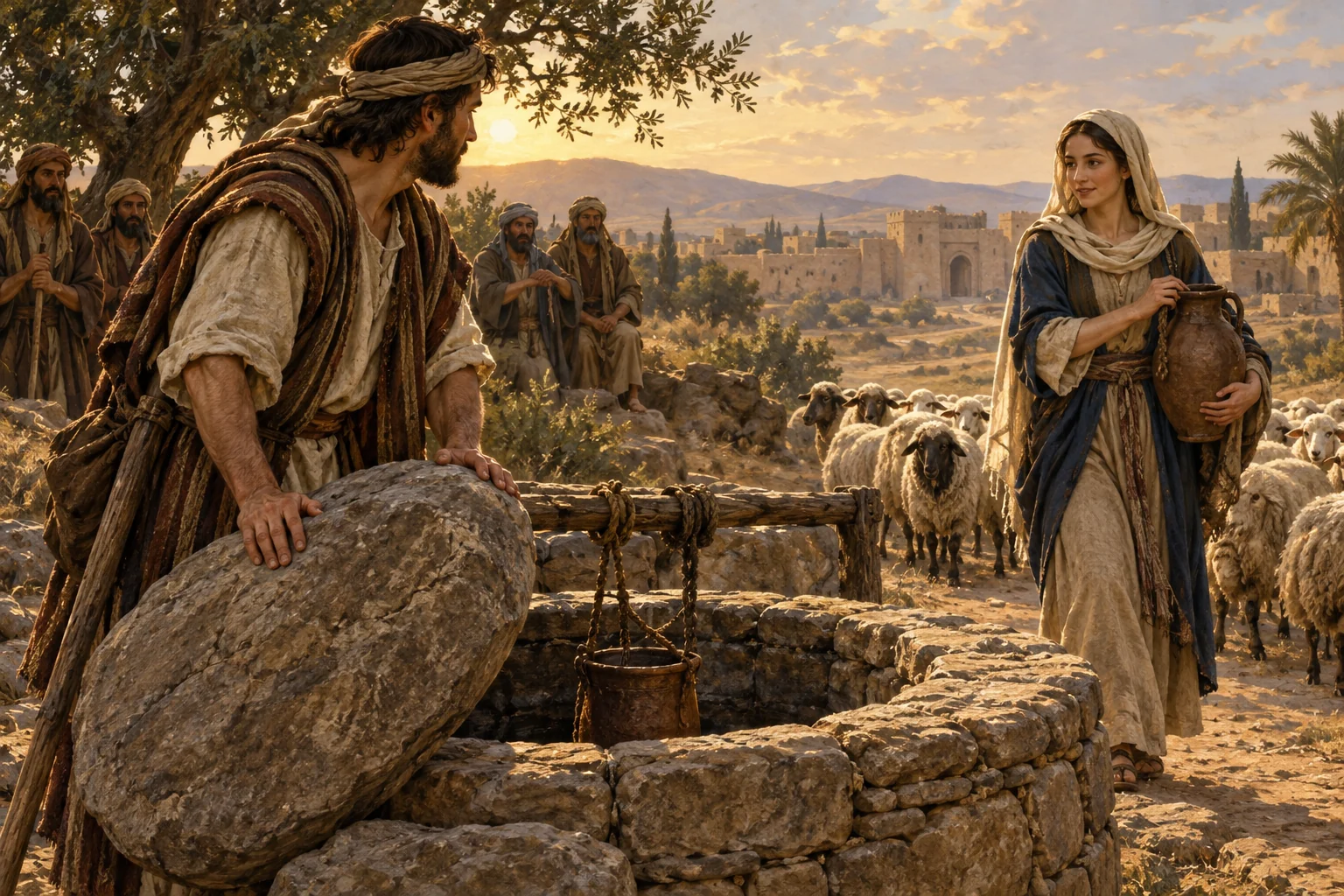
- The well scene echoes Genesis 24 but highlights Jacob’s strength and initiative more than explicit prayer.
- Seven years of labor function as bride-price for Rachel within the household economy.
- Laban’s nighttime substitution confronts Jacob with the firstborn principle he previously subverted.
- Leah’s fertility and naming of her sons disclose longing, rejection, and growing recognition of Yahweh.
- The tribal family begins through rivalry and injustice, yet every son will be incorporated into Israel’s corporate election.
Interpretive Context
Ancient marriage and bride-price customs explain the negotiations but do not make Laban’s deception just or the women’s distress incidental. The text neither prescribes polygyny nor presents Leah and Rachel as props; their experiences reveal the human cost of male bargaining and household competition.
The chapter’s literary reversals also direct attention beyond Jacob’s discipline to Yahweh’s regard for Leah. Her movement from craving her husband’s affection toward praising Yahweh at Judah’s birth becomes part of the messianic trajectory, showing that God advances the promise through the overlooked without romanticizing the household that wounded them.
Selected Scholarship
- Gordon J. Wenham, Genesis 16–50 (1994).
- Victor P. Hamilton, The Book of Genesis, Chapters 18–50 (1995).
- Nahum M. Sarna, Genesis (1989).
- Robert Alter, Genesis: Translation and Commentary (1996).
- Kenneth A. Mathews, Genesis 11:27–50:26 (2005).
Scripture Connections
Genesis 29; Genesis 11; Deuteronomy 32; Genesis 24; Matthew 1; Galatians 4; Hebrews 11; Revelation 7
Continue on Substack
The complete article remains on Rabbit Room Apologetics at Substack.
Originally published June 23, 2026. This WordPress page is a discovery guide; the complete article is hosted on Substack.