ARTICLE GUIDE
At a Glance
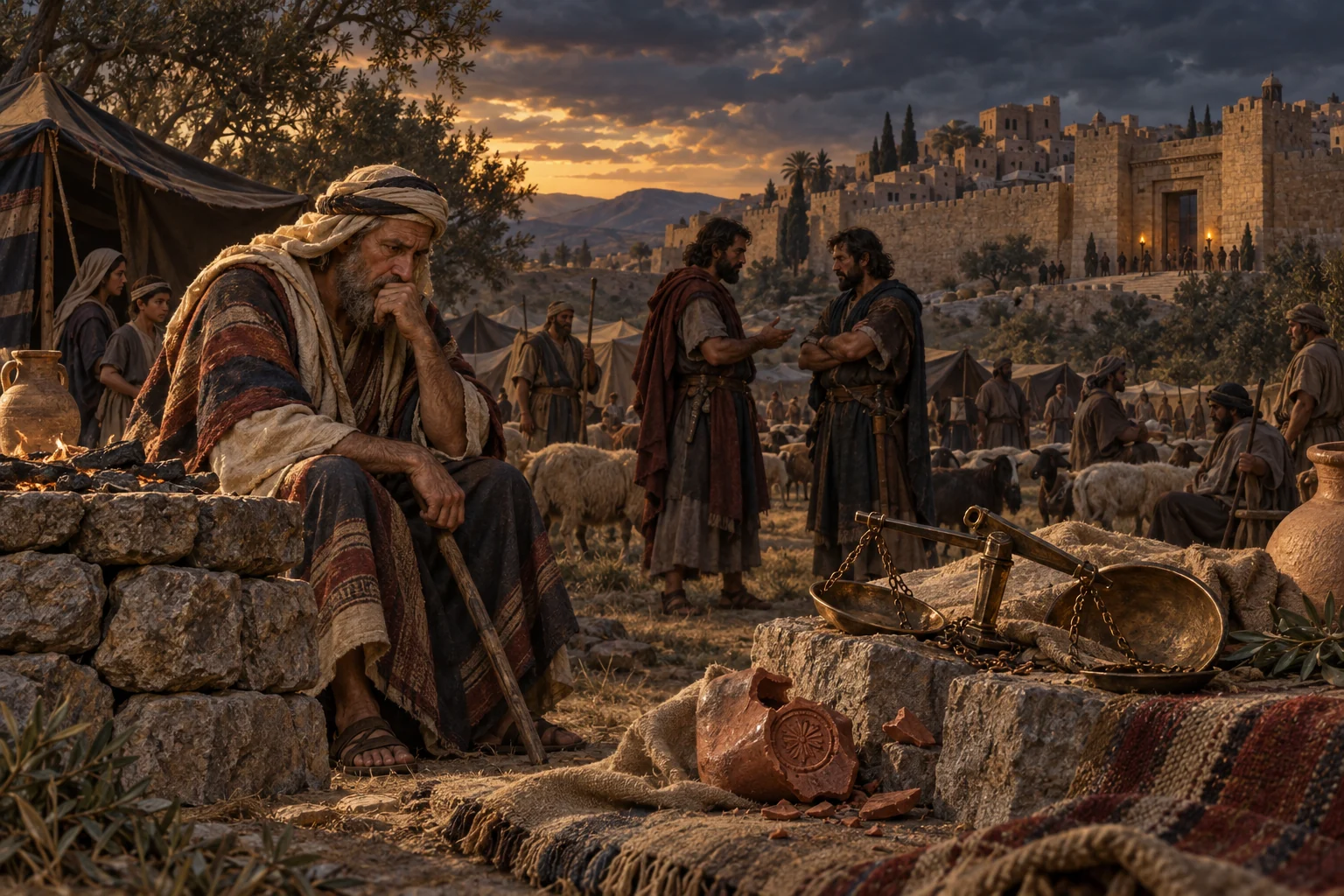
Genesis 34 represents a critical moral and geopolitical crisis within the ancestral history of Israel, strategically situated between Jacob’s covenant renewal at Peniel (Gen 33) and his mandatory return to the cultic center of Bethel (Gen 35).
Read moreShow less
What This Study Explores
Israel and the Nations
Direct Answer: Does Genesis 34 present either Jacob’s passivity or his sons’ vengeance as true justice for Dinah?
No. Jacob’s silence fails to protect his daughter or establish a righteous response, while Simeon and Levi weaponize circumcision, kill incapacitated men, and plunder the city. The chapter exposes two destructive alternatives: political paralysis and retaliatory excess.
Dinah’s violation is never repaired by forcing her into marriage with Shechem, but neither is it honored by indiscriminate bloodshed. The promise survives because of Yahweh’s faithfulness, not because the covenant family responds well to the crisis.
Key Claims
- Shechem’s seizure and violation of Dinah cannot be neutralized by later affection or generous bride-price.
- Jacob’s silence creates a vacuum in which grief and fury become ungoverned vengeance.
- Hamor’s proposal seeks economic and marital absorption of Jacob’s household into Shechem.
- The brothers profane the covenant sign of circumcision by using it as an instrument of deception and massacre.
- Jacob’s later rebuke of Simeon and Levi confirms that zeal for family honor did not justify disproportionate violence.
Interpretive Context
The narrative gives Dinah no recorded speech, so interpreters should resist inventing her consent or interior state. Ancient honor and marriage customs illuminate the negotiations but do not make assault a property offense or validate marriage to the perpetrator. The text’s moral disquiet is part of its critique.
Read canonically, Jacob’s later judgment in Genesis 49 prevents the massacre from being baptized as covenant zeal: Simeon and Levi’s anger scatters rather than secures blessing. The episode therefore separates Yahweh’s promise from the family’s conduct and anticipates a justice that neither ignores violated persons nor answers evil with indiscriminate vengeance.
Selected Scholarship
- Gordon J. Wenham, Genesis 16–50 (1994).
- Victor P. Hamilton, The Book of Genesis, Chapters 18–50 (1995).
- Nahum M. Sarna, Genesis (1989).
- Susanne Scholz, Sacred Witness: Rape in the Hebrew Bible (2010).
- Bruce K. Waltke, Genesis: A Commentary (2001).
Scripture Connections
Genesis 34; Genesis 17; Romans 12:19; Galatians 3:28; Galatians 5:1–2; Ephesians 2:14–15; Genesis 49:5–7; Genesis 3
Continue on Substack
The complete article remains on Rabbit Room Apologetics at Substack.
Originally published June 30, 2026. This WordPress page is a discovery guide; the complete article is hosted on Substack.