ARTICLE GUIDE
At a Glance
Genesis 36 marks a critical structural transition within the primeval and patriarchal history, bringing the narratives of Jacob to a formal close and preparing the reader for the Joseph sequence. Within Scripture’s organically unfolding promise-plan, Esau’s descendants, chiefs, territory, and kings show that divine blessing reaches beyond the chosen line even as the covenant vocation proceeds through Jacob.
Read moreShow less
What This Study Explores
Biblical Theology • Canonical Interpretation • The Promise-Plan of God
Direct Answer: Why does Genesis devote an entire chapter to Esau’s descendants outside the chosen covenant line?
The genealogy demonstrates that election is not the same as divine neglect of everyone else. Yahweh fulfills his word concerning Esau by granting descendants, territory, chiefs, and kings, even while the Abrahamic promise takes its particular historical course through Jacob.
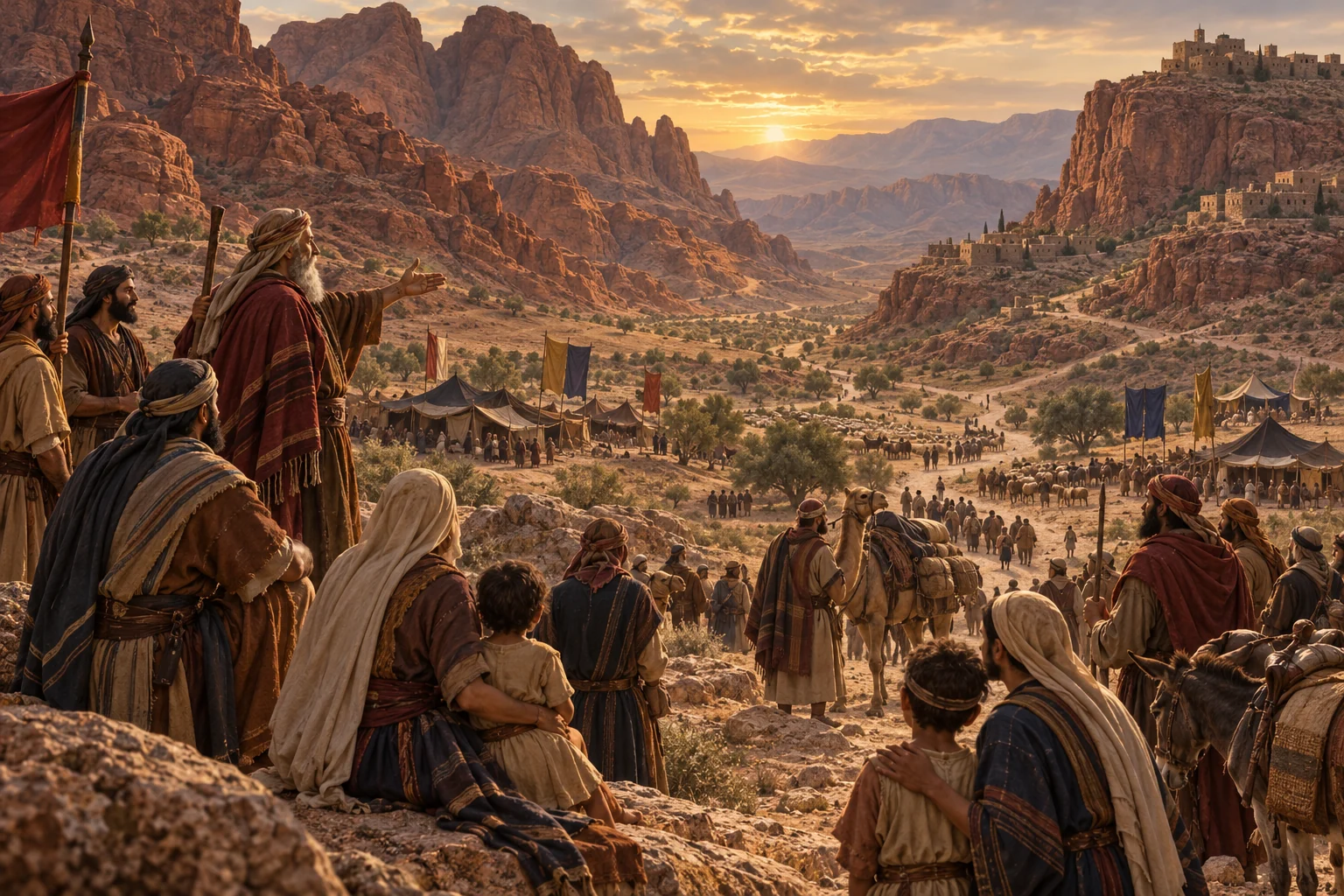
Genesis 36 also prepares later readers for Israel’s complicated relationship with Edom, Seir, and Amalek. Its names and territories turn later conflict into family history and show that the God of the promise governs nations beyond Israel’s direct lineage.
Key Claims
- The Esau toledot formally closes one branch before Genesis returns to Jacob’s line.
- Esau’s migration to Seir resolves competition for pasture while distinguishing his territory from Jacob’s inheritance in Canaan.
- The genealogy records the rapid growth of Edomite clans and chiefs as concrete fulfillment of patriarchal blessing.
- Horite and Edomite lines reveal incorporation and political development within the land of Seir.
- The list of kings before Israel had a king anticipates later national history without implying that Edom lies outside divine providence.
Interpretive Context
Biblical genealogies select and arrange names for literary, political, and theological purposes; they need not function like modern civil registries. Apparent name variations should be evaluated in light of alternate names, marriage alliances, transmission, and the chapter’s several overlapping organizational schemes.
Within the wider canon, Edom’s later hostility must not be read backward so as to erase the blessing and providential development recorded here. Genesis distinguishes Jacob’s covenant vocation from Esau’s genuine creaturely and national goods, allowing election and divine care for the nations to stand together without collapsing their roles.
Selected Scholarship
- Gordon J. Wenham, Genesis 16–50 (1994).
- Victor P. Hamilton, The Book of Genesis, Chapters 18–50 (1995).
- Nahum M. Sarna, Genesis (1989).
- Kenneth A. Mathews, Genesis 11:27–50:26 (2005).
- John H. Walton, Genesis (2001).
Scripture Connections
Genesis 36; Romans 9:10–13; Hebrews 12:16–17; Romans 11:17–24; Ephesians 3:4–6; Genesis 3; Genesis 1:1–2
Continue on Substack
The complete article remains on Rabbit Room Apologetics at Substack.
Originally published June 30, 2026. This WordPress page is a discovery guide; the complete article is hosted on Substack.