ARTICLE GUIDE
At a Glance
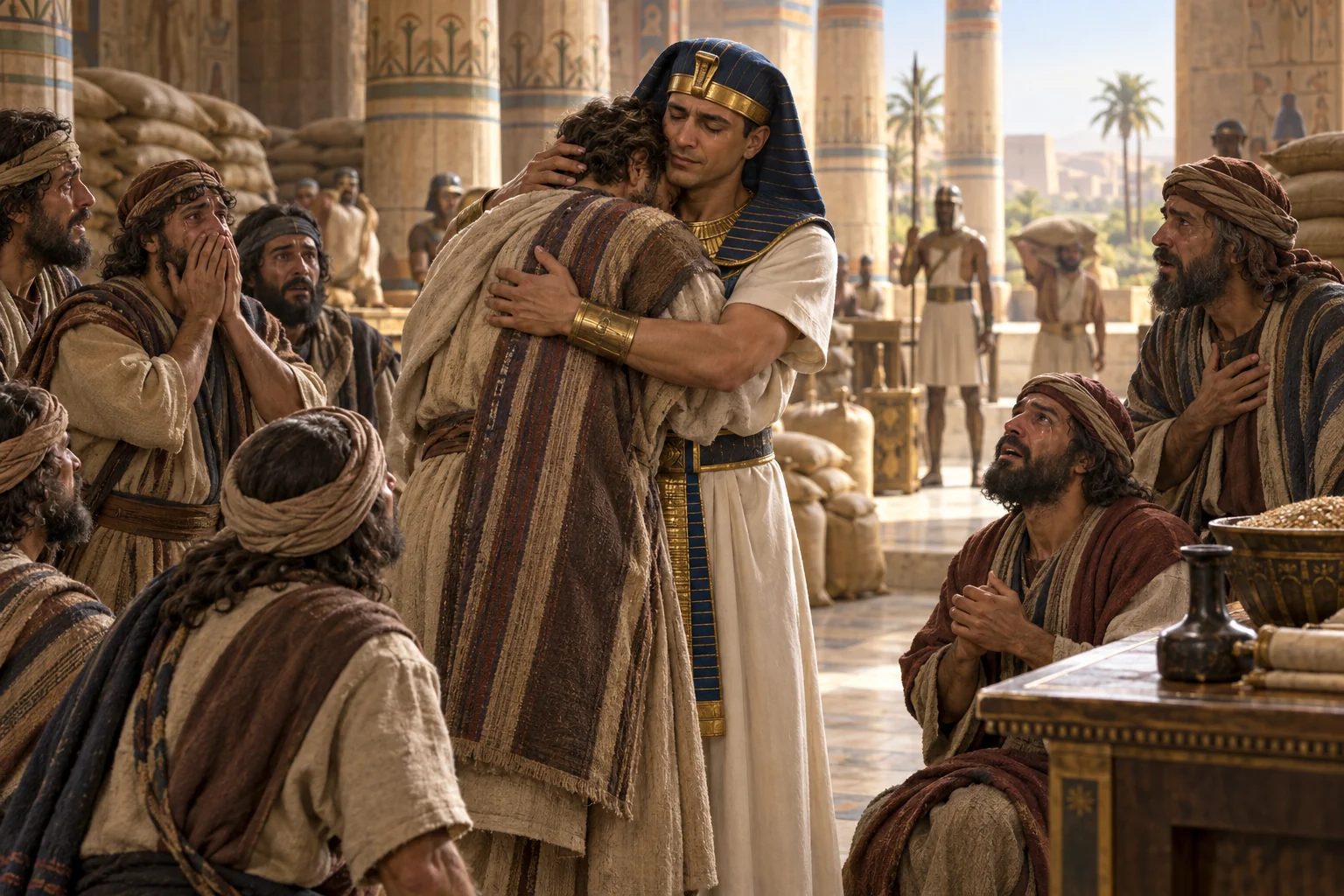
The narrative of Genesis 45 marks the emotional and theological climax of the Joseph cycle (Genesis 37–50) and represents a critical juncture in the progressive unfolding of God’s promise-plan. Following the disinheritance of the Gentile nations at Babel (Genesis 11) and the election of Abraham (Genesis 12), Yahweh committed Himself to bringing forth a royal seed through whom all families of the earth would be blessed.
Read moreShow less
What This Study Explores
Promise-Plan Theology
What Does Joseph’s Self-Revelation Show about Providence and Forgiveness?
Joseph reveals himself only after Judah demonstrates a willingness to become a slave in Benjamin’s place, showing that the brothers’ moral posture has changed. His tears, invitation to come near, and naming of their crime hold truth and reconciliation together. Forgiveness does not require pretending the betrayal never occurred.
Joseph interprets his history through providence: the brothers sold him, yet God sent him ahead to preserve life and save the covenant family. Divine purpose does not absolve their malice; it overrules it toward good. The reconciliation preserves the seed promised to Abraham and prepares Israel’s descent into Egypt, national growth, and eventual exodus.
Key Claims
- Judah’s substitution reveals repentance. The brother who once participated in selling Joseph now offers himself for Rachel’s other son.
- Joseph names the evil accurately. Reconciliation begins with truth rather than euphemism or coerced forgetting.
- Providence works without moral confusion. Human and divine intentions operate simultaneously but are ethically opposite.
- Preservation serves covenant history. Joseph’s elevation protects the family through whom blessing will reach the nations.
- Forgiveness restores relationship and provision. Joseph moves beyond non-retaliation to concrete care for those who harmed him.
Interpretive Context
The reconciliation occurs while five years of famine remain, so Joseph’s disclosure resolves the family’s fracture without completing the land promise. Pharaoh’s invitation and Joseph’s provision move Jacob’s household into the very foreign sojourn anticipated in Genesis 15. Egypt is therefore an instrument of preservation, not Israel’s final inheritance, and the chapter’s deliverance must be read as preparation for both national formation and eventual exodus.
Ancient family honor helps explain Joseph’s removal of Egyptian witnesses before disclosing his brothers’ shame. His statement “God sent me” must be read alongside “whom you sold,” maintaining both sovereignty and responsibility. Joseph functions typologically as a rejected and exalted deliverer, but the narrative’s own patriarchal setting remains primary before connections are drawn to Messiah.
Selected Scholarship
- Hamilton, V. P. (1995). The Book of Genesis, Chapters 18–50.
- Kaiser, W. C., Jr. (2008). The Promise-Plan of God.
- Sarna, N. M. (1989). Genesis.
- Waltke, B. K. (2001). Genesis.
- Wenham, G. J. (1994). Genesis 16–50.
Scripture Connections
Genesis 45; Genesis 37; Genesis 11; Genesis 12; Genesis 44:18–34; Acts 7:9–14; Acts 2:23; Acts 4:27–28
Continue on Substack
The complete article remains on Rabbit Room Apologetics at Substack.
Originally published August 6, 2026. This WordPress page is a discovery guide; the complete article is hosted on Substack.