ARTICLE GUIDE
At a Glance
Genesis 47 functions as the critical narrative hinge connecting the patriarchal sojourn in Canaan to the corporate formation of Israel within Egypt, serving as a structural bridge between the Genesis narratives and the Exodus deliverance.
Read moreShow less
What This Study Explores
Israel and the Nations
How Does Genesis 47 Preserve Israel while Transforming Egypt?
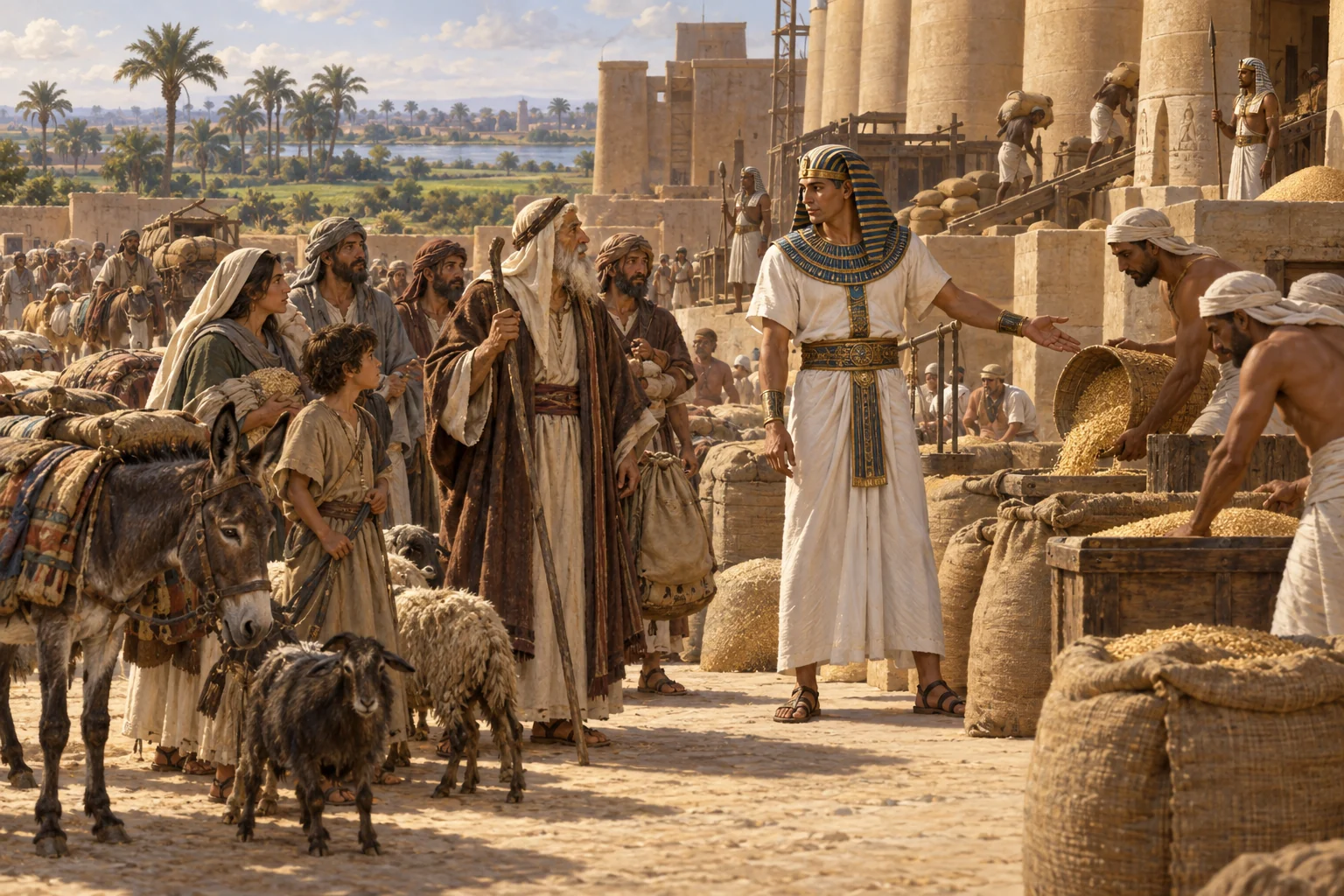
Genesis 47 establishes Jacob’s family in Goshen, where geographic and occupational separation protect covenant identity during famine. Jacob blesses Pharaoh, reversing ordinary imperial assumptions: the aged, landless sojourner mediates Abrahamic blessing to the ruler of Egypt. Israel’s survival and multiplication begin precisely where God promised to make the family into a nation.
The chapter also recounts Joseph’s concentration of Egyptian money, livestock, land, and labor under Pharaoh. The narrative describes an ancient famine policy that preserved life while producing profound dependence; it should neither be romanticized as ideal economics nor judged without its emergency and cultural setting. The contrast remains central: Egypt becomes increasingly bound to Pharaoh while Israel receives provision and grows.
Key Claims
- Goshen protects covenant distinctiveness. Social separation becomes providential shelter from assimilation.
- Jacob blesses the empire. The Abrahamic vocation operates through a vulnerable pilgrim rather than imperial dominance.
- Egypt is refuge and future exile. Temporary preservation prepares both national growth and the later need for exodus.
- Joseph’s policy preserves life at significant cost. The text reports centralization honestly without requiring unqualified moral approval.
- Land remains Israel’s horizon. Jacob’s burial instructions show that Egyptian security cannot replace the promised inheritance.
Interpretive Context
Genesis 47:21 has a notable textual and translation issue: the Masoretic tradition can be read as moving the people into cities, while the Samaritan Pentateuch and Septuagint support language of servitude reflected in some translations. Either way, the narrative describes emergency centralization rather than issuing a timeless economic blueprint. Interpretation should hold together Joseph’s preservation of life, Pharaoh’s increased power, and Israel’s contrasting covenant shelter.
Ancient Egyptian land tenure, taxation, famine administration, shepherd taboos, and royal ideology inform the account. The twenty-percent levy appears comparatively stable within the narrative, yet the transfer of property and labor demands ethical attention. Promise-plan theology reads the chapter as a hinge: God uses imperial structures to preserve the seed while ensuring that Egypt cannot become Israel’s permanent sacred home.
Selected Scholarship
- Hamilton, V. P. (1995). The Book of Genesis, Chapters 18–50.
- Kaiser, W. C., Jr. (2008). The Promise-Plan of God.
- Sarna, N. M. (1989). Genesis.
- Waltke, B. K. (2001). Genesis.
- Wenham, G. J. (1994). Genesis 16–50.
Scripture Connections
Genesis 47; Genesis 46:3–4; Hebrews 11:21; Genesis 47:31; Acts 7:14–15; Romans 4:13
Continue on Substack
The complete article remains on Rabbit Room Apologetics at Substack.
Originally published August 7, 2026. This WordPress page is a discovery guide; the complete article is hosted on Substack.