ARTICLE GUIDE
At a Glance
Genesis 50 serves as the capstone and literary climax of both the Joseph narrative (Gen 37–50) and the entire primeval-patriarchal epic of Genesis. The narrative brings the arc of the Abrahamic covenant full circle: God had pledged to Abraham that his offspring would sojourn as foreigners in an alien land, face hardship, and ultimately depart with great substance to possess the Promised Land (Gen 15:13–16).
Read moreShow less
What This Study Explores
Biblical Theology • Canonical Interpretation • The Promise-Plan of God
How Does Genesis 50 Turn Death into Expectant Hope?
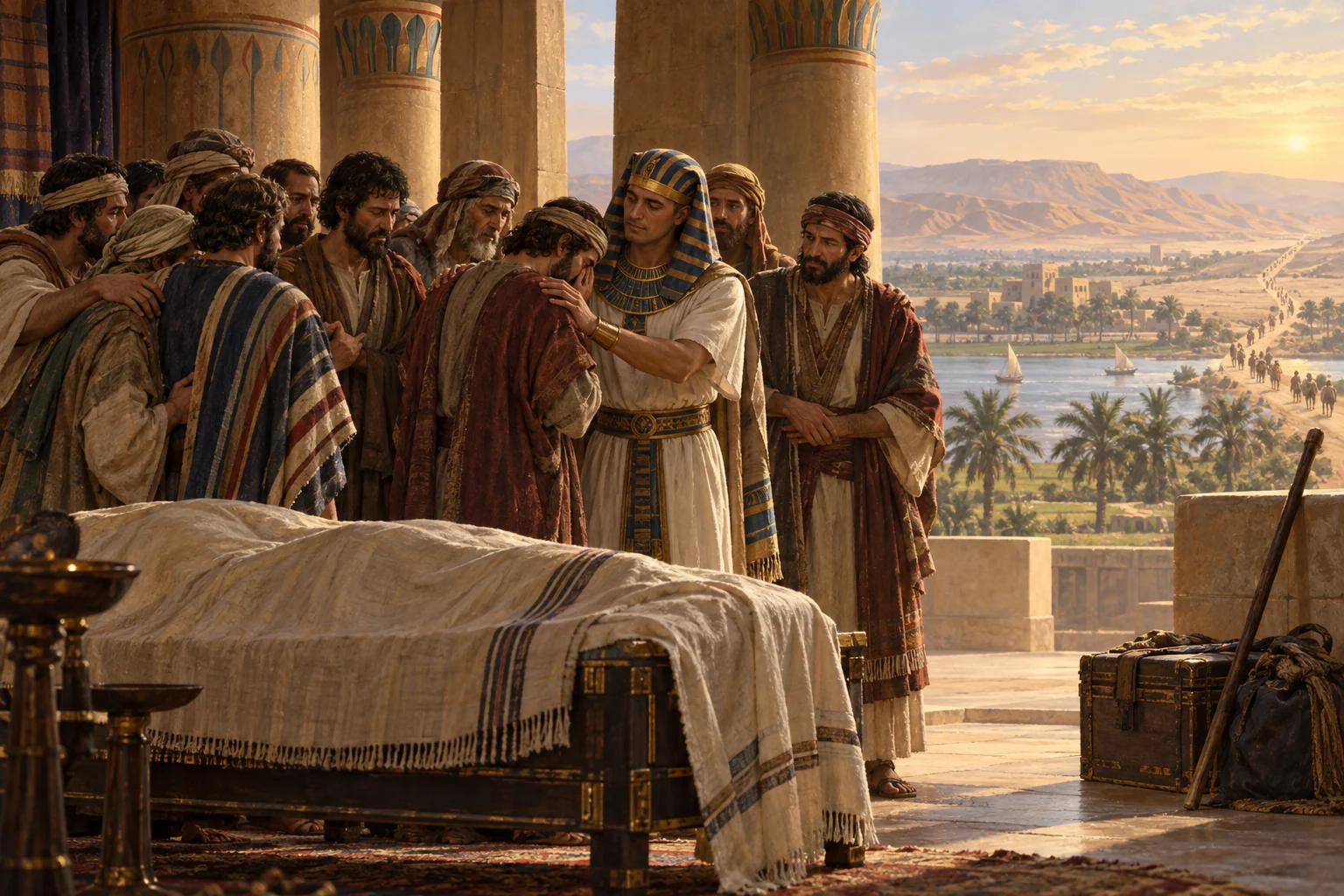
Genesis ends with two deaths, but neither is portrayed as the defeat of the promise. Jacob’s burial at Machpelah publicly anchors the family in the land pledged to Abraham, despite its present residence and privilege in Egypt. Joseph’s embalmed body remains in a coffin awaiting a future exodus, turning the book’s final image into a material testimony that God will visit his people.
Joseph’s statement that his brothers intended evil while God intended the same event for good affirms providence without calling evil good or excusing perpetrators. Human agency and divine purpose operate at different moral levels: the brothers remain responsible, while God directs the history toward preservation of the covenant family. Forgiveness therefore rests on God’s larger purpose rather than denial of harm.
Key Claims
- Machpelah is a covenantal claim. Burial in Canaan confesses that Egypt is temporary and the promised land remains the family’s inheritance.
- Providence does not erase responsibility. God’s good intention sovereignly overrules, rather than morally baptizes, human evil.
- Joseph refuses the place of God. His forgiveness rejects private vengeance and provides for those who harmed him.
- The exodus is anticipated. Joseph’s oath and bones connect Genesis directly to Exodus and later biblical remembrance.
- The coffin is a pledge, not merely a tomb. Death cannot terminate the promise-plan or Israel’s future.
Interpretive Context
Egyptian embalming and the royal-scale mourning procession underscore Joseph’s status, but burial at Machpelah prevents Egyptian honor from redefining the family’s covenant identity. Joseph’s own oath concerning his bones likewise anticipates Exodus rather than immediate return. These burial scenes are therefore geographical confessions: the family may live and die in Egypt, yet its promised future remains attached to Canaan.
Egyptian mourning and embalming customs display Joseph’s public status, yet burial choices preserve distinct covenant identity. Genesis 50:20 must be read within the Joseph narrative’s repeated providential reversals and the Abrahamic forecast of sojourn, oppression, and return. The chapter’s movement from creation in Genesis 1 to a coffin in Egypt intensifies the need for exodus, resurrection, and renewed creation.
Selected Scholarship
- Hamilton, V. P. (1995). The Book of Genesis, Chapters 18–50.
- Kaiser, W. C., Jr. (2008). The Promise-Plan of God.
- Sarna, N. M. (1989). Genesis.
- Waltke, B. K. (2001). Genesis.
- Wenham, G. J. (1994). Genesis 16–50.
Scripture Connections
Genesis 50; Hebrews 11:22; Acts 7:15–16; Romans 8:28; Genesis 50:20; Acts 2:23; Acts 4:27–28; Genesis 49
Continue on Substack
The complete article remains on Rabbit Room Apologetics at Substack.
Originally published August 8, 2026. This WordPress page is a discovery guide; the complete article is hosted on Substack.