ARTICLE GUIDE
At a Glance
Matthew 3 marks a decisive transition in the progressive unfolding of God’s redemptive promise-plan. Following the infancy narratives of Matthew 1–2—which established Jesus as the legal heir to the Davidic throne, the seed of Abraham, and the true Israel called out of Egypt—the narrative shifts dramatically to the Judean wilderness.
Read moreShow less
What This Study Explores
Promise-Plan Theology • Israel and the Nations
What Is John the Baptist Preparing Israel to Receive?
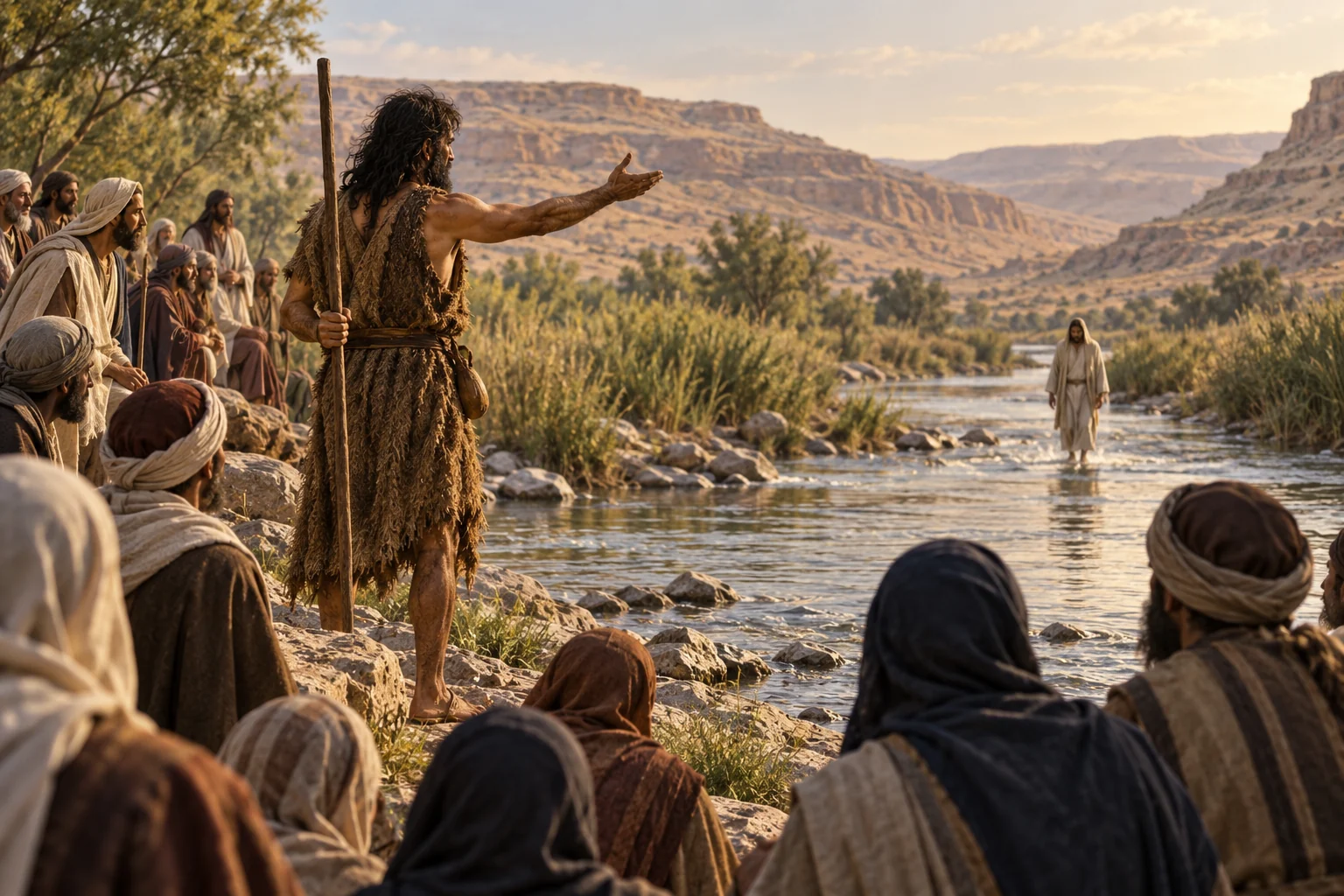
John announces that God’s reign is arriving and summons Israel to covenantal return. His wilderness ministry, Elijah-like clothing, and citation of Isaiah 40 identify him as the promised forerunner preparing a royal highway for Yahweh. His baptism is a public, once-for-all sign of repentance and readiness for the coming kingdom, not a denial of Israel’s covenant story.
John rejects reliance on ancestry without transformed allegiance: Abrahamic descent is a privilege and vocation, not immunity from judgment. The coming one will bring the Holy Spirit and fire, gathering wheat and judging chaff. At Jesus’ baptism, Father, Son, and Spirit converge; the beloved Son is publicly consecrated as Davidic King, Isaianic Servant, and faithful representative of Israel.
Key Claims
- Repentance means covenantal reorientation. John calls for changed direction and fruit, not emotion alone.
- The wilderness announces new exodus. Isaiah’s highway imagery presents God returning to restore his people.
- John fulfills an Elijah pattern. His appearance and ministry prepare Israel for the day of Yahweh.
- Ancestry cannot substitute for faithfulness. Covenant privilege intensifies responsibility before the coming judgment.
- Jesus’ baptism is messianic consecration. The heavenly voice joins royal Psalm 2 and servant imagery from Isaiah.
Interpretive Context
John’s proclamation holds restoration and judgment together: repentance is covenantal return evidenced by fruit, not confidence in ancestry or ritual alone. The opened heavens, descending Spirit, and heavenly voice identify Jesus within Israel’s messianic hopes and the Father-Son-Spirit pattern, while “fulfill all righteousness” remains broader than any single proposal about priestly consecration, representative repentance, or royal commissioning.
John’s immersion differs from repeated ritual washings and likely resonates with prophetic cleansing, Jordan-crossing, and restoration expectations. Matthew’s “kingdom of heaven” is a Jewish reverential expression for God’s active reign, not primarily a location after death. Jesus receives baptism not because he needs repentance but to identify with Israel, fulfill covenant righteousness, and begin the servant mission that culminates in the cross.
Selected Scholarship
- Davies, W. D., & Allison, D. C., Jr. (1988). Matthew 1–7.
- France, R. T. (2007). The Gospel of Matthew.
- Hagner, D. A. (1993). Matthew 1–13.
- Keener, C. S. (2009). The Gospel of Matthew.
- Kaiser, W. C., Jr. (2008). The Promise-Plan of God.
Scripture Connections
Matthew 3; Matthew 1; Malachi 3:1; Isaiah 40:3; 2 Kings 1:8; Genesis 1:2; Genesis 8:8–12; 2 Kings 2
Continue on Substack
The complete article remains on Rabbit Room Apologetics at Substack.
Originally published August 12, 2026. This WordPress page is a discovery guide; the complete article is hosted on Substack.