ARTICLE GUIDE
At a Glance
Matthew 14 marks a pivotal turning point within the Gospel’s macro-structure, bridging the parabolic revelation of the kingdom mysteries in Matthew 13 with the expanding messianic authority and escalating conflict of the central narrative.
Read moreShow less
What This Study Explores
Gospel Studies
What does Matthew 14 reveal about Jesus’ identity and kingdom?
Matthew contrasts Herod’s violent banquet and John’s martyrdom with Jesus’ compassionate provision in the wilderness. The feeding of the five thousand presents Jesus as the greater Moses and messianic shepherd, while the twelve baskets signal provision for Israel.
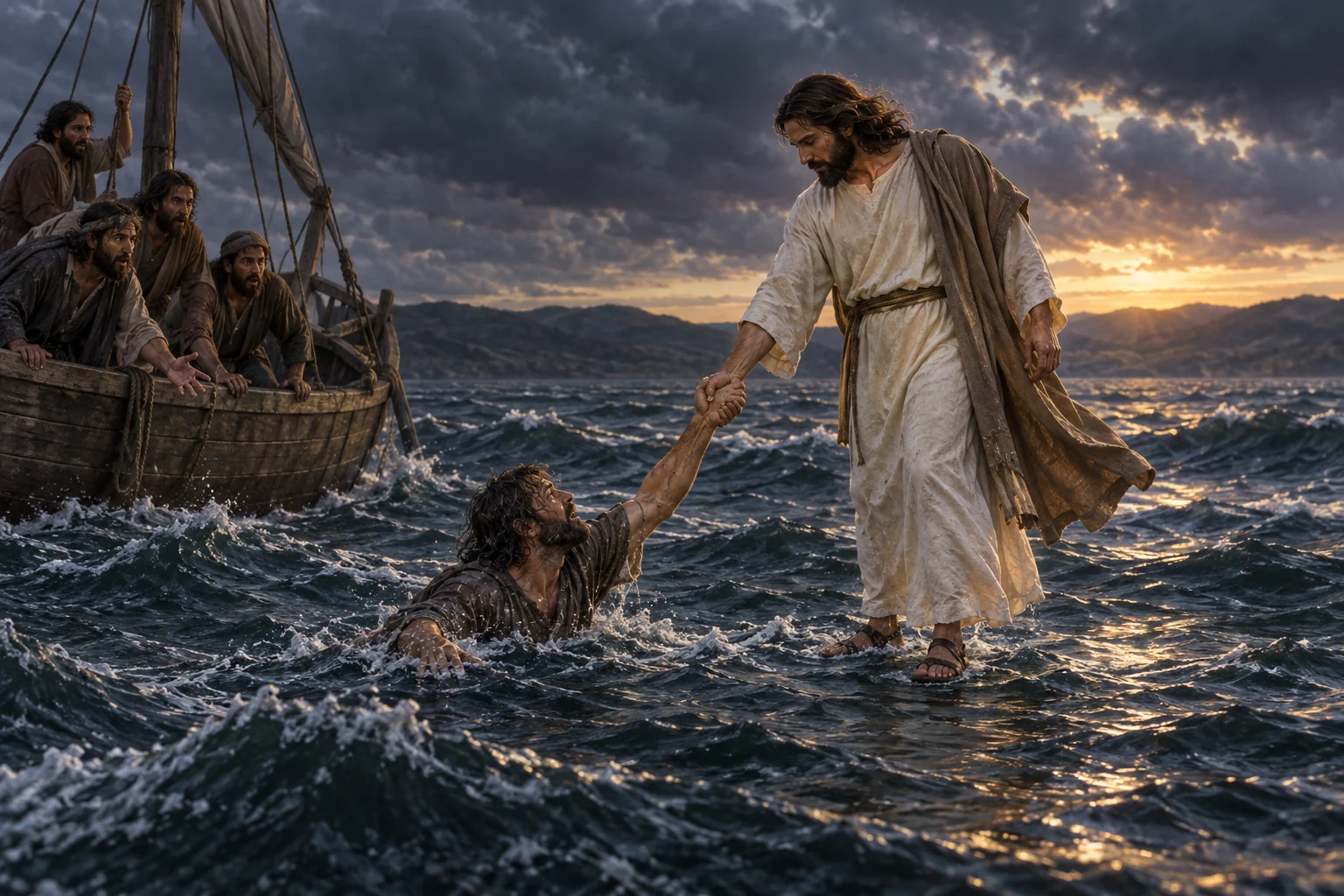
When Jesus walks upon the sea and declares “It is I” (egō eimi), he performs the works Scripture assigns to Yahweh. Peter’s rescue and the healings through Jesus’ garment fringe show that faith rests not in human steadiness but in the holy presence of the divine Son.
Key Claims
- Herod’s feast displays imperial fear and death; Jesus’ feast displays compassionate abundance.
- The wilderness meal recalls manna, Moses, and Israel’s promised restoration.
- The twelve remaining baskets symbolically reinforce Jesus’ mission to Israel.
- Walking on the sea and the “I am” declaration evoke Yahweh’s mastery over chaotic waters.
- Healing through Jesus’ fringe reverses impurity’s direction: his holiness proves contagious rather than defiled.
Interpretive Context
The chapter belongs within Matthew’s escalating revelation of Jesus as Messiah and Emmanuel. John’s death anticipates Jesus’ own rejection, while the disciples’ confession after the storm advances beyond amazement toward recognition of his divine sonship.
Peter’s episode is neither a technique for accomplishing the impossible nor a simple rebuke of doubt. It dramatizes discipleship: Jesus calls, sustains, corrects, and saves those whose faithful response remains dependent on him.
Selected Scholarship
- R. T. France, The Gospel of Matthew
- Craig S. Keener, A Commentary on the Gospel of Matthew
- W. D. Davies and Dale C. Allison Jr., Matthew
- Ulrich Luz, Matthew 8–20
- Walter C. Kaiser Jr., The Promise-Plan of God
Scripture Connections
Matthew 14; Matthew 13; Leviticus 18:16; Ezekiel 34; Exodus 16; Psalm 78:24–25; Psalm 132:15; 2 Kings 4:42–44
Continue on Substack
The complete article remains on Rabbit Room Apologetics at Substack.
Originally published August 23, 2026. This WordPress page is a discovery guide; the complete article is hosted on Substack.