ARTICLE GUIDE
At a Glance
Matthew 16 occupies a strategic macro-structural position within the First Gospel, functioning as a decisive narrative and theological turning point. Situated within the Gospel’s progressive polarization between “outsiders” who reject Messiah and “insiders” who receive Him, this chapter concludes Jesus’ public Galilean ministry and initiates His focused journey toward Jerusalem.
Read moreShow less
What This Study Explores
Gospel Studies
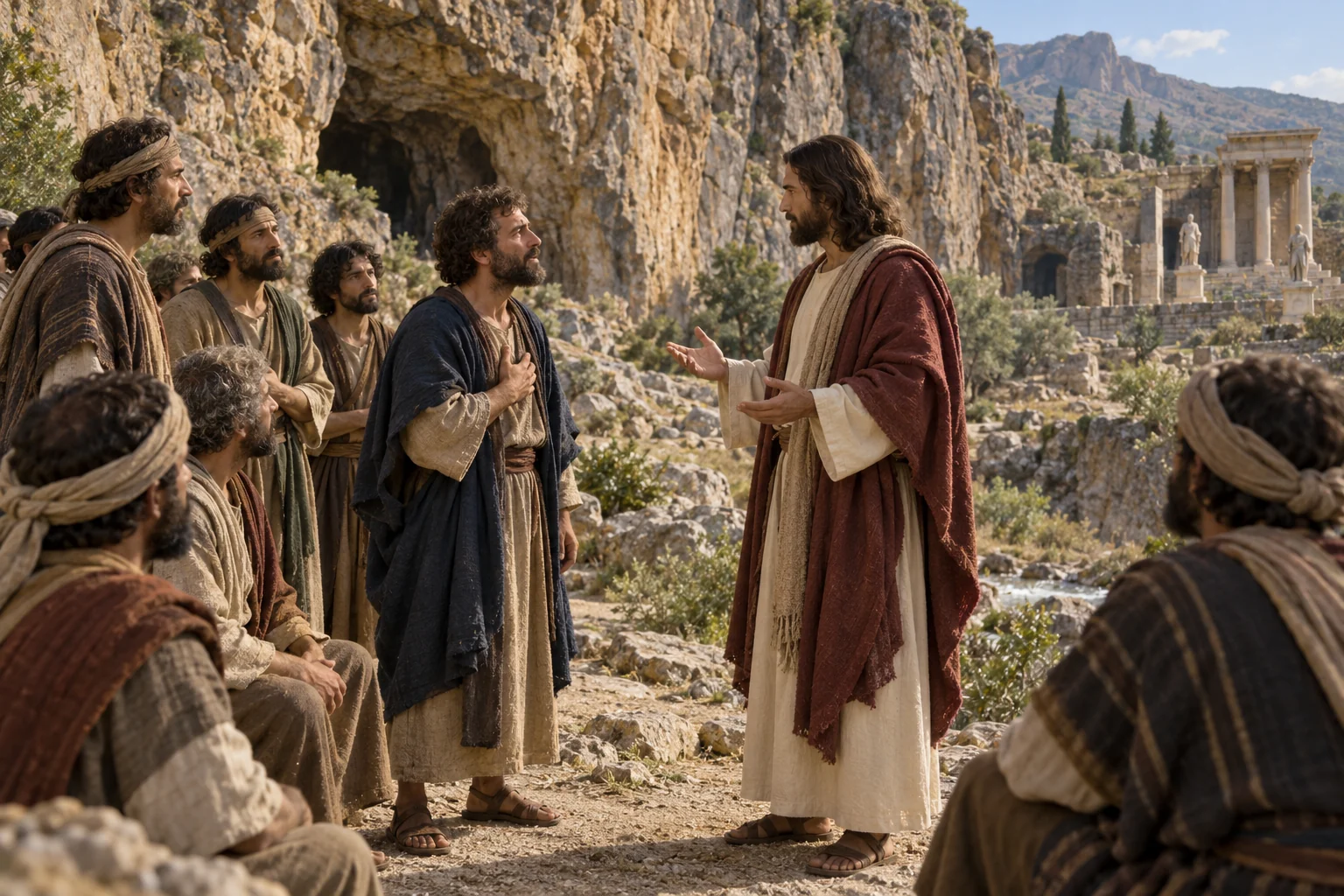
What changes when Peter confesses Jesus as Messiah at Caesarea Philippi?
The confession marks Matthew’s transition from broad kingdom proclamation to explicit passion instruction. Against a landscape associated with imperial power, pagan worship, and the gates of the underworld, Jesus announces that his messianic assembly will withstand death’s stronghold.
Peter receives kingdom keys and binding-and-loosing responsibility, but immediately resists the cross. The juxtaposition shows that true messianic authority is exercised under Jesus’ cruciform mission rather than through triumphal status or self-preservation.
Key Claims
- The request for a sign contrasts hardened leadership with the disciples’ growing recognition.
- Peter’s confession identifies Jesus as Messiah and Son of the living God by divine revelation.
- The rock-and-keys saying grants real representative and halakhic authority within Messiah’s assembly.
- The gates of Hades signify death’s fortified domain, which cannot defeat the advancing kingdom.
- Cross-bearing defines discipleship and exposes any messianism that avoids suffering.
Interpretive Context
Caesarea Philippi’s geography and Second Temple cosmic associations sharpen the confrontation, but the text’s explicit claims about confession, assembly, death, and discipleship remain primary.
The ekklēsia represents Israel’s restored remnant expanded toward the nations, not a replacement of Israel. The Davidic Son conquers through death and resurrection while Abrahamic promises advance.
Selected Scholarship
- R. T. France, The Gospel of Matthew (2007).
- Craig S. Keener, A Commentary on the Gospel of Matthew (1999).
- W. D. Davies and Dale C. Allison Jr., Matthew 8–18 (1991).
- Michael S. Heiser, The Unseen Realm (2015).
- Walter C. Kaiser Jr., The Promise-Plan of God (2008).
Scripture Connections
Matthew 16; Genesis 3:15; Jeremiah 31; Ezekiel 36; Matthew 4; Daniel 7:13–14; Isaiah 22:22; Isaiah 8:14
Continue on Substack
The complete article remains on Rabbit Room Apologetics at Substack.
Originally published August 25, 2026. This WordPress page is a discovery guide; the complete article is hosted on Substack.