ARTICLE GUIDE
At a Glance
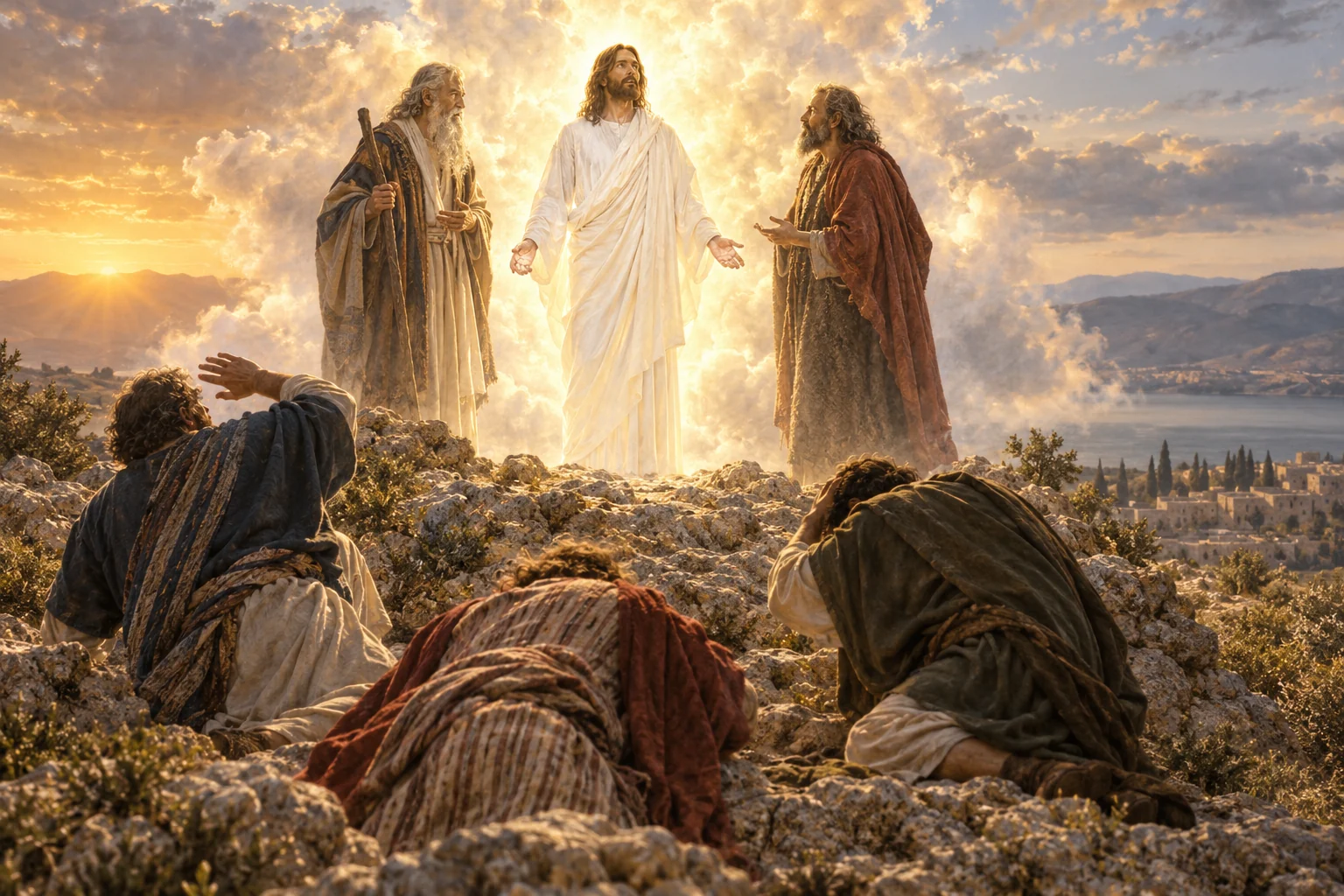
Matthew chapter 17 marks a pivotal watershed in the Gospel’s narrative architecture, situated within Walter C. Kaiser Jr.’s organizing framework of the promise-plan of God—the organic, progressive unfolding of divine redemption across the canon.
Read moreShow less
What This Study Explores
Promise-Plan Theology • Gospel Studies
What does the transfiguration reveal about Jesus’ identity and mission?
Jesus is unveiled as the beloved divine Son whose intrinsic glory surpasses the reflected radiance of Moses. Torah and Prophets bear witness to him, while the Father’s command to “listen to him” identifies Jesus as Davidic King, Servant, and prophet like Moses.
The mountain glory cannot be separated from the road to Jerusalem. The same Son who shines in divine majesty descends into demonic suffering, predicts his death and resurrection, and voluntarily yields royal privilege in the temple-tax episode.
Key Claims
- The six-day marker, high mountain, cloud, and shining face deliberately evoke Sinai.
- Moses and Elijah testify to Jesus rather than sharing equal status with him.
- The divine acclamation combines Psalm 2, Isaiah 42, and Deuteronomy 18.
- The failed exorcism exposes dependence on delegated authority rather than technique or status.
- Jesus’ tax payment demonstrates divine sonship, sovereign provision, and voluntary pastoral restraint.
Interpretive Context
Mount Hermon fits the narrative geography near Caesarea Philippi and carries Second Temple associations with cosmic rebellion, though that background illuminates rather than controls Matthew’s explicit claims.
The transfiguration joins Israel’s institutions and hopes in Messiah without discarding them. The glorious Son fulfills Torah and Prophets, defeats rebellious powers, and extends Abrahamic blessing while Israel’s calling remains secure.
Selected Scholarship
- R. T. France, The Gospel of Matthew (2007).
- Craig S. Keener, A Commentary on the Gospel of Matthew (1999).
- W. D. Davies and Dale C. Allison Jr., Matthew 8–18 (1991).
- Richard Bauckham, Jesus and the God of Israel (2008).
- Walter C. Kaiser Jr., The Promise-Plan of God (2008).
Scripture Connections
Matthew 17; Exodus 24:16; Luke 9:31; Isaiah 42:1; Deuteronomy 18:15; Matthew 4:24; Matthew 10:1; Exodus 30:11–16
Continue on Substack
The complete article remains on Rabbit Room Apologetics at Substack.
Originally published August 26, 2026. This WordPress page is a discovery guide; the complete article is hosted on Substack.