ARTICLE GUIDE
At a Glance
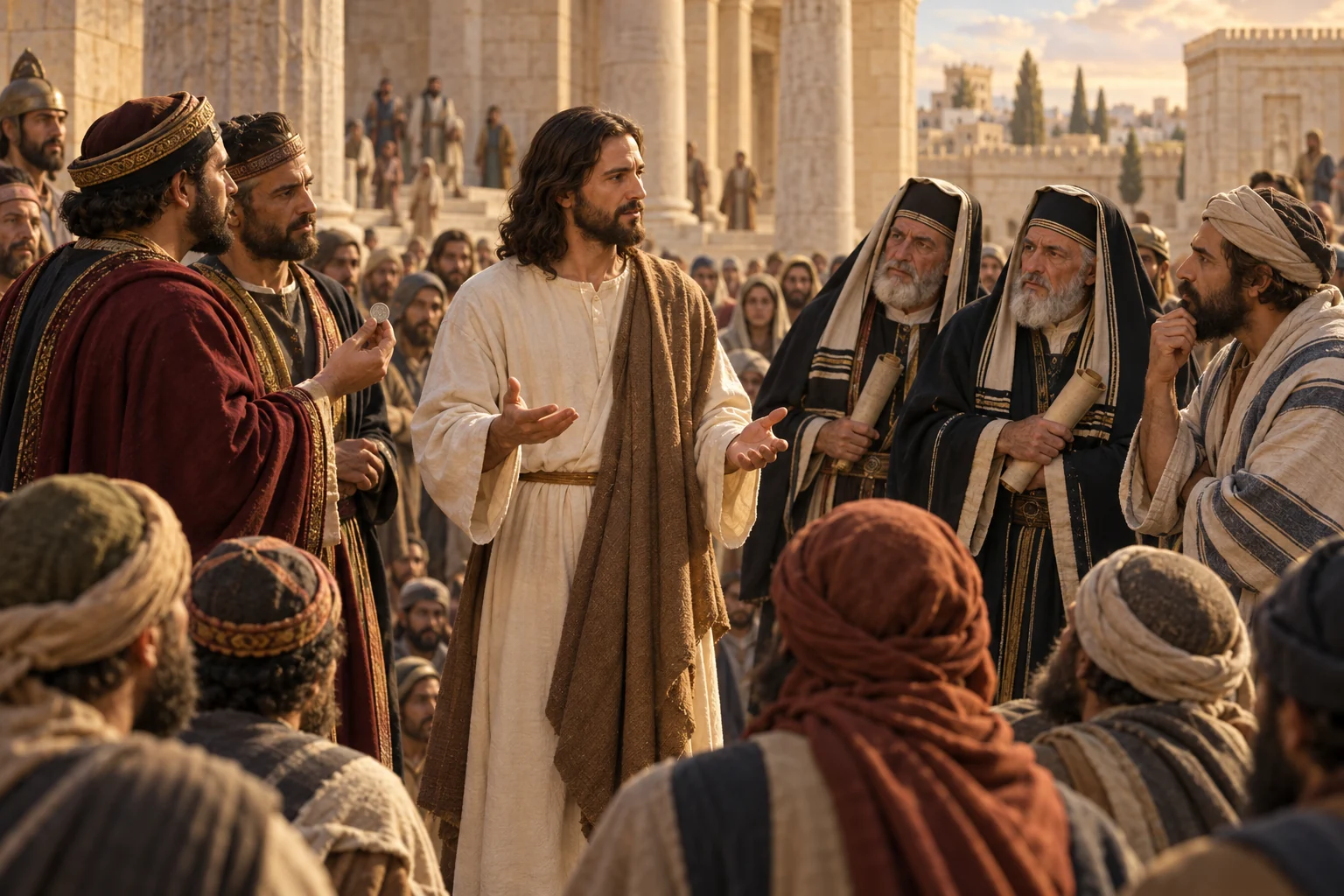
Matthew 22 marks the dramatic climax of the controversy dialogues between Jesus and the Jerusalem religious leadership in the Temple courtyard during Passion Week. Following the symbolic clearing of the Temple and the initial parables of covenantal indictment in Matthew 21, this chapter gathers four distinct challenges designed to entrap Jesus on political, doctrinal, ethical, and Christological grounds.
Read moreShow less
What This Study Explores
Christology • Kingdom Ethics
What unifies the controversies and parables of Matthew 22?
Every scene tests allegiance to the royal Son: accepting the kingdom invitation, ordering civic obligation beneath God’s image-claim, trusting resurrection power, reading Torah through love, and recognizing David’s son as David’s Lord.
The chapter moves from rejected invitation to messianic enthronement. Grace gathers guests widely, but participation requires transformed covenant loyalty rather than ancestry, religious status, or verbal assent alone.
Key Claims
- The wedding feast combines generous invitation with judgment upon rejection and accountability within the banquet.
- Caesar may claim his coin, but God claims the whole image-bearing person.
- Jesus grounds resurrection hope in God’s continuing covenant identity as the God of Abraham, Isaac, and Jacob.
- Love of God and neighbor is the hermeneutical hinge on which Torah and the Prophets hang.
- Psalm 110 presents Messiah as both David’s descendant and transcendent Lord.
Interpretive Context
The debate occurs in the temple during Passion Week and reflects live Second Temple disputes over Rome, resurrection, commandment ranking, and messianic identity. Jesus answers from within Israel’s Scriptures rather than against them.
The widening banquet fulfills Abrahamic blessing without canceling Israel. Gentiles join the remnant in one covenant assembly, and the exalted Davidic Messiah brings the promise-plan toward resurrection and renewed creation.
Selected Scholarship
- R. T. France, The Gospel of Matthew (2007).
- Craig S. Keener, A Commentary on the Gospel of Matthew (1999).
- W. D. Davies and Dale C. Allison Jr., Matthew 19–28 (1997).
- Richard Bauckham, Jesus and the God of Israel (2008).
- Walter C. Kaiser Jr., The Promise-Plan of God (2008).
Scripture Connections
Matthew 22; Matthew 21; Exodus 3:6; Deuteronomy 6:5; Leviticus 19:18; Psalm 110:1; Hebrews 11:13–16; Acts 2:34–35
Continue on Substack
The complete article remains on Rabbit Room Apologetics at Substack.
Originally published September 2, 2026. This WordPress page is a discovery guide; the complete article is hosted on Substack.