ARTICLE GUIDE
At a Glance
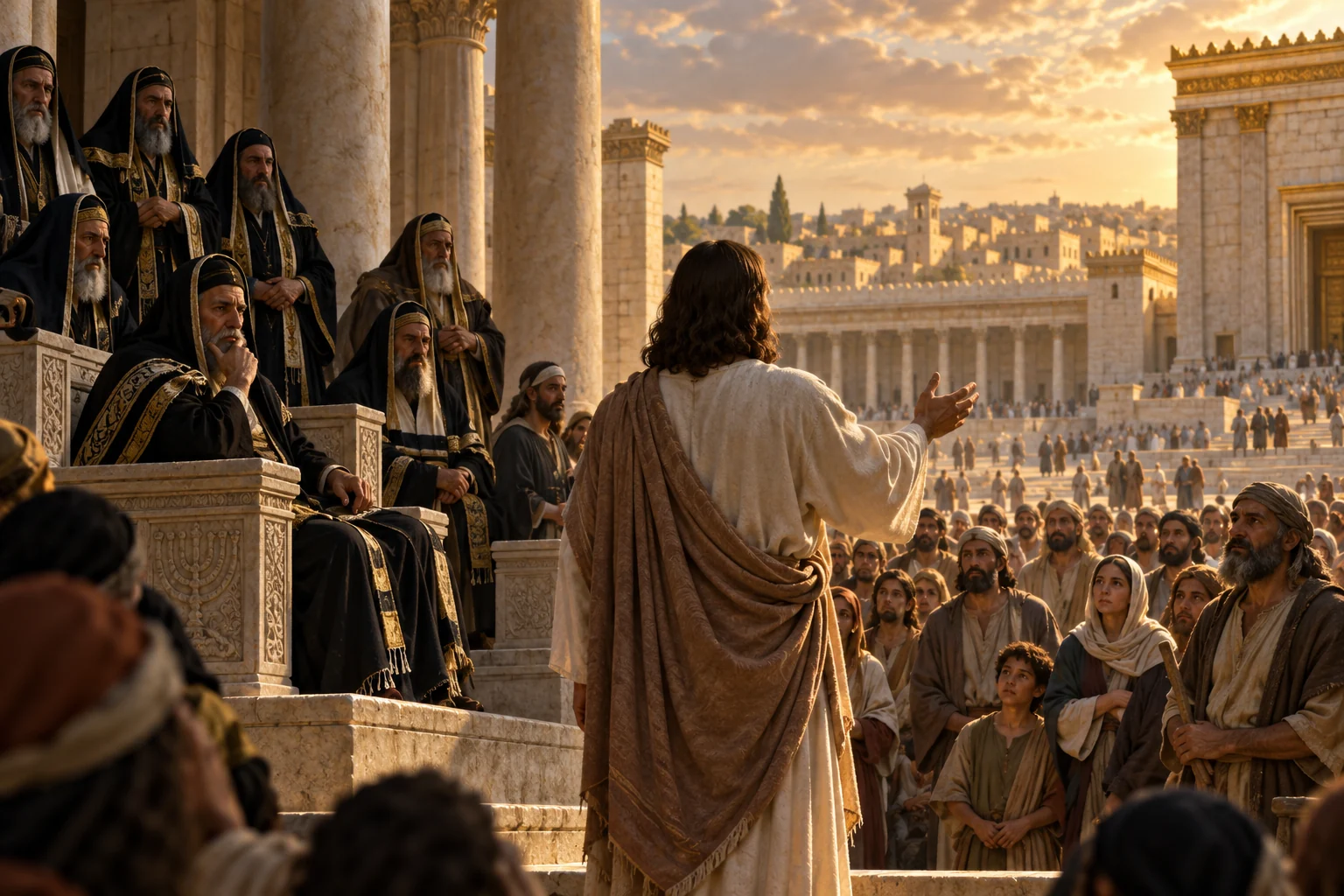
Matthew 23 marks the dramatic climax of Jesus’ public ministry and His final confrontation with Jerusalem’s religious establishment within the Temple precincts during Passion Week.
Read moreShow less
What This Study Explores
Biblical Theology • Canonical Interpretation • The Promise-Plan of God
What is Jesus condemning in Matthew 23: Torah itself or hypocritical leadership?
Jesus speaks as an Israelite prophet within the Torah’s own covenantal tradition. He does not abolish Moses; he condemns leaders who burden others, pursue status, manipulate interpretation, and maintain outward purity while neglecting justice, mercy, and faithfulness.
The seven woes expose covenantal betrayal and accumulated bloodguilt, while the lament over Jerusalem reveals the sorrow behind the judgment. The chapter bridges Messiah’s public rejection and the temple judgment announced in the Olivet Discourse.
Key Claims
- The “seat of Moses” distinguishes the authority of written Torah from the hypocrisy of leaders who fail to practice it.
- Jesus rejects status-seeking titles and redefines greatness through sibling equality and service.
- The weightier matters of Torah are justice, mercy, and faithfulness without neglecting lesser obligations.
- Whitewashed tombs portray impressive external religion concealing internal lawlessness and death.
- The Abel-to-Zechariah sequence frames cumulative righteous blood across the Hebrew canonical order.
Interpretive Context
The woes echo Isaiah, Jeremiah, Amos, Micah, and other covenant-lawsuit traditions. Their rhetoric is intramural prophetic critique, not a warrant for hostility toward Jews or a declaration that Judaism itself has been replaced.
The desolated house and Jesus’ departure echo Ezekiel’s departing glory, yet Psalm 118:26 leaves an eschatological horizon for Israel’s welcome of her King. Messiah becomes the true temple while Israel’s calling remains within the promise-plan.
Selected Scholarship
- R. T. France, The Gospel of Matthew (2007).
- W. D. Davies and Dale C. Allison Jr., Matthew 19–28 (1997).
- Craig S. Keener, A Commentary on the Gospel of Matthew (1999).
- Amy-Jill Levine, The Misunderstood Jew (2006).
- Walter C. Kaiser Jr., The Promise-Plan of God (2008).
Scripture Connections
Matthew 23; Matthew 22; Matthew 24; Isaiah 5:8–23; Jeremiah 23; Micah 6:8; 2 Chronicles 24:20–22; Lamentations 4:13
Continue on Substack
The complete article remains on Rabbit Room Apologetics at Substack.
Originally published September 3, 2026. This WordPress page is a discovery guide; the complete article is hosted on Substack.